


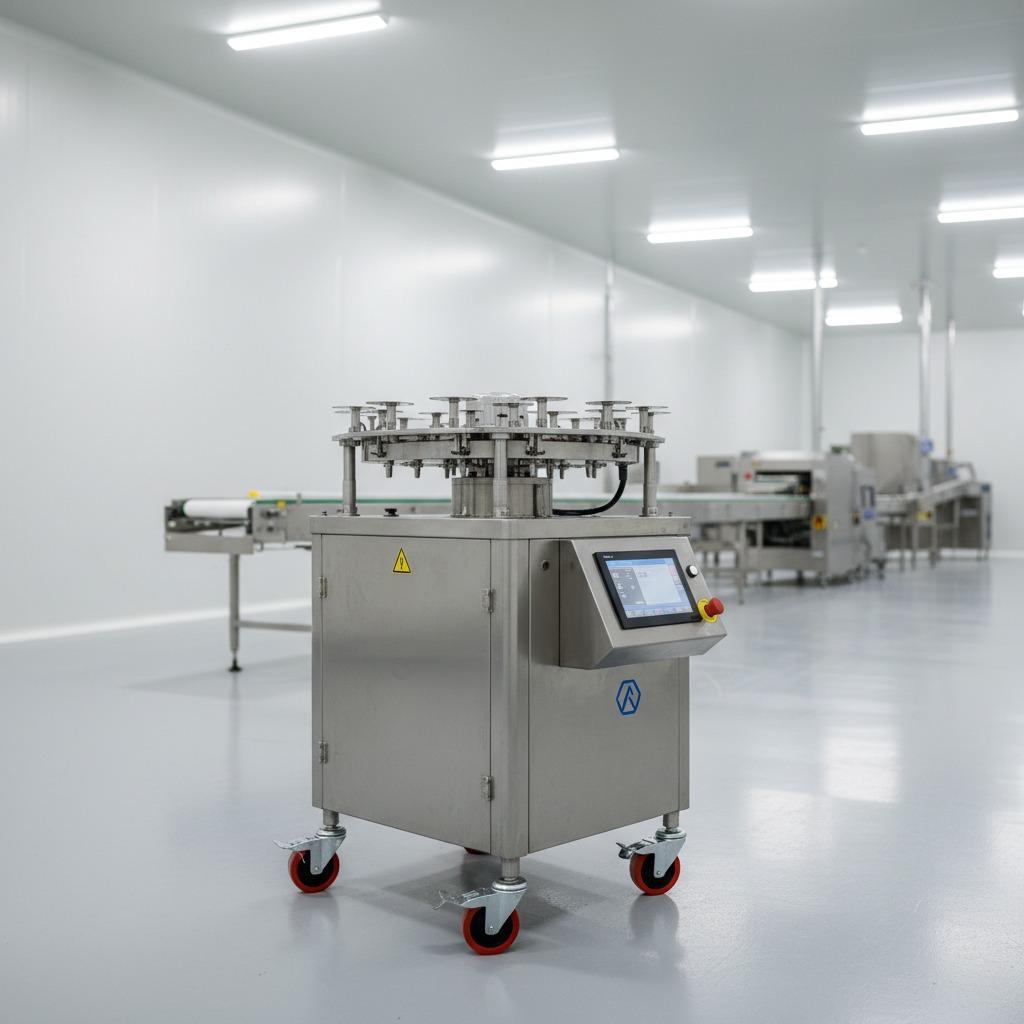
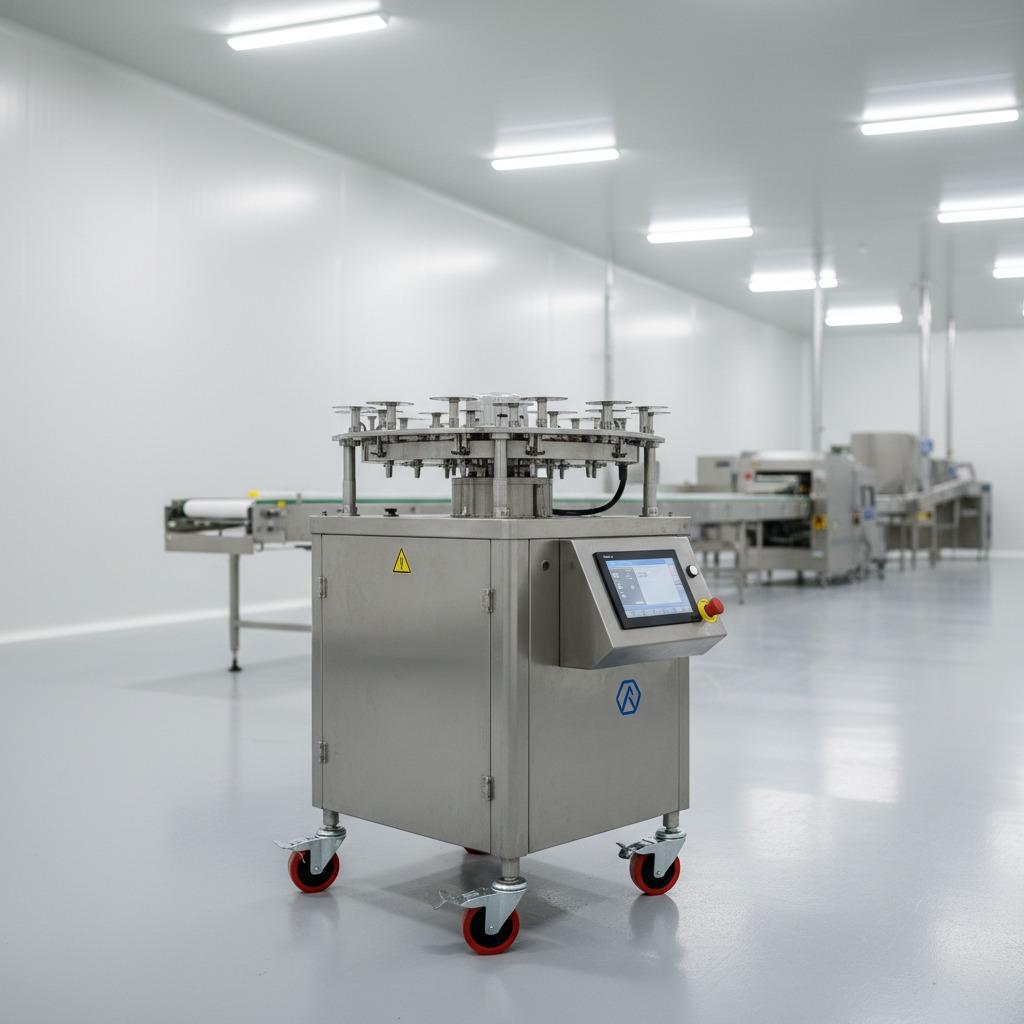
An automated poultry vaccination system helps hatcheries improve repeatability when day-old chick vaccination volume grows beyond a fully manual process. The buyer’s real concern is not only machine speed. Stable dose control, correct needle position, clean tubing, air pressure, and trained operators all affect vaccination quality.
The Jili Day-Old Chick Injection Vaccinator is used for one-day-old chick neck subcutaneous injection. Product material lists 0.05-0.3 ml adjustable dose, reference capacity around 3,200-3,800 chicks per hour for four-station equipment, machine size of 659 mm x 600 mm x 995 mm, about 0.2 kW power, and air pressure checks around 0.45-0.5 MPa.
Why maintenance affects vaccination output
Vaccination output is easy to misunderstand. A hatchery may count how many chicks pass through the station, but the more important measure is whether the correct dose reaches the correct injection position with minimal leakage or missed injection. Maintenance protects that outcome during daily production.
Needles, tubing, syringes, seals, valves, and guide positions all need routine attention. If one part is dirty, worn, or installed incorrectly, the system may still run but the vaccination result can become unstable.
Daily startup checks
- Check that air pressure is around the required operating range before production.
- Install needles and syringes correctly before running chicks.
- Remove air bubbles from tubing and confirm smooth liquid flow.
- Calibrate dose with a measuring cylinder before batch production.
- Reset bottle, basket, and daily production counts.
- Inspect the first production batch before increasing speed.
Planning data for buyers
| Selection factor | Jili reference information |
| Application | One-day-old chick neck subcutaneous injection |
| Dose range | 0.05-0.3 ml adjustable |
| Reference capacity | About 3,200-3,800 chicks per hour |
| Power | About 0.2 kW |
| Air pressure check | Around 0.45-0.5 MPa |
| Machine size | 659 mm x 600 mm x 995 mm |
What to include in a maintenance plan
A practical maintenance plan includes daily cleaning, needle and tubing replacement, syringe inspection, guide-seat cleaning, valve checks, and operator training. Buyers can ask which consumables need regular replacement and what spare parts are useful to keep on site.
Cleaning routines should fit the hatchery’s own hygiene requirements. Operators should also know how to react when they see leakage, bleeding, poor dose delivery, or missed injection during production.
How to prepare a stronger RFQ
Send chick age, vaccine dose, daily volume, peak hourly target, air supply condition, current vaccination method, and any current quality problems. Photos of the vaccination area or a short workflow description can help Jili understand how the equipment will be used.
If the hatchery also needs infrared beak treatment in the same flow, the project may require a different integrated product. For injection-focused work, the injection vaccinator is the more direct match.
For combined beak treatment and vaccination planning, buyers can compare the Jili Day-Old Chick Infrared Beak Trimming and Vaccination Machine separately after confirming whether both processes belong in one station.
How to evaluate supplier support
Supplier support matters because vaccination quality depends on both the machine and the operating routine. Buyers should ask how installation training is arranged, how dose calibration is checked, what consumables need regular replacement, and what troubleshooting support is available after startup.
A strong proposal should make the first production week predictable. The hatchery team should know how to inspect injection results, adjust settings, clean contact parts, and respond when dose delivery or needle position looks abnormal.
A dependable automated poultry vaccination system should support repeatable dose delivery while giving operators clear checks for startup, cleaning, and first-batch inspection.
FAQ
What is an automated poultry vaccination system used for?
It supports controlled vaccination work in hatcheries, commonly for day-old chick neck subcutaneous injection.
What dose range is listed in Jili material?
The listed adjustable dose range is 0.05-0.3 ml.
Why is air pressure important?
Stable air pressure helps the injection mechanism work consistently and supports repeatable dose delivery.
What should operators check before batch production?
Operators should check air pressure, needle installation, tubing flow, dose calibration, count reset, and first-batch injection quality.
What information helps Jili prepare a quotation?
Chick age, dose requirement, hourly target, daily volume, air supply, room layout, and current vaccination problems are useful.