


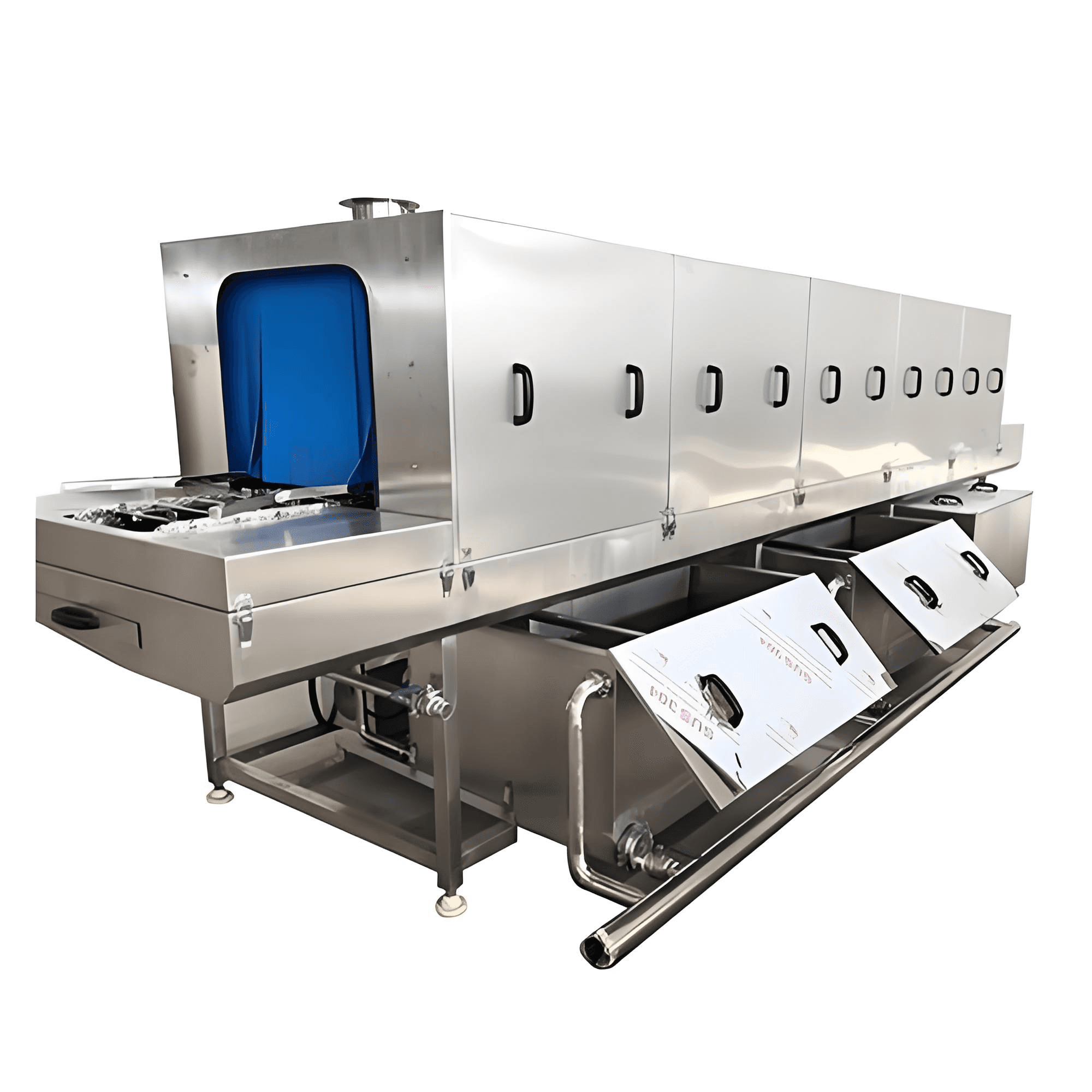
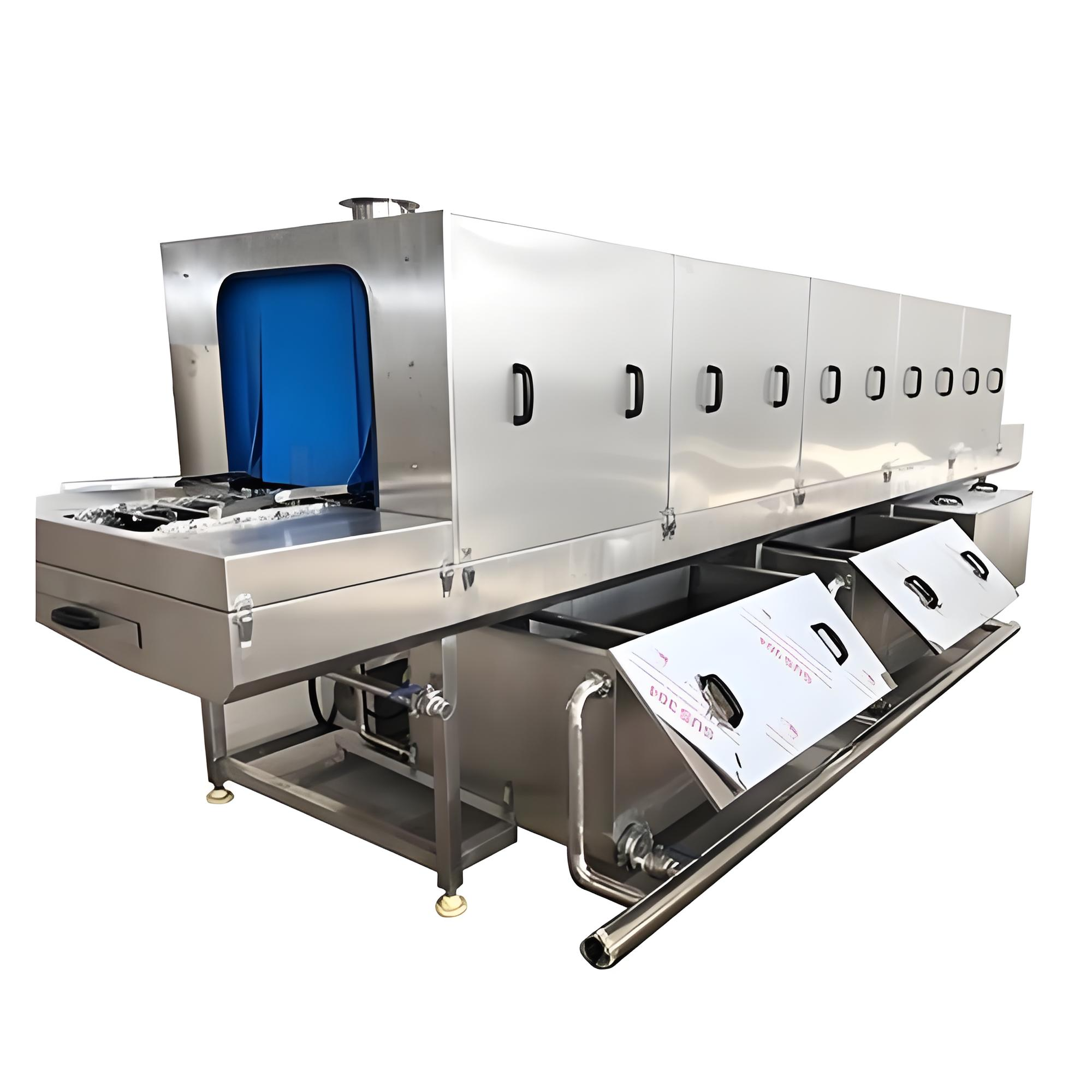
An automatic poultry crate washer must do more than make crates look clean during a demonstration. It has to support a repeatable crate return workflow, stable washing, easy drainage, and practical daily maintenance. Buyers searching this topic often want to understand what protects long-term performance after installation.
Jili's Automatic Continuous Crate Washer is suitable for focused crate cleaning needs. When the project requires inverting, liner placement, or a larger connected workflow, buyers can also review the Jili Poultry Crate Washing System with Inverting and Liner Placement. The best choice depends on crate size, soil level, hourly return volume, utilities, and handling flow.
Maintenance starts with the crate itself
Crate dimensions, material, damage level, residue type, and stacking method all influence washer performance. If the crate does not travel smoothly or if soil conditions are underestimated, the washer may need more cleaning time, more operator attention, or layout adjustments.
Before buying, prepare crate photos and measurements. This lets the supplier discuss guidance, wash coverage, loading, unloading, and whether the washer should be part of a larger return-crate system.
Daily checks for stable washing
- Inspect nozzles for blockage or uneven spray.
- Check filters, drains, and residue collection points.
- Confirm loading and discharge are smooth.
- Review water supply, heating, drainage, and power conditions.
- Remove debris before it affects the next shift.
- Keep access clear for operators to clean and inspect the machine.
Buyer planning table
| Planning factor | Information to prepare |
| Crate details | Photos, dimensions, material, weight, and stacking method |
| Soil level | Residue type, pre-rinse routine, and cleaning standard |
| Throughput | Hourly crate return volume and shift schedule |
| Utilities | Water, drainage, heating, power, and available floor space |
| Handling flow | Loading, unloading, drying, storage, inverting, or liner placement needs |
What to ask before purchase
Ask where operators access nozzles, filters, and wash zones. Ask what cleaning tasks are expected daily and which spare parts should be kept on site. Ask how crate jams are prevented and how the washer handles the buyer’s exact crate size.
These questions help buyers compare real operating value. A washer that is difficult to inspect may look acceptable in a brochure but become expensive to maintain over time.
When a larger crate washing system is better
A focused automatic crate washer may be enough when the task is continuous washing. A larger system can be useful when crates must also be inverted, lined, conveyed, or organized before returning to production. The decision should follow the crate return workflow, not only the wash chamber.
How to compare washer proposals
Buyers should compare more than the wash chamber. Loading height, discharge direction, water management, filter access, nozzle layout, drainage, and operator movement all affect daily operation. A proposal that ignores these details may look simple but create extra labor later.
It is also useful to ask how the washer performs with the buyer’s real crate condition. Crates with heavy residue, damage, labels, or irregular stacking can change the cleaning requirement. Sharing those details early helps Jili recommend the right washer or connected washing system.
How to protect long-term return on investment
Long-term value improves when the washer is easy to operate at the same standard every day. Buyers should plan a simple inspection routine, define who cleans filters and nozzles, and confirm how quickly operators can reach key parts during production. These details reduce unexpected stoppages and make washing performance easier to maintain.
For multi-shift operations, the crate washer should also match the rhythm of crate return. If crates arrive in peaks, the system needs enough loading organization and clean-crate space so washing does not become a bottleneck.
A reliable automatic poultry crate washer should keep cleaning quality stable while making daily inspection, residue removal, and crate return easier for operators.
FAQ
What should be checked daily on an automatic poultry crate washer?
Nozzles, filters, drains, wash zones, crate travel, water supply, loading, and discharge should be checked.
Why do crate photos help quotation?
Photos and dimensions help the supplier understand crate fit, guidance, wash coverage, and handling flow.
When is a washing system needed instead of a single washer?
A system is useful when washing must connect with inverting, liner placement, conveying, or other crate handling steps.
What causes long-term washer problems?
Blocked nozzles, dirty filters, poor drainage, mismatched crates, and limited cleaning access can reduce performance.
What should buyers send first?
Send crate photos, dimensions, soil level, target throughput, room layout, and available utilities.