


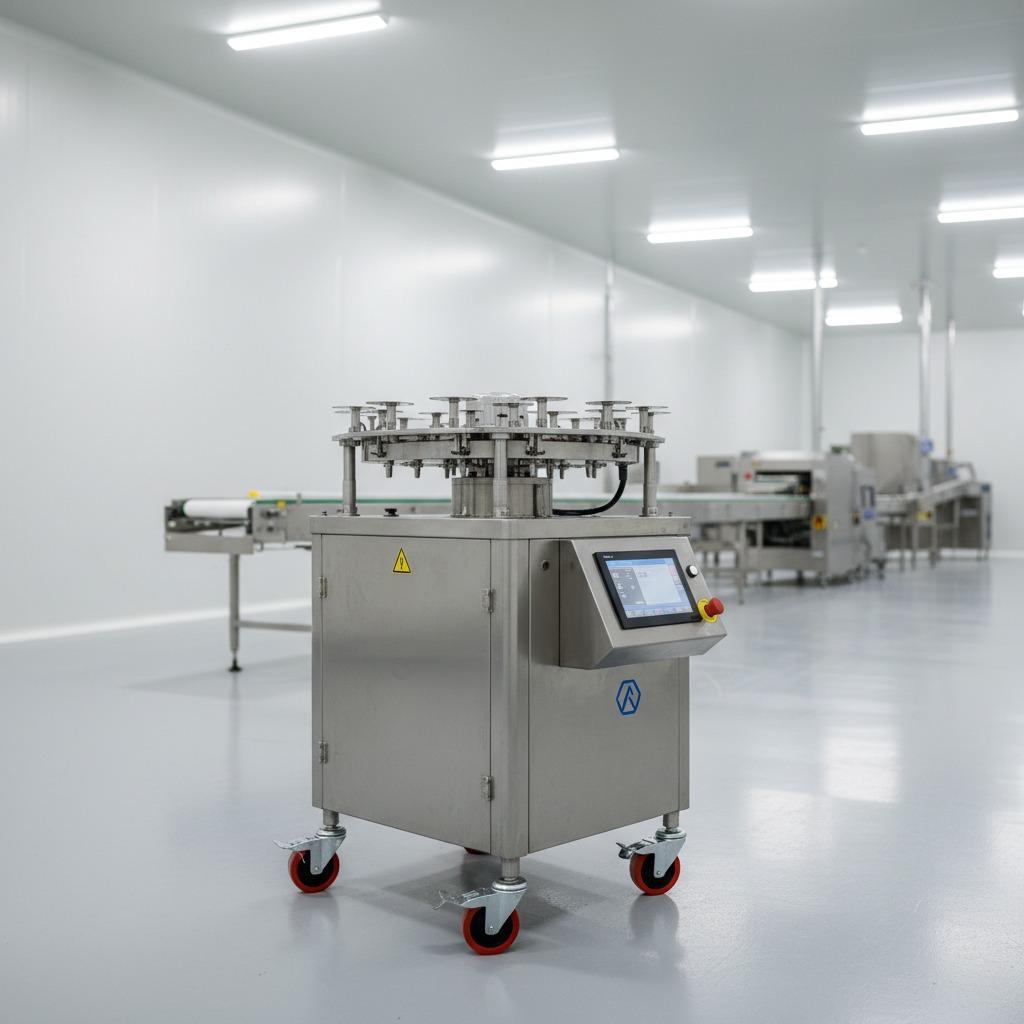
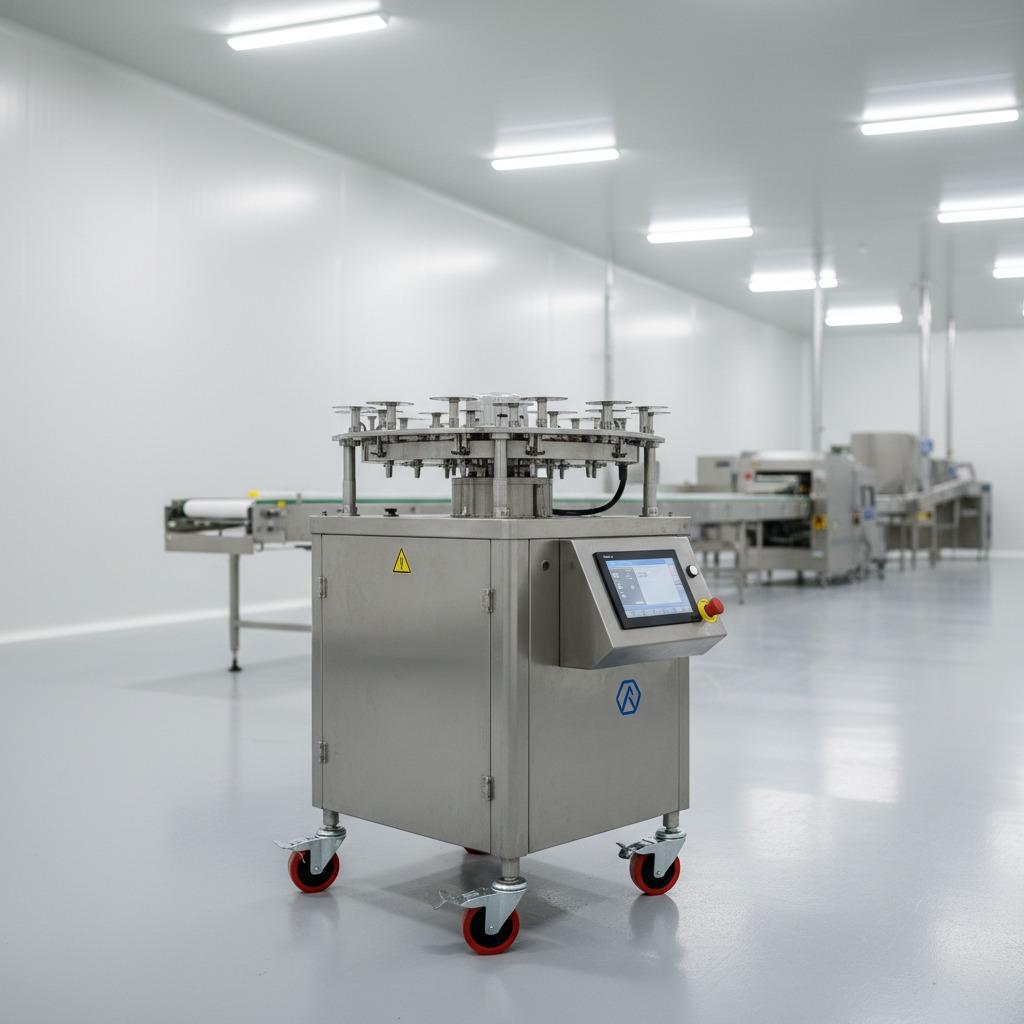
A chick injection vaccination machine helps a hatchery improve output when vaccination quality, dose control, and operator rhythm are all managed together. The goal is not simply to move chicks faster. The machine must support repeatable neck subcutaneous injection, clear startup checks, and practical maintenance during daily production.
The Jili Day-Old Chick Injection Vaccinator is used for one-day-old chick injection vaccination. Product material for the four-station injection equipment lists 0.05-0.3 ml adjustable dose, reference capacity around 3,200-3,800 chicks per hour, machine size of 659 mm x 600 mm x 995 mm, about 0.2 kW power, and air pressure checks around 0.45-0.5 MPa. These details help buyers judge whether the equipment matches their hatchery conditions.
Output depends on more than machine speed
Vaccination output is affected by dose accuracy, needle installation, tubing condition, air pressure, operator skill, and first-batch inspection. A machine with high theoretical speed can still create problems if dose calibration is rushed or if operators are not trained to notice leakage, missed injection, or incorrect needle position.
For this reason, buyers should evaluate the full vaccination routine. The best equipment plan supports setup, production, cleaning, consumable replacement, and troubleshooting, not only the moment of injection.
Best applications for this equipment
- Day-old chick neck subcutaneous vaccination in hatcheries.
- Projects moving from manual injection to a controlled station.
- Operations that need adjustable dose from 0.05 ml to 0.3 ml.
- Teams that need bottle count, basket count, and production count control.
- Buyers who want clearer checks for leakage, missed injection, and dose consistency.
Key specifications and operating checks
| Selection point | Jili reference information |
| Application | One-day-old chick neck subcutaneous injection |
| Dose range | 0.05-0.3 ml adjustable |
| Reference capacity | About 3,200-3,800 chicks per hour |
| Air pressure | Check around 0.45-0.5 MPa before operation |
| Daily startup | Needle, tubing, air supply, bubble removal, count reset, and dose calibration |
What buyers should prepare before quotation
Send the vaccine dose, chick age, daily chick volume, peak hourly target, current injection method, air supply condition, and any quality issues observed in production. Photos or short workflow notes are useful because they show how chicks are handled before and after injection.
If the hatchery has experienced bleeding, leakage, missed injection, or unstable dose delivery, describe the problem clearly. A supplier can only recommend the right setup when the buyer explains the operating pain point, not just the desired capacity.
Maintenance points that protect vaccination quality
Daily cleaning and consumable replacement are part of vaccination quality. Needles, drip tubes, guide seats, syringes, seals, and valves should be inspected according to the hatchery routine. Operators should remove air from tubing, confirm dose delivery with a measuring cylinder, and check early production batches before running at full speed.
These steps may seem basic, but they are the difference between a stable vaccination station and a line that produces rework. A practical buying decision includes operator training and spare parts from the beginning.
How to compare suppliers
Ask each supplier to explain dose adjustment, air pressure requirements, cleaning access, consumable replacement, troubleshooting support, and how the first production week should be checked. A useful answer will connect equipment design with real hatchery operation.
Questions to ask before placing an order
Before confirming the machine, ask how operators will be trained, which consumables should be stocked on site, how dose checks are performed during the first production day, and what support is available if injection quality changes. These questions turn the purchase from a simple equipment order into a vaccination workflow plan.
A well-selected chick injection vaccination machine also helps managers standardize the daily vaccination routine, making dose checks and operator training easier to repeat across shifts.
FAQ
What does a chick injection vaccination machine do?
It supports controlled injection vaccination of day-old chicks, commonly through neck subcutaneous injection.
What dose range is listed for Jili injection equipment?
Jili material lists an adjustable dose range of 0.05-0.3 ml.
Why is air pressure important?
Stable air pressure helps the injection mechanism work consistently and should be checked before operation.
What details improve quotation accuracy?
Vaccine dose, chick volume, air supply, room layout, current process, and existing injection problems all help.
How can buyers reduce missed injection risk?
Use trained operators, correct needle installation, dose calibration, clean tubing, and first-batch inspection before full production.