


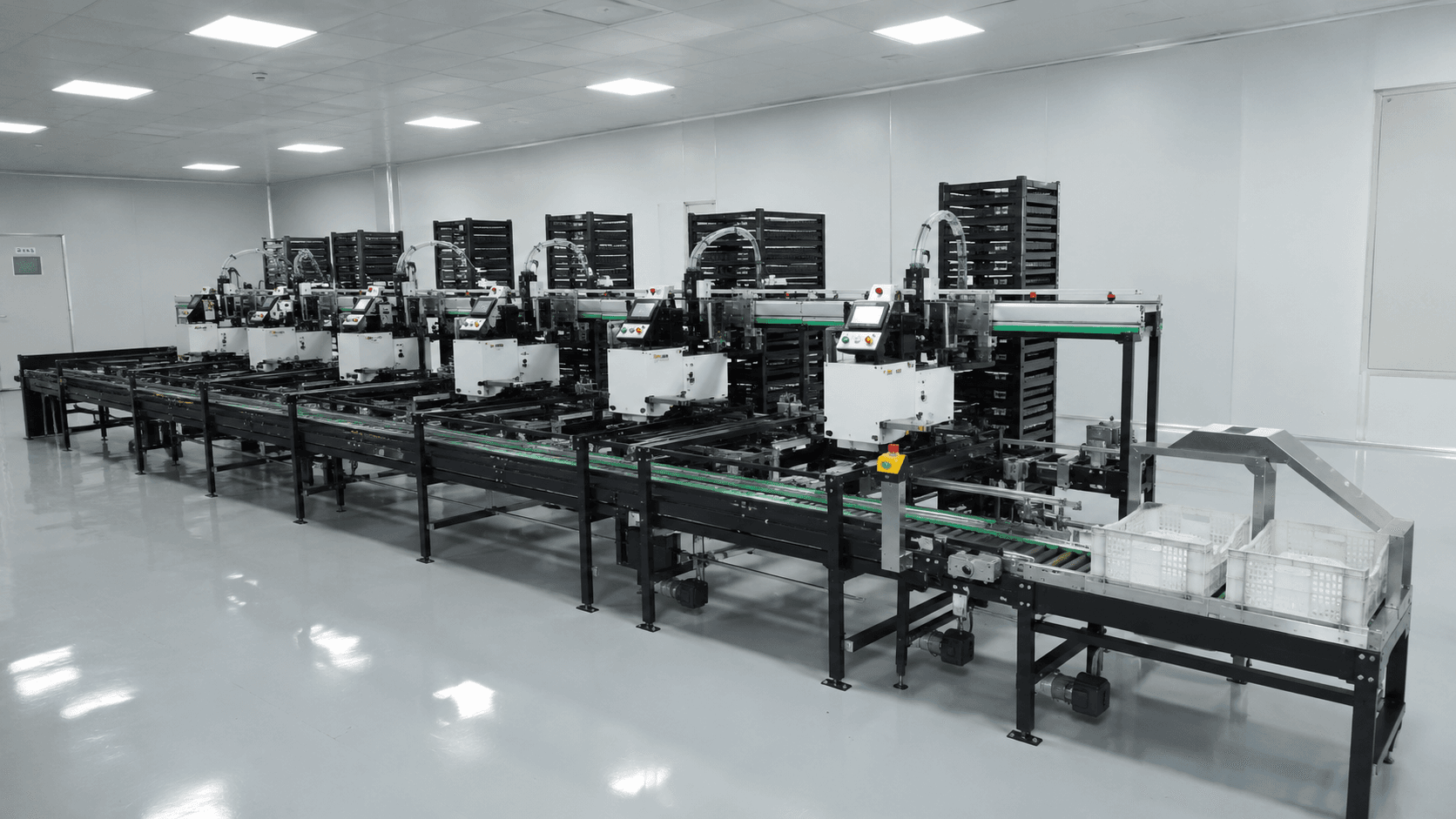
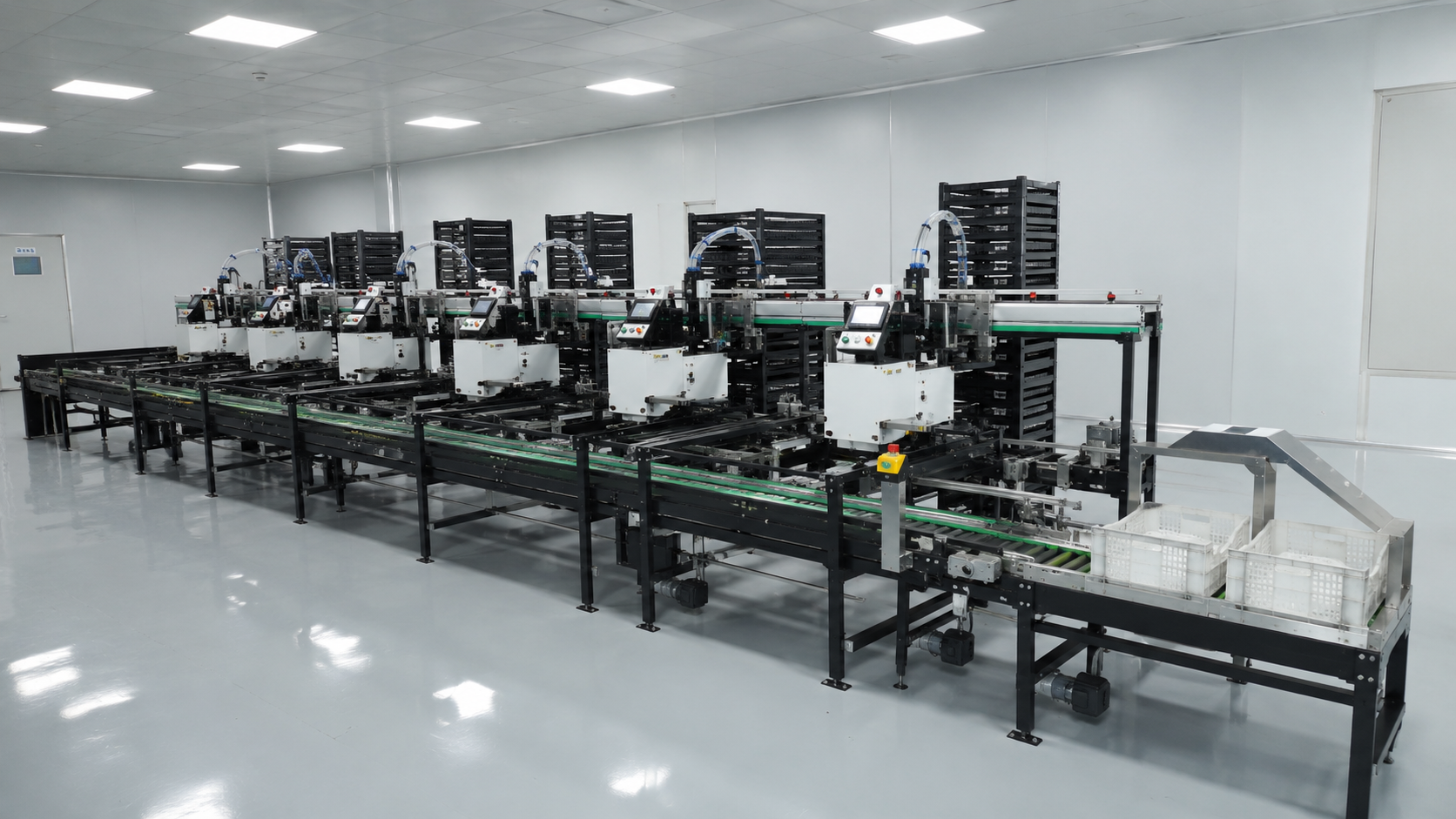
A chick processing line can increase hatchery output only when each station is planned around the next step. Buyers often focus on one machine first, but transfer, vaccination, beak treatment, conveying, stacking, and dispatch preparation must work at a compatible rhythm.
Jili provides equipment modules that can support this workflow, including the Day-Old Chick Picking and Transfer Machine, Infrared Beak Trimming and Vaccination Machine, Conveying and Stacking Line, and Complete Hatchery Automation Solutions. These pages help buyers match equipment to the actual processing path.
Output depends on line balance
A fast transfer machine will not improve the whole hatchery if the next station cannot receive chicks smoothly. The same problem can happen when vaccination, beak treatment, or conveying is planned separately. Output improves when the line is balanced around real station capacity and operator access.
A practical chick processing line should reduce waiting, reduce repeated handling, and make the work easier to inspect. It should also leave room for cleaning, maintenance, and future expansion.
What buyers should map first
- Where chicks enter the processing area.
- Which manual step creates the most delay.
- Whether vaccination, beak treatment, transfer, or conveying is the main bottleneck.
- How many operators are available for each station.
- Where shells, crates, or downstream handling connect.
- Which modules may be added in a later phase.
Line planning table
| Planning factor | Buyer question |
| Transfer | Can chicks move from baskets into the next station smoothly? |
| Vaccination | Is dose control, air pressure, and operator routine stable? |
| Beak treatment | Does the station match chick type and hourly output? |
| Conveying | Can downstream equipment receive chicks at the right rhythm? |
| Labor | Are operators positioned for inspection and cleaning? |
| Expansion | Can the first layout support future upgrades? |
How to improve RFQ quality
Buyers should send a simple workflow map before asking for a quote. This map can show where chicks arrive, which equipment is used now, where operators stand, and where the next bottleneck appears. Photos and videos are also useful because they reveal space and handling issues that a written request may miss.
A strong RFQ for a chick processing line includes daily volume, peak hourly output, chick type, layout restrictions, utility conditions, and the main production problem the buyer wants to solve.
How Jili can support module planning
Jili can help buyers compare focused modules and connected workflows. A project may begin with transfer equipment, then connect with conveying, beak treatment, or vaccination as the hatchery grows. This keeps investment tied to operational need.
How to compare proposals from suppliers
When comparing proposals, buyers should look beyond the number of machines included. A useful proposal explains how each station connects, how chicks move between stations, where operators stand, and what happens when one process slows down. This makes it easier to see whether the line can actually improve output during daily production.
Buyers can also ask how the line is installed, how operators are trained, and which spare parts are recommended for startup. These details reduce uncertainty and help the hatchery prepare for stable use after commissioning.
Questions that help Jili size the line correctly
Buyers can prepare better answers by listing how many chicks move through the room each day, which shifts are busiest, and which process creates the longest waiting time. It is also useful to share whether the hatchery wants a complete line immediately or a practical first phase. Clear answers help Jili size equipment around real demand and avoid a layout that is either too small for growth or too complex for current operation.
FAQ
What is a chick processing line?
It is a connected hatchery workflow for handling day-old chicks through transfer, treatment, vaccination, conveying, stacking, or other processing steps.
What causes a processing line bottleneck?
Bottlenecks often come from uneven transfer, slow manual handling, mismatched station capacities, or poor downstream movement.
What should buyers send before quotation?
Send chick volume, layout, current process, target capacity, photos or videos, and the main bottleneck.
Can the line be built in phases?
Yes. Many buyers solve the strongest bottleneck first and reserve room for future equipment modules.
Which Jili page supports full planning?
Buyers can review Jili Complete Hatchery Automation Solutions for broader line planning.