


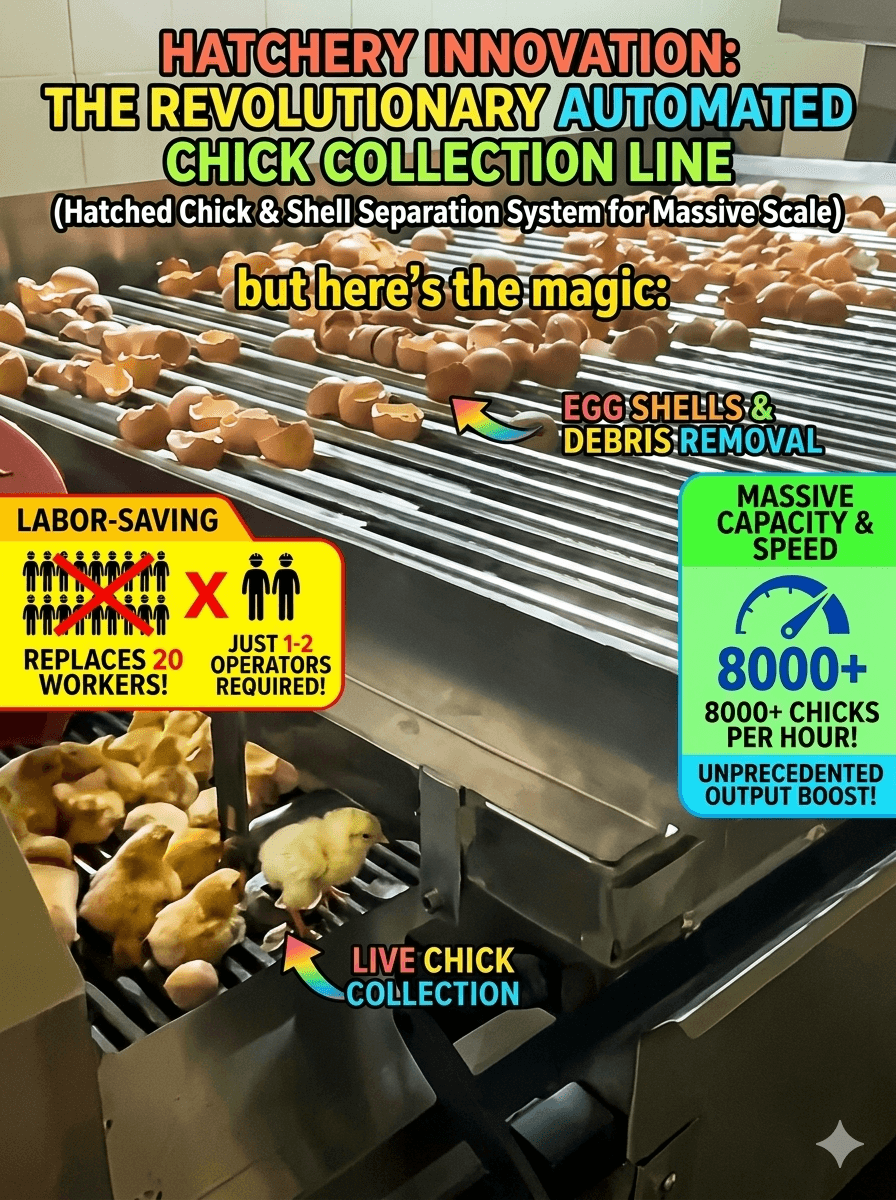
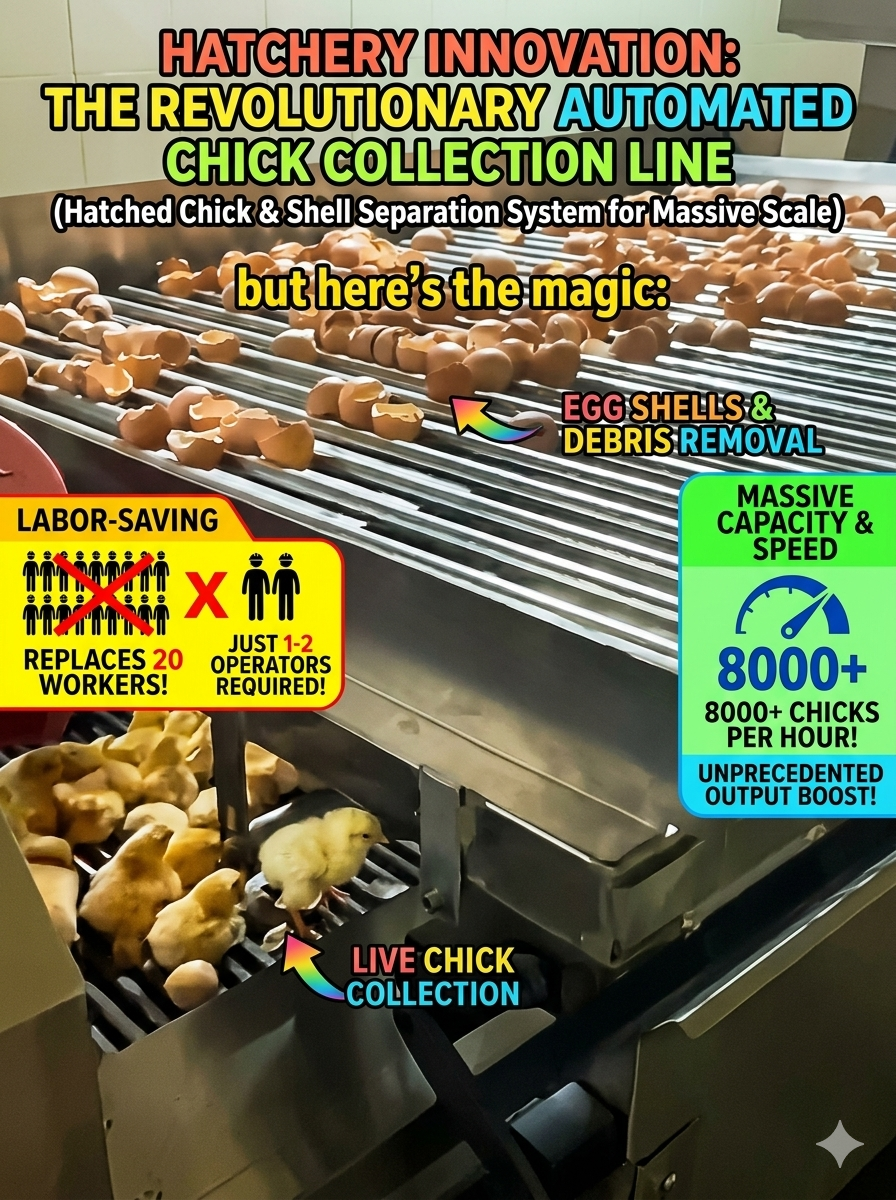
A day old chick processing line can improve hatchery output when transfer, vaccination, beak treatment, conveying, and downstream movement are planned as one workflow. If each station is selected separately, the line may still have waiting, repeated handling, or operator pressure during busy shifts.
Jili equipment modules can support different parts of this workflow, including the Day-Old Chick Picking and Transfer Machine, Infrared Beak Trimming and Vaccination Machine, Conveying and Stacking Line, and Complete Hatchery Automation Solutions. Buyers can choose modules according to their bottleneck and growth plan.
Output improves when the line is balanced
The right line is not always the line with the most machines. It is the line where each station can receive and pass chicks at a stable rhythm. If transfer is faster than vaccination, or conveying is slower than beak treatment, output can still be limited.
A practical day old chick processing line should make the chick path visible: where chicks enter, where operators inspect, where equipment connects, and where the next process begins.
What buyers should check first
- Daily chick volume and peak hourly demand.
- Current manual handling points and labor pressure.
- Whether transfer, vaccination, beak treatment, or conveying is the main bottleneck.
- Room layout, operator access, cleaning route, and utilities.
- Downstream equipment receiving capacity.
- Future expansion needs and phased project options.
Line planning table
| Process area | Buyer check |
| Transfer | Can chicks move from baskets to the next station smoothly? |
| Vaccination | Are dose control, air pressure, and operator checks stable? |
| Beak treatment | Does the station fit chick type and output? |
| Conveying | Can handoffs between stations stay organized? |
| Labor | Can operators inspect, clean, and respond without crowding? |
| Expansion | Can future modules be added without redesigning the room? |
How to prepare a useful RFQ
A useful RFQ includes layout drawings or photos, daily and peak output, chick species, current workflow, operator count, and the process that currently limits the line. If the buyer wants to start with one module and expand later, that should be clearly stated.
Jili can then recommend whether the day old chick processing line should begin with transfer, integrated treatment and vaccination, conveying, or a more complete automation plan.
How to judge proposal quality
A good proposal explains station handoffs, operator positions, cleaning access, maintenance points, and future growth. It should show how the line will work during daily production, not only which products are included.
Plan commissioning before the equipment arrives
A new day old chick processing line reaches stable output faster when commissioning is planned early. The hatchery can assign responsible people for utilities, installation access, operator training, cleaning procedures, spare parts, and acceptance checks before shipment. This prevents the project from becoming a series of last-minute decisions after the equipment reaches the site.
Acceptance should cover more than a short no-load test. Buyers can prepare a checklist for chick flow, station handoffs, emergency stops, counting, alarms, cleaning access, operator movement, and performance during a representative production batch. If the line will be expanded later, the team should also confirm that reserved connection points and floor space match the approved layout.
During the first production week, record actual hourly output, waiting time, manual interventions, cleaning time, and operator feedback. Sharing these observations with Jili helps the team adjust routines and identify whether the issue comes from settings, training, station balance, or the surrounding workflow. A structured startup process turns the equipment plan into a repeatable daily operation.
FAQ
What is a day old chick processing line?
It is a connected workflow for handling day-old chicks through transfer, vaccination, beak treatment, conveying, stacking, or related processes.
What causes output problems?
Output problems often come from mismatched station capacity, manual handling, poor handoffs, or limited operator access.
What should buyers send before quotation?
Send volume, layout, photos, chick type, current process, target capacity, and the main bottleneck.
Can the line be phased?
Yes. Buyers can start with the main bottleneck and leave space for later modules.
Which Jili page supports full line planning?
Buyers can review Jili Complete Hatchery Automation Solutions for broader project planning.