


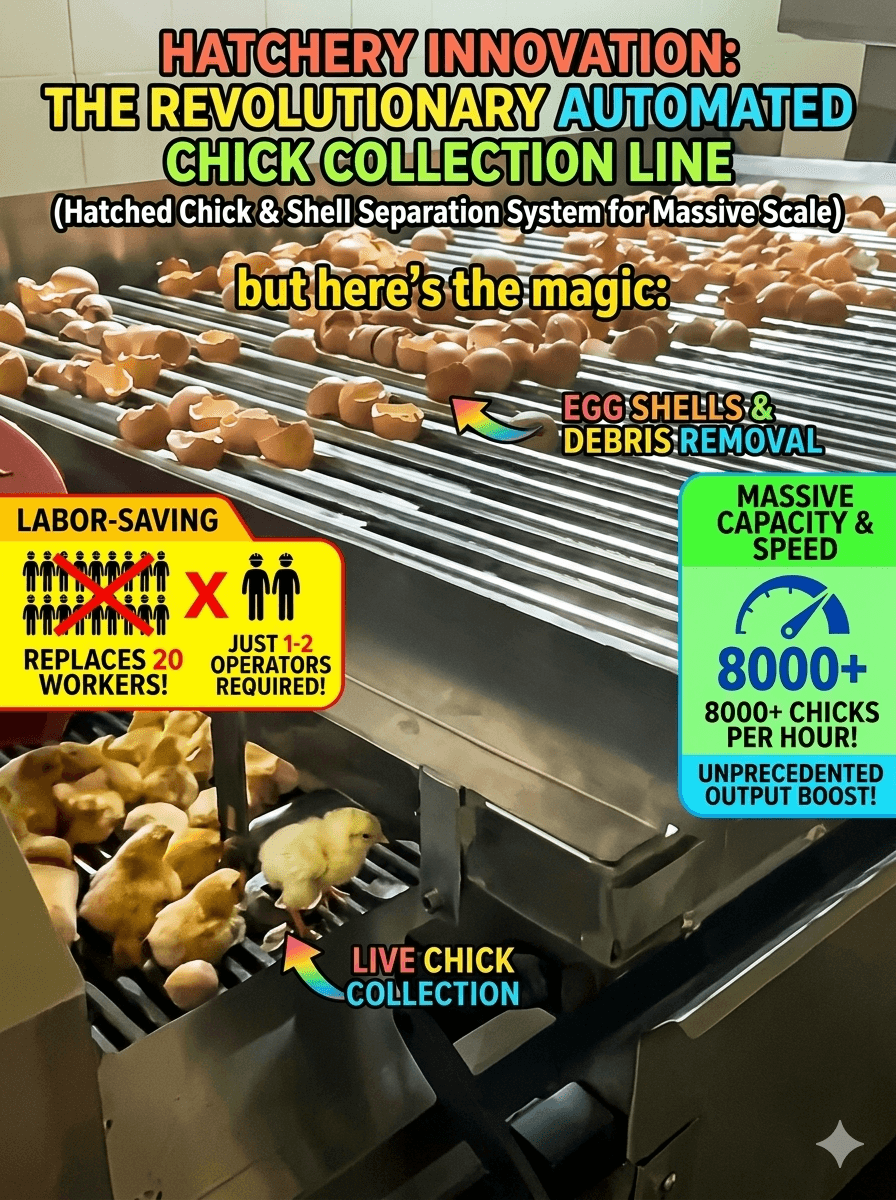
A poultry hatchery automation feasibility study should answer a practical question: is this specific project workable in this hatchery, with a scope the team can operate and support? It should not begin with a machine list and work backward to a justification. Start with the constraint, test the evidence, and allow the result to be go, reshape, stage, or stop.
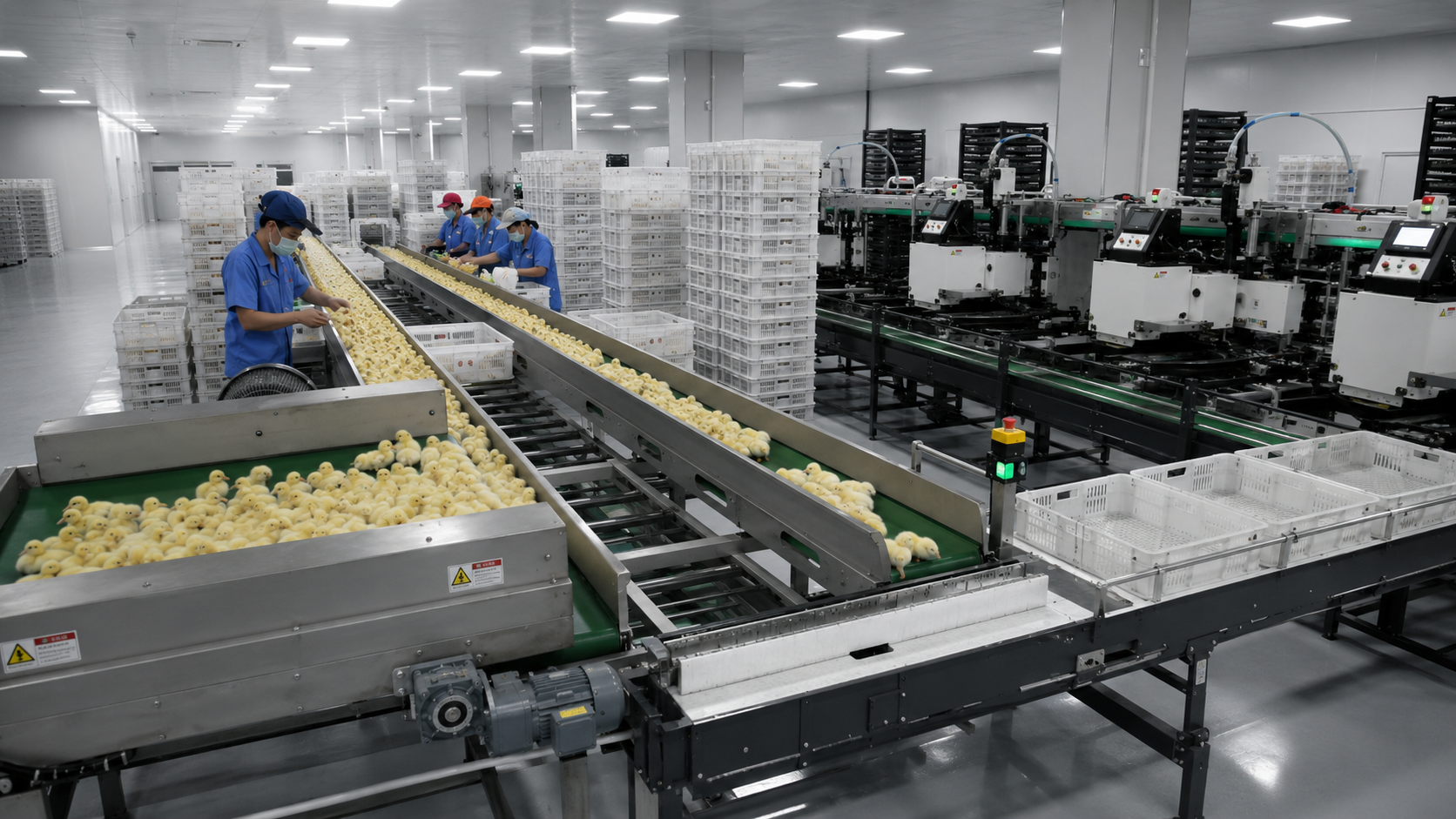
JuliSense supplies modular equipment and integrated hatchery automation solutions. The six-gate method below helps a customer decide what belongs in an initial request and what must remain an assumption until further engineering.
Gate 1: Is the Operating Problem Measurable?
Describe the current route in observable terms. Record batch pattern, operating window, staffing positions, waiting, repeated handling, stoppages, cleaning time, quality checks, reject handling, and downstream limitations. Separate symptoms from causes.
Use a week that represents real work
One unusually quiet shift can make every option look feasible. Use production records and direct observation across relevant days, products, crews, and peak conditions. Explain gaps rather than replacing them with a confident average.
Write one outcome statement
An outcome might be a more continuous transfer, reduced repeated handling at a defined point, clearer batch movement, or a route that supports planned capacity. Avoid claiming fixed labor, quality, or payback results before the operating model is tested.
Gate 2: Can the Room Support the Route?
Place the proposed functions on an as-built plan. Include heights, columns, doors, drains, traffic, cleaning access, maintenance removal, utilities, staging, and installation paths. A line that fits on a clean drawing may not fit the actual operating room.
Test the busiest hour
Map incoming loads, empty containers, processed output, rejects, consumables, people, and waste during the same period. Look for crossings and full zones. The poultry hatchery automation feasibility study should expose congestion instead of moving it downstream.
Mark facts and assumptions differently
Use separate symbols for measured dimensions, customer-provided information, supplier requirements, and unverified assumptions. Assign each critical assumption an owner and close date before final approval.
Gate 3: Can the Interfaces Be Owned?
List every boundary between new equipment, existing machines, building services, local work, controls, and operating teams. For each interface, define information required, responsible party, approval, test method, and due date.
Review more than signals
Interfaces include working height, alignment, container geometry, accumulation, guarding, operator access, utility quality, network policy, batch information, stop behavior, cleaning responsibility, and restart authority.
Simulate a refused transfer
Ask what happens when a receiving station is not ready. Trace loads already committed to movement, warnings, permitted actions, recovery, and ownership. This small exercise often reveals whether the proposed integration is mature.
ISO 12100 provides a general machinery risk-assessment and risk-reduction framework. Apply the requirements relevant to the final configuration and destination.
Gate 4: Can the Team Operate and Maintain It?
Feasibility includes people. Identify operators, supervisors, maintenance, sanitation, technical owners, and local support. Review language, shift coverage, skill levels, authorization, spare parts, documentation, and escalation routes.
Build a role map before training
State what each role must recognize, perform, record, and escalate. Training duration is less useful than demonstrated competence in normal operation, planned stops, safe isolation, cleaning tasks, common recovery, and handover.
Check the support distance
Decide which parts and skills must be available on site, which can come from local suppliers, and which require JuliSense support. Include time zones, communication route, remote access policy, travel constraints, and evidence needed before escalation.
Gate 5: Does the Investment Case Use Honest Boundaries?
Build a cost model around equipment, integration, building work, utilities, shipping, installation, testing, travel, training, startup spares, support, production interruption, and contingency. State taxes and local responsibilities separately where applicable.
Model more than one scenario
Compare the current condition with a minimum intervention, staged automation, and broader integrated route. Use the same workload and financial assumptions for every option. The poultry hatchery automation feasibility study becomes useful when decision-makers can see why an option changes.
Keep benefits traceable
Connect every projected benefit to a measured baseline, implementation action, owner, and review date. Use ranges for uncertain inputs. Avoid presenting supplier-rated speed as fixed plant output.
Gate 6: Is There a Controlled Delivery Path?
Define concept approval, detailed design, interface freeze, factory testing, site readiness, shipment, installation, commissioning, training, acceptance, and early production support. Give each gate entry evidence and a decision owner.
Consider a staged release
A hatchery may begin with one constrained process or a connected module rather than a complete line. The design should preserve sensible interfaces and space for later expansion without pretending future stages are already approved.
Define acceptance before purchase
Agree representative inputs, operating conditions, interface tests, planned interruptions, records, deviations, responsibilities, and closure evidence. Acceptance should demonstrate the agreed scope, not an undefined idea of perfection.
WOAH standards provide relevant international references for animal health and welfare. Site programs and destination requirements still need project-specific review.
Write the Decision Page Last
The final page should summarize the problem, evidence, preferred option, alternatives, critical assumptions, customer and supplier boundaries, expected benefits, cost range, schedule, major risks, and next decision. A reader should understand the recommendation without reading every appendix.
What causes a “reshape” decision?
Common reasons include an unverified peak, insufficient room, unowned interfaces, missing utilities, support gaps, installation disruption, or a business case that depends on one uncertain assumption. Reshaping early is cheaper than defending an unsuitable scope.
What should JuliSense receive?
Share the process map, normal and peak data, site plan, equipment list, containers, photos where permitted, utility information, destination, desired functions, project timing, and known constraints.
Review JuliSense complete hatchery automation solutions, the wider product range, and available services while defining options.
Stress-Test the Preferred Option
Before the recommendation goes to an investment committee, change one important assumption at a time. Test a larger peak, shorter operating window, delayed local work, reduced staffing availability, a longer imported-parts lead time, and a staged installation. Record whether the preferred option still works, needs adjustment, or becomes unattractive.
Use red, amber, and green evidence
Green means the input is confirmed and the proposed response is owned. Amber means a workable path exists but an action remains open. Red means the option cannot pass the gate without a decision or new evidence. This makes the poultry hatchery automation feasibility study easier for non-specialists to read without hiding uncertainty.
Identify a reversible first step
When uncertainty remains, define a pilot measurement, detailed survey, sample test, interface workshop, or staged module that can close the largest gap. State cost, owner, timing, success evidence, and the decision that follows. Do not call every partial purchase a pilot; the step needs a question it is designed to answer.
Include a review date because production plans, room use, prices, and supplier lead times change. A poultry hatchery automation feasibility study should be refreshed when a critical assumption moves, not carried indefinitely as if the original recommendation were permanent.
Make the Gate Decision With Evidence
A strong poultry hatchery automation feasibility study does not force every idea toward purchase. It gives the customer a controlled way to invest, stage, reshape, or stop. JuliSense can support equipment and integration discussions once the operating need and project boundary are visible.
Use the JuliSense contact page to send the project evidence. A concise, honest study creates a better basis for concept design and a more comparable proposal.