


Successful poultry hatchery automation does not begin by connecting as many machines as possible. It begins by passing four gates: stabilize the current process, measure the real bottleneck, design interfaces and exceptions, and scale only after operating evidence is available.
Each gate answers a different investment question and prevents automation from moving an unresolved problem to another part of the room.
Gate One: Is the Current Process Stable Enough to Automate?
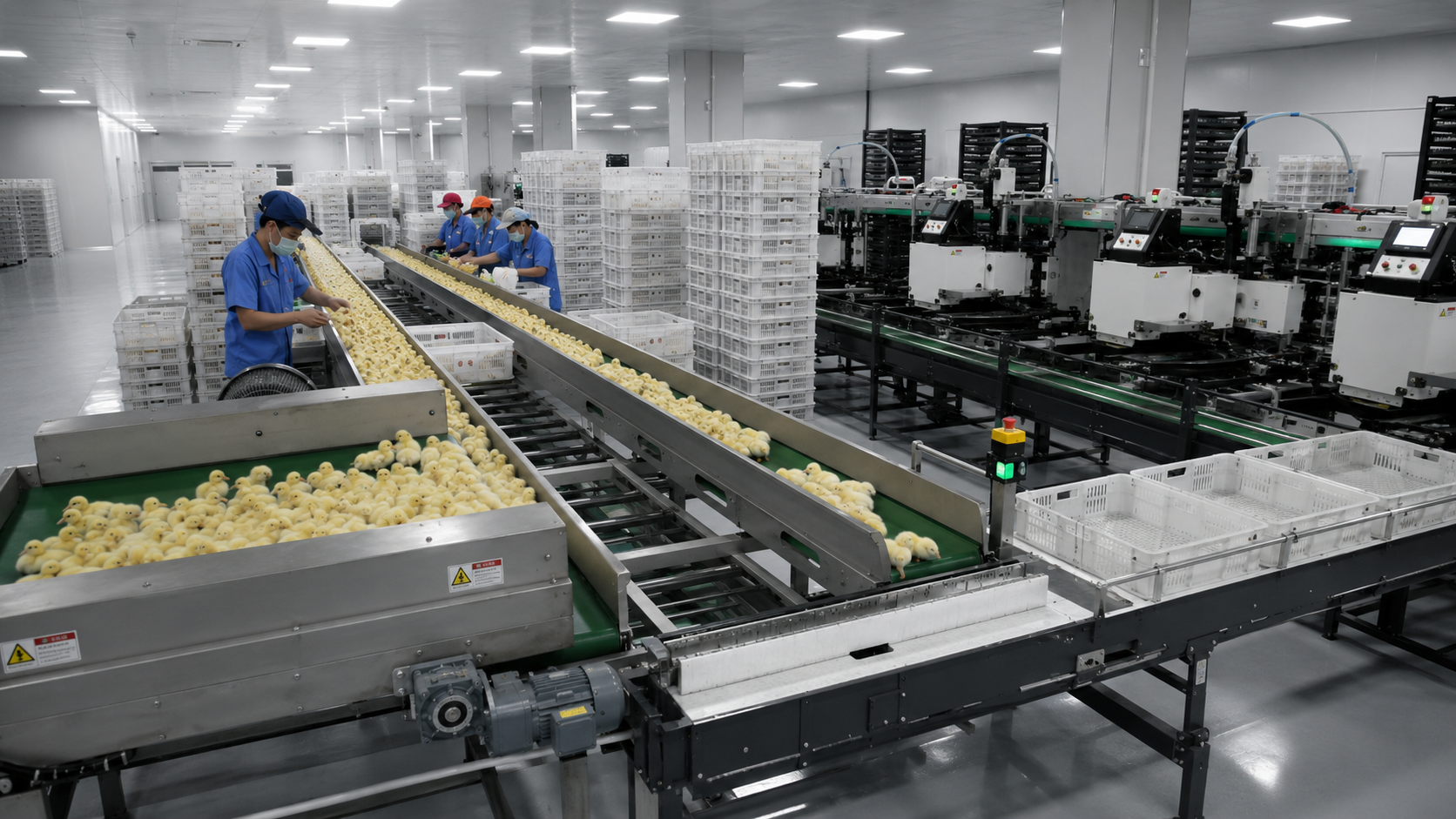
Map the route from chick transfer to approved treatment or vaccination, loading, conveying, stacking, and dispatch. Record manual touches, waiting, corrections, batch changes, cleaning, and the action taken when a station is unavailable.
Variation caused by unclear procedures, damaged containers, irregular arrivals, or missing ownership should be addressed before equipment is expected to solve it.
Some manual tasks should remain because they involve technical judgment or release. Automation is most effective when the input, sequence, responsibility, and exception rule are clear.
Gate Two: Which Bottleneck Deserves Investment First?
Measure arrivals and departures in short intervals. Hourly totals can hide waves, queues, and recovery time. Identify the first place where work waits and the first place where operators carry or correct material to protect output.
Score improvement opportunities by frequency, physical burden, variation, delay, quality risk, and effect on an expensive downstream station.
Jili Intelligent publishes equipment for day-old chick picking and transfer, infrared treatment, vaccination, conveying, and stacking. The first investment should follow the measured constraint rather than the most impressive machine.
When planning poultry hatchery automation, calculate usable output with replenishment, changeovers, planned stops, and recovery included.
Gate Three: Are Interfaces and Exception Routes Designed?
Every machine has an upstream and downstream handoff. Define physical connections, controls, status signals, accumulation, operator access, guarding, utilities, and responsibility.
Then draw the routes for a blocked downstream station, an unsuitable container, a batch change, technical review, cleaning, and maintenance. State what stops first, where material waits, who owns the decision, and how normal flow resumes.
Jili's conveying and stacking line can be reviewed as part of that interface system. Conveyor length alone does not create a recovery plan.
Factory acceptance should include at least one stop and controlled restart across an interface.
Gate Four: What Evidence Allows the Next Phase?
Define success before startup. Useful measures may include manual touches removed, queue time, restart time, changeover duration, staffing stability, recurring alarms, container exceptions, maintenance completion, and daily usable output.
Review the first weeks of production with operators, technical teams, sanitation, maintenance, and management. Confirm whether the original bottleneck improved or moved.
Only then decide the next phase. The answer may be another machine, more accumulation, a layout change, container standardization, training, or no additional automation yet.
Jili publishes complete hatchery automation solutions, allowing future modules to be discussed during the first concept. A phased plan should reserve space, utilities, controls, and interfaces without forcing premature investment.
Give Each Gate an Owner
Operations owns the real workflow and staffing evidence. Veterinary or technical teams own approved procedures and release. Engineering owns layout and interfaces. Maintenance and sanitation own access requirements. Procurement owns commercial scope. Management approves the investment boundary.
Use one gate review page with required evidence, owner, unresolved assumptions, decision, and date. A gate remains open until the missing evidence is visible and accepted.
This approach keeps the project practical. It also gives suppliers better information for a configuration-specific proposal.
Frequently Asked Questions
Must a hatchery complete all four gates before buying any equipment?
The depth depends on project size, but every project should confirm process stability, bottleneck, interfaces, exceptions, and success evidence before the scope is frozen.
Can automation be installed in phases?
Yes. Phasing can reduce risk when the layout reserves future space and the first phase includes compatible controls, utilities, and handoffs.
Does a higher rated capacity guarantee more daily output?
No. Daily output also depends on arrivals, staffing, replenishment, changeovers, stops, recovery, containers, and downstream dispatch.
Scale Only After the Evidence Opens the Gate
The right poultry hatchery automation plan turns each investment into a measured operating improvement. Stabilize, measure, design the difficult conditions, and use production evidence before expanding.
Send Jili Intelligent your workflow, batch data, layout, manual touches, bottlenecks, exceptions, utilities, and expansion goals through the contact page. Ask for a phased concept tied to the four gates.