


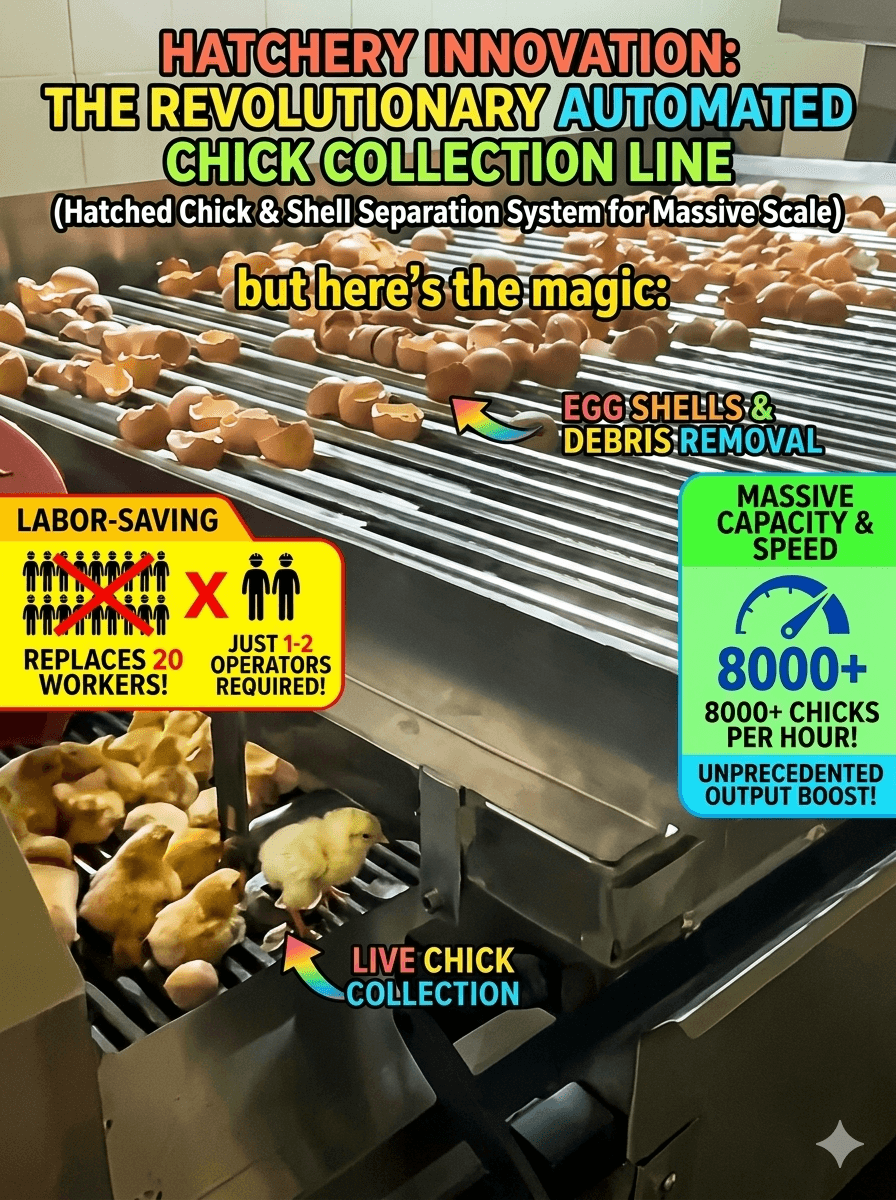
A poultry hatchery automation integrator is valuable when several machines, controls, containers, utilities, people, and operating decisions must behave as one route. The role is not proved by putting multiple products on a layout. Buyers need to see who owns each gap between them and how that ownership is tested before handover.
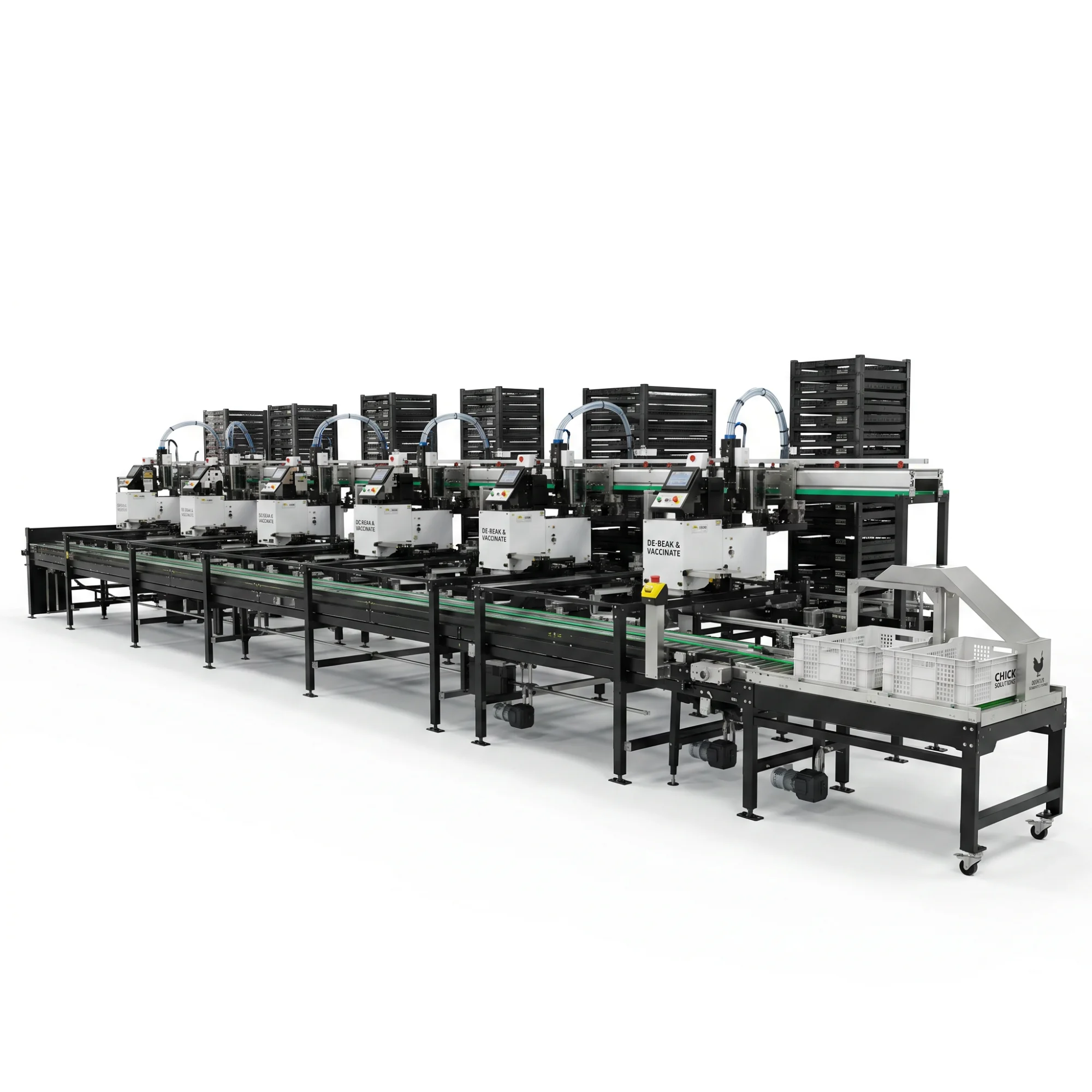
JuliSense offers equipment and integrated solutions for day-old chick handling, treatment, vaccination, conveying, stacking, washing, and related hatchery processes. The following interview helps a project team evaluate whether the proposed integration scope is complete.
Interview 1: Restate the Customer's Workflow
Ask the candidate to describe the project without reading its own quotation. A strong answer names the current process, the desired route, the operating constraints, and the information still missing.
Look for an operating story
The answer should follow work from arrival to dispatch, including batch changes, replenishment, cleaning, ordinary pauses, and downstream unavailability.
Mark assumptions in a separate register
A poultry hatchery automation integrator should not quietly convert missing customer data into fixed design decisions. Each assumption needs an owner and confirmation date.
Interview 2: Show the Scope Boundary
Ask for a line-by-line list of equipment, controls, services, documents, local work, third-party work, and exclusions. “Turnkey” is not a substitute for a scope table.
Separate standard and custom work
Identify which modules use established designs and which need project-specific layout, controls, guarding, labeling, language, documentation, or testing.
Name the final system owner
If several suppliers are involved, decide who coordinates the complete line test and who closes an issue that crosses two suppliers. The buyer should not discover this boundary during commissioning.
Interview 3: Open the Interface Schedule
The interface schedule is the working map of integration. It should cover mechanical position, containers, utilities, electrical supply, signals, data, guarding, operator access, cleaning access, and line behavior.
Use one row per handoff
For every row, record the sending zone, receiving zone, normal condition, blocked condition, owner, evidence, and approval status. A poultry hatchery automation integrator should be able to explain how the schedule is created and controlled.
Include the building
Doors, columns, floor levels, drainage, ceilings, traffic, sanitation zones, and local utility routes are interfaces too. Put them on the same project map.
Interview 4: Rehearse a Bad Day
Stable running tells only part of the story. Ask what happens when a container arrives incorrectly, a supply is late, a downstream zone is full, a sensor is unavailable, or a shift restarts after cleaning.
Follow the last committed load
Trace every load already released when the stop occurs. Decide where it waits, how it remains identified, who may intervene, and how the route restarts.
Keep authority visible
Define who may stop, reset, bypass, release, or escalate each condition. Operator messages should match the actual responsibility structure.
ISO 12100 provides a general framework for machinery risk assessment and risk reduction. Apply relevant laws and standards to the final installed system.
Interview 5: Ask What Evidence Remains
A finished project should leave more than equipment and a demonstration. Request the approved configuration, drawings, interface schedule, inspection and test records, open-item register, manuals, spare list, training records, and final acceptance evidence.
Control changes from design to handover
Each revision needs an owner, date, reason, affected documents, commercial effect, and approval. The poultry hatchery automation integrator should keep the current design package identifiable.
Close open items with proof
Give each item an impact, temporary control where needed, owner, due date, required evidence, and authorized closer. A general email saying “done” is not enough.
Interview 6: Test Training and Support
Integration problems often appear as questions that cross equipment boundaries. Confirm how support requests are logged, diagnosed, escalated, and connected to the correct specialist.
Train by role and scenario
Operators need normal flow and controlled recovery. Maintenance needs isolation, diagnostics, inspection, replacement, and escalation. Supervisors need line status and handover. Technical owners need process and release records.
Identify support information
A useful request includes site, project reference, machine or zone, operating state, event description, visible message, recent change, images or video where permitted, and actions already taken.
The JuliSense service page provides a starting point for installation, commissioning, training, and after-sales discussions. Put the project-specific boundary into the agreement.
Seven-Column Integrator Scorecard
| Area | Question | Evidence | Owner | Due date | Open risk | Decision |
|---|---|---|---|---|---|---|
| Scope | What is included and excluded? | Equipment and service list | Named | Dated | Visible | Approve/revise |
| Interfaces | Who owns every handoff? | Controlled schedule | Named | Dated | Visible | Approve/revise |
| Testing | How is failure behavior tested? | FAT/SAT plan | Named | Dated | Visible | Approve/revise |
| Documents | What remains after handover? | Document register | Named | Dated | Visible | Approve/revise |
| Support | How are cross-zone issues handled? | Escalation route | Named | Dated | Visible | Approve/revise |
Is one supplier always a better integrator?
Not automatically. A single supplier can simplify some boundaries, while a capable multi-supplier team can work well with clear ownership. Judge the evidence and control method.
When should the integrator join the project?
Before the equipment list is fixed. Early involvement allows layout, interfaces, utilities, site constraints, and acceptance plans to influence the scope.
What should buyers send JuliSense?
Share the process map, room layout, batch data, current equipment, containers, utilities, selected functions, third-party scope, destination, schedule, and service expectations.
Run a Two-Hour Interface Workshop
Before shortlisting, hold a focused workshop with operations, engineering, maintenance, technical owners, procurement, the site team, and the candidate. Use a current floor plan and one representative production scenario. The purpose is not to complete the design. It is to see whether the candidate can turn questions into controlled actions.
During the first 30 minutes, follow normal flow. Ask where work is released, identified, transferred, accumulated, processed, loaded, stacked, cleaned, or dispatched according to the proposed scope. Record each uncertain boundary without trying to solve it immediately.
During the second 30 minutes, introduce a planned downstream stop. The poultry hatchery automation integrator should trace committed loads, operator messages, buffer limits, intervention points, restart authority, and information that remains available for diagnosis. A vague promise that the line will “automatically handle it” deserves a more specific sequence.
Use the third segment for the building and customer responsibilities. Review utilities, floor and ceiling restrictions, local fabrication, delivery access, lifting, network needs, sanitation boundaries, guarding, and production shutdowns. Ask which inputs release detailed design and what happens if they arrive late.
Finish with documents and closure. The poultry hatchery automation integrator should describe the registers, drawings, approvals, test records, training evidence, open-item process, and support contacts that will remain. The workshop output should be a dated action list with owners, not an edited sales presentation.
What behavior is a strong signal?
The candidate asks precise questions, labels assumptions, resists unsupported promises, identifies cross-supplier boundaries, and explains what evidence will close each decision.
What behavior is a warning signal?
Watch for immediate model selection without process data, repeated use of “standard” without a boundary, refusal to discuss stopped flow, and documents that cannot be tied to a revision or responsible owner.
Which additional safety reference helps?
OSHA machine-guarding guidance provides general workplace information for the United States. It does not replace the destination-specific review, but it can help buyers ask practical questions about access and guarding.
Choose Visible Ownership
The right poultry hatchery automation integrator makes boundaries easier to see, not easier to ignore. JuliSense can discuss individual products and integrated routes through its products and contact pages. Before appointment, ask the poultry hatchery automation integrator to show how scope, interfaces, testing, documents, training, and support will remain controlled from design to handover.