


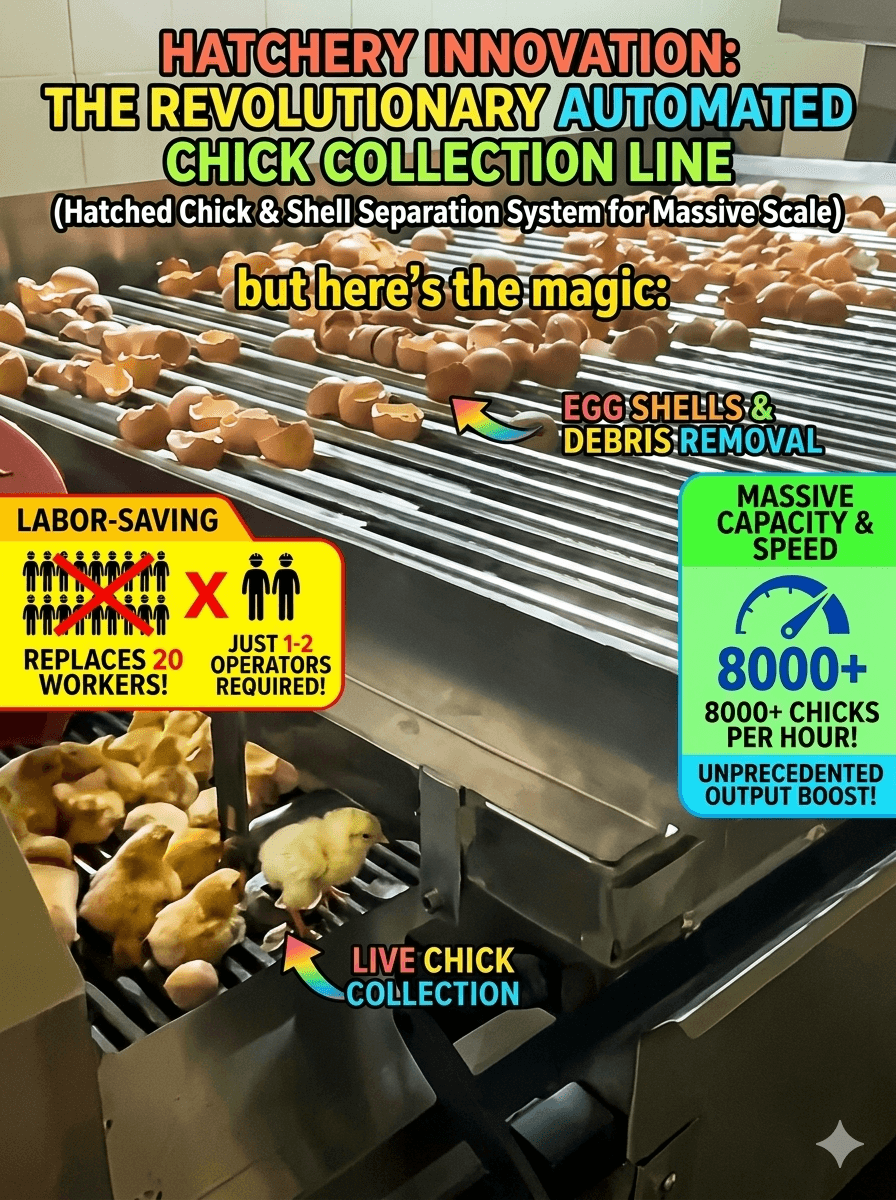
The easiest way to discuss poultry hatchery chick processing equipment is to follow the first production hour. In that hour, the project reveals how chicks arrive, how operators start, where queues form, which approved operations occur, how boxes leave, and whether the line recovers from small interruptions.
A catalogue lists machines. The first hour shows whether those machines can work together in the customer's room.
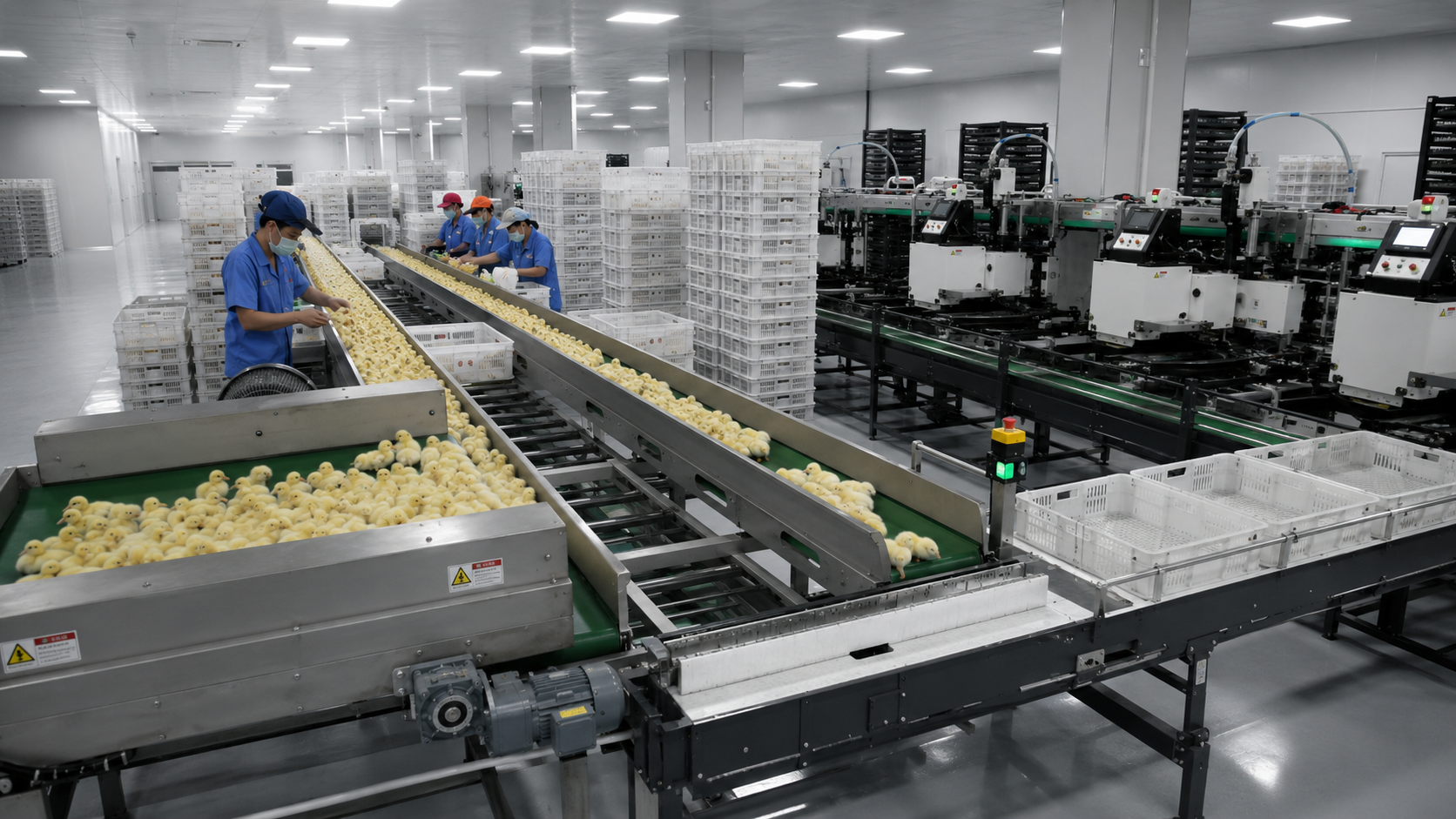
Minute 0 to 15: The Line Must Become Ready Together
Startup begins before the first chicks reach a machine. Operators confirm room status, utilities, guards, containers, supplies, batch identity, records, and downstream readiness.
If one module becomes ready much earlier than the rest, pressure builds to start before the whole route is controlled. Use a line-readiness board or shared startup status so the team can see which stage is ready, waiting, or blocked.
Jili Intelligent publishes a day-old chick picking and transfer machine. The transfer point sets the first rhythm of the processing room. Its output should match the approved downstream process rather than simply run at its highest possible speed.
During project planning, time the real startup tasks by role. The result often changes staffing and equipment sequence more than a theoretical capacity calculation does.
Minute 15 to 30: Chicks Reach the Value-Creating Stations
Once flow stabilizes, the line reaches treatment or vaccination points. The hatchery's responsible technical and veterinary teams define the approved procedures, verification, and release requirements. The equipment supplier defines the offered machine capability, controls, access, and interfaces.
Jili publishes a day-old chick infrared beak trimming machine, a day-old chick injection vaccinator, and a combined infrared treatment and vaccination machine.
The right choice depends on the approved job and the cost of repeated presentation. Combining operations may reduce handling, while separate stations may provide flexibility or fit an existing room. The first-hour map should show operator reach, supply replenishment, batch identity, waiting space, and what happens when one station pauses.
Minute 30 to 45: The Bottleneck Becomes Visible
By the middle of the hour, small rate differences begin to matter. A station may process quickly while boxes accumulate because loading, labelling, conveying, or dispatch is slower. Operators may start carrying containers around the designed route to protect output.
This is where buyers should evaluate poultry hatchery chick processing equipment as a system. Record arrivals and departures in short intervals, not only total hourly output. Note the first queue, its growth rate, the action that clears it, and the stage that must stop when accumulation is full.
Create one representative downstream-not-ready condition during acceptance. The line should enter an understandable state, maintain batch clarity, and restart without improvised handling. A system that performs only when every module is available is not ready for a real hatch day.
Minute 45 to 60: Full Boxes Must Leave Cleanly
The last part of the first hour tests loading, conveying, stacking, and dispatch. Full boxes need a stable route, visible identity, practical operator access, and a plan for damaged or incorrectly oriented containers.
Jili publishes a conveying and stacking line. Buyers should provide representative boxes or crates, dimensional variation, labels, lids, stacking pattern, dispatch method, and the route for rejected containers.
Follow the last full box of the hour. Does it wait? Who owns it? Can the next box enter? What happens if stacking or dispatch pauses? The answers reveal whether the downstream design supports the expensive processing equipment upstream.
Review the Hour Through Five Different Roles
Production sees flow and staffing. The veterinary or technical team sees approved procedures and verification. Maintenance sees access, alarms, adjustments, wear, and recovery. Sanitation sees surfaces, removal routes, cleaning access, and release. Management sees capacity, labor, schedule, risk, and return on investment.
Ask each role to mark one concern on the same hour map. Conflicting views are useful before the layout is frozen. They are expensive after installation.
Jili's complete hatchery automation solutions support a line-level discussion, but the customer still needs to define the approved process, responsibilities, and acceptance criteria.
Use the First Hour to Build the Factory Test
Turn the timeline into an acceptance script. Include startup, first arrival, stable running, replenishment, a planned pause, a downstream block, one container exception, batch or record checks, restart, and the release of the final box.
State the offered configuration, representative materials, staffing assumptions, evidence to collect, and responsibility for open items. Factory acceptance proves equipment behavior under agreed conditions. Site acceptance proves the installed line can work with the real room, utilities, operators, and surrounding systems.
Avoid a test that begins only after the line is already running smoothly. The first 15 minutes often contain the most useful project evidence.
Frequently Asked Questions
Should every hatchery buy a complete automated line?
No. The equipment scope should follow the measured bottleneck, approved process, room, staffing, containers, budget, and expansion plan. A phased project may be more suitable.
How should capacity be compared between modules?
Compare short-interval arrivals and departures, changeovers, replenishment, planned stops, recovery, staffing, and downstream limits. Nameplate capacity alone does not show line output.
What information should be sent for a concept layout?
Provide the room drawing, workflow, normal and peak batches, operating window, approved operations, containers, utilities, existing equipment, staffing, cleaning route, dispatch method, and future plans.
One Hour Can Reveal the Whole Project
Choosing poultry hatchery chick processing equipment becomes easier when the buyer follows the first hour instead of comparing isolated machines. Startup, treatment, vaccination, queues, boxes, exceptions, and dispatch belong in one operating story.
Send Jili Intelligent your first-hour workflow, batch data, room drawing, containers, utilities, staffing, and acceptance expectations through the contact page. Ask for a concept that shows both equipment and handoffs.