


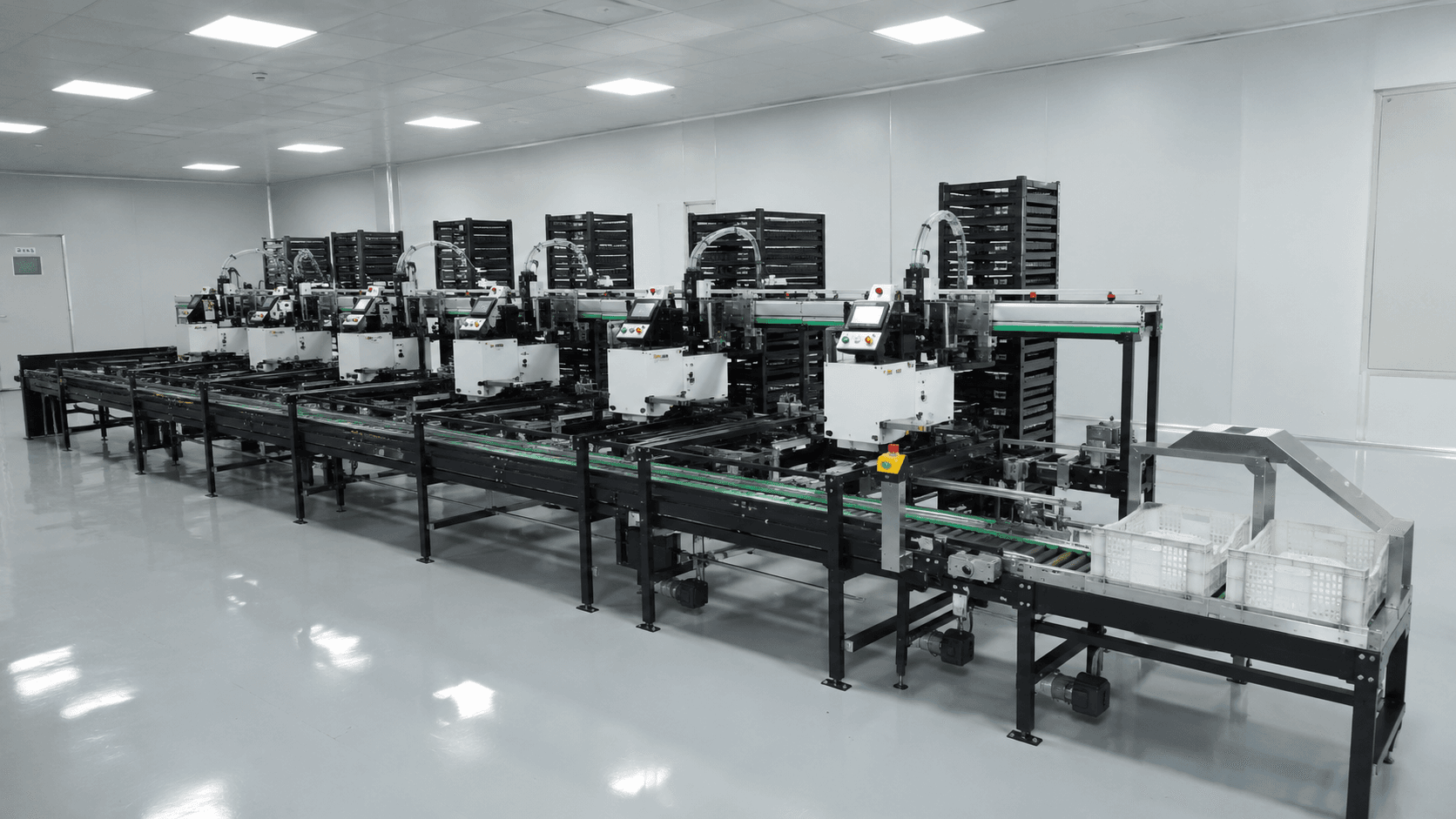
A poultry hatchery conveyor system is only as understandable as its handoffs. Give every transfer an interface door: a numbered place where upstream and downstream owners agree the item, state, signal, buffer rule, stop response, cleaning boundary, and release authority.
Seven doors are enough for a first route review. They make hidden assumptions visible before a conveyor is installed between otherwise capable machines.
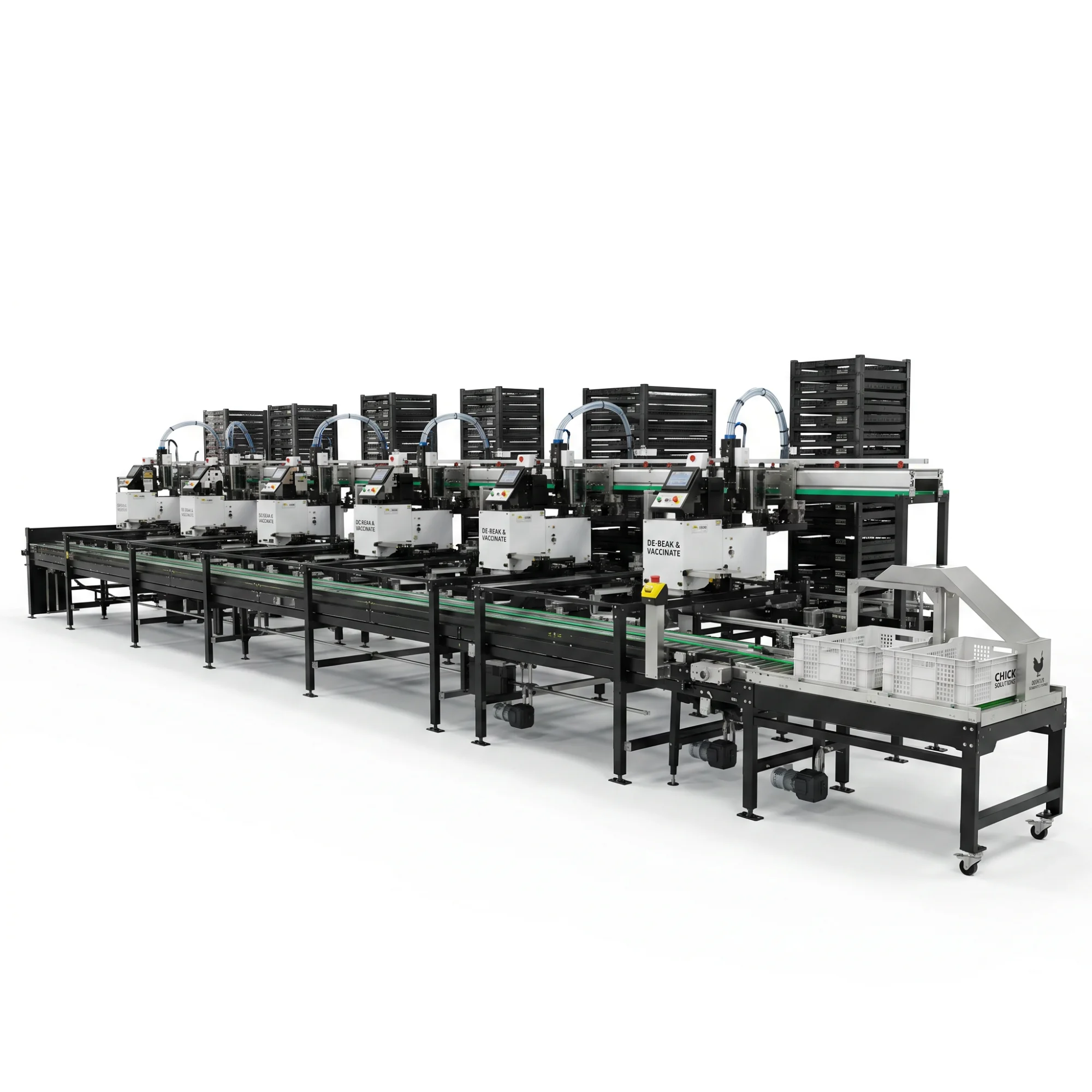
Door One: Arrival Enters the Route
Identify the item or carrier, presentation condition, expected rhythm, upstream owner, acceptance signal, and what happens when the conveyor is not ready.
Jili Intelligent presents conveying and stacking equipment through JuliSense. Final load, speed, layout, controls, interfaces, and customer conditions need project-specific confirmation.
Give the first buffer a limit
State quantity, time or operating limit, location, status, owner, and escalation. A buffer without a release rule is just a hidden queue.
Name the rejection or hold route
If an item cannot enter, record where it waits, who decides, what is protected, and how its status is shown.
Door Two: Presentation Becomes Movement
At the first powered or guided transfer, describe alignment, carrier condition, sensor or status information, speed relationship, and operator visibility.
During a poultry hatchery conveyor system review, ask what both sides believe when the same carrier pauses at the boundary.
Use one location code
The code appears on drawing, label, control, inspection, training, and maintenance records. Avoid “the first turn” when a route may later change.
Observe approved representative flow
Record load, spacing, variation, staffing, and surrounding machine state. An empty conveyor cannot prove the same interface behavior.
Door Three: Accumulation Holds a Decision
Mark the accumulation point, maximum occupancy, expected duration, signal, operator action, downstream owner, and release condition.
Separate starvation from blocking
Starvation means the interface lacks input; blocking means it cannot release output. Both require timestamps and an upstream/downstream explanation.
Keep status visible from both sides
The upstream operator should understand why transfer is withheld, while downstream personnel should understand what is waiting and what they own.
Door Four: Direction or Level Changes
Turns, lifts, merges, and level changes deserve an expanded interface envelope. Include access, carrier presentation, speed coordination, physical guides, surrounding traffic, and service positions.
For machinery risk assessment and risk reduction, ISO 12100 provides a general framework. Apply relevant laws, standards, risk assessments, and site procedures to the complete route.
Draw the open service state
The closed footprint is not enough. Mark covers, tools, removed parts, safe working space, cleaning access, and neighboring equipment.
Test the route in reverse
Ask how work is protected when the downstream side stops and how the system recovers without pulling new work into an unresolved state.
Door Five: Quality or Observation Release
Some handoffs require inspection, documentation, or a customer-approved observation before release. Identify who owns the decision, where the record is completed, and how held work is labeled.
The customer's qualified welfare or veterinary owners define applicable criteria and professional decisions. The World Organisation for Animal Health Terrestrial Code provides internationally recognized references; destination requirements and customer procedures govern actual operation.
Avoid a silent release
The conveyor can move physically while quality or animal-health ownership remains unresolved. Put the release signal and authority into the interface door.
Keep evidence attached
Link record, photograph, status, exception, and approval to the location code and route revision.
Door Six: Cleaning and Maintenance Access
Sanitation and maintenance need their own boundary. Mark cleaning route, waste removal, inspection, tool access, isolation under site procedure, reassembly, guarding, and return-to-service checks.
JuliSense describes commissioning, training, and after-sales support on its service page. The project scope should state the actual maintenance information, parts, training, service response, and exclusions.
Walk the route with a cart
Use the representative cleaning and maintenance equipment. Note crossings, blocked doors, stored items, and communication points.
Name the release checker
After work, identify who confirms parts, cleanliness, guards, status, area clearance, records, and readiness before movement.
Door Seven: Final Dispatch
The last door connects conveyor release to stacking, loading, documentation, customer destination, or another system. Include the physical and information handoff.
Measure the last queue
Dispatch can become the true constraint after the powered route looks stable. Define staging limits, status, owner, loading sequence, and exception handling.
Close the route with evidence
A final release record should show what moved, under which conditions, who accepted it, what remains open, and how support is requested.
Put Seven Interface Doors on One Route Sheet
| Door | Must be explicit |
|---|---|
| Arrival | Input, owner, acceptance, first buffer |
| Presentation | Alignment, signal, visibility |
| Accumulation | Limit, status, release |
| Direction change | Access, load, recovery |
| Quality release | Criteria, record, authority |
| Cleaning/service | Access, control, reassembly |
| Dispatch | Staging, documents, final owner |
Review doors with both owners present
The upstream and downstream owners should explain normal flow and one approved interruption. Do not accept a door because only one side understands it.
Keep the door card versioned
When layout, controls, staffing, buffer, equipment, or procedure changes, update the location card and linked drawing together.
Buyer Questions About Conveyor Interfaces
Can a conveyor speed prove a good interface?
No. Interface quality also depends on presentation, signals, buffers, people, status, cleaning, recovery, and final release.
What should a customer send JuliSense?
Share floor plan, carrier details, expected flow, existing equipment, interface signals, buffer rules, staffing, cleaning method, and acceptance evidence through the JuliSense contact page.
Who should attend the route review?
Include production, engineering, maintenance, quality, safety, sanitation where relevant, and owners of adjacent equipment.
What is the value of interface doors?
They turn vague boundaries into named places with observable states, owners, limits, and recovery actions.
Run a Door-to-Door Walkthrough
Start at arrival and stop at every numbered door. At each one, the upstream owner states what is being sent, the downstream owner states what can be accepted, and the supervisor states what happens when acceptance is unavailable.
Record one ordinary exception
Choose a safe, approved scenario such as missing ready status, controlled buffer limit, or a planned pause. Freeze current work and record the signal, people, protected state, permitted check, and restart authority.
Do not let the route skip cleaning
After the production walkthrough, repeat the doors with sanitation and maintenance. Mark access, tools, removed items, waste route, inspection, reassembly, and return-to-service release.
Use Door Cards at Handover
Each shift should inherit the current state of every door that matters. A short controlled handover states location, item, status, buffer, open issue, temporary control, owner, and next decision.
Test the late-shift version
Ask whether the same state is understandable when the project team and specialist supplier personnel are no longer present. Poultry hatchery conveyor system support should not depend on one person's memory.
Link cards to evidence
Use the route code on drawings, records, photographs, training, maintenance requests, and open-item closure. This lets a later reader reconstruct what happened.
Include Interfaces in Commercial Scope
When a door requires customer controls, building work, local guarding, sensors, furniture, staffing, or another supplier, put that responsibility in the scope. An interface left outside the quotation is still part of the installation.
Ask for the closure proof
For each door, define whether closure needs a drawing, signal check, representative run, recovery record, inspection, training teach-back, or customer approval.
Seven Doors Make the Route Negotiable
A poultry hatchery conveyor system becomes easier to purchase, commission, and support when every handoff has a visible interface door. JuliSense can organize equipment and service discussions around those doors while the customer retains control of site procedures, welfare decisions, and final acceptance.
What does a door look like in a project file?
It can be a location-coded card linked to the layout, interface description, signal list, buffer rule, cleaning boundary, recovery record, training note, and closure evidence. The card gives the poultry hatchery conveyor system a shared language across shifts and suppliers.
When should door cards be reviewed?
Review them during concept design, after interface drawings, during commissioning, after a controlled change, and at handover. A door that changes without a revised record becomes a hidden assumption again.
That review also helps the customer decide whether the poultry hatchery conveyor system needs a layout change, clearer signal, buffer rule, training update, or a different support arrangement.