


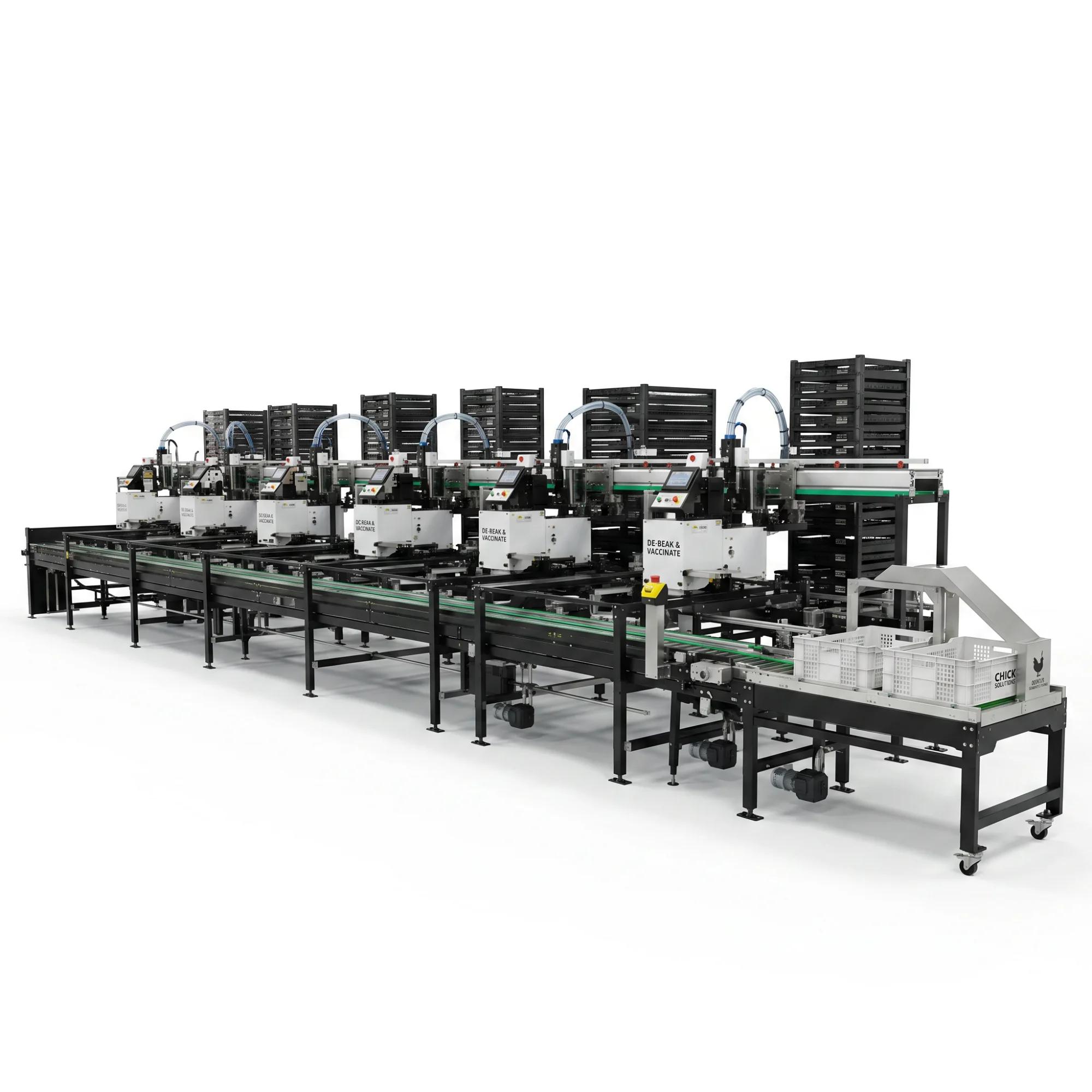
A poultry hatchery conveyor system looks simple during continuous production. The real design becomes visible when a downstream station stops, containers continue arriving, operators need access, and the line must restart without losing batch identity or creating another blockage.
This Jili Intelligent guide follows one stoppage from the first signal to stable recovery. The timeline gives buyers a better design review than conveyor length and nominal speed alone.
Second 0: The Downstream Station Becomes Unavailable
Define how the condition is detected. The signal may come from the downstream machine, a container sensor, an operator control, or a line-level interlock.
The design should state which conveyor section stops first and whether upstream stations receive a warning, slow request, or stop request. A single emergency reaction for every condition may create unnecessary disruption.
Record the machine states needed for diagnosis. Operators should be able to identify the unavailable station and the affected zone without searching across unrelated controls.
Seconds 1-10: Material Already in Motion Needs a Destination
Count the containers between the last controllable release point and the blockage. Decide whether they can stop in place, enter an accumulation zone, move to a bypass, or require an operator-controlled removal route.
Spacing, container variation, guides, sensors, transfer points, and incline changes can affect how safely the line holds work. Test representative containers rather than assuming every box or crate behaves identically.
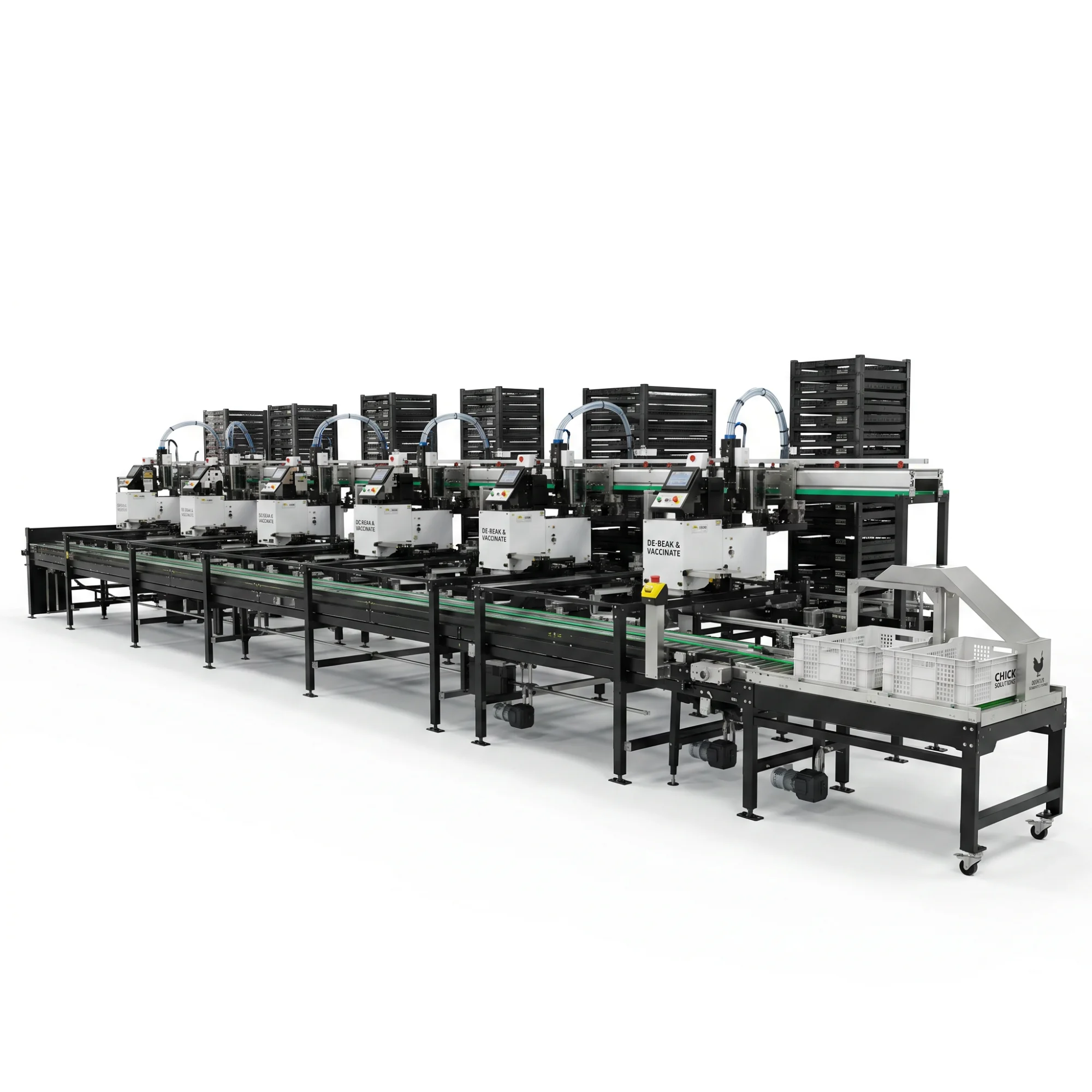
Jili Intelligent publishes a conveying and stacking line for day-old chick processing systems. Buyers should review it as part of a connected route with defined upstream and downstream responsibilities.
Seconds 10-60: Operators Need a Safe, Clear Response
The operator must know whether to wait, clear an agreed zone, redirect work, stop an upstream release, or call maintenance. Place controls where the person can see the affected area and act without entering an unsafe space.
Define who owns the decision. Operations may control routine flow recovery, while maintenance handles equipment faults and technical teams protect batch or release requirements.
When specifying a poultry hatchery conveyor system, include access for clearing, inspection, sanitation, and maintenance. Guarding should support safe work rather than forcing improvised access.
Minute 1 and Beyond: The Queue Changes the Rest of the Room
A long stop can affect chick handling, approved treatment or vaccination, loading, counting, stacking, dispatch, staffing, and record completion. The response plan should show when upstream work pauses and where batch identity remains visible.
Ask how the system handles a full accumulation zone. A design is incomplete if it works only until every available conveyor position is occupied.
The room layout should show escape paths, operator routes, maintenance access, and temporary material locations. These spaces need ownership and cleaning rules.
Restart: Release One Zone at a Time
Before restart, confirm the fault is cleared, people and tools are outside guarded areas, containers are aligned, downstream capacity is available, and batch status is understood.
Use a controlled sequence. Release the downstream zone, then the next upstream zone, and observe transfer points before returning to normal speed. Avoid sending the entire accumulated queue forward at once.
Record restart time, manual interventions, recurring sensor conditions, container issues, and any batch corrections. This evidence can show whether the problem belongs to equipment, interfaces, containers, procedures, or training.
Put the Stop Into Factory and Site Acceptance
Factory acceptance should include a representative downstream stop, accumulation response, alarm identification, operator action, controlled restart, and document review. Site acceptance should repeat the scenario with actual room interfaces and agreed containers.
Jili's quality-control process can support an evidence discussion. The project acceptance plan should still define the exact scenarios, criteria, responsibilities, and open-item closure.
Frequently Asked Questions
How much accumulation does a hatchery conveyor need?
It depends on arrival waves, downstream recovery time, container spacing, batch rules, room space, and the cost of stopping upstream stations. Measure the actual process before deciding.
Should every downstream fault stop the complete line?
Not necessarily. The control response should match the condition, available accumulation, safety requirements, and product or batch rules.
What should buyers test besides normal conveyor running?
Test container variation, sensors, transfers, blocked discharge, accumulation, operator access, alarms, manual recovery, sanitation access, maintenance access, and controlled restart.
A Good Conveyor Design Explains the Difficult Minute
The right poultry hatchery conveyor system does more than move containers during normal production. It gives operators time, space, information, and a controlled route back to stable flow.
Send Jili Intelligent your layout, containers, batch pattern, upstream and downstream equipment, stop history, staffing, and recovery expectations through the contact page. Ask for the stop sequence to be included in the system review.