


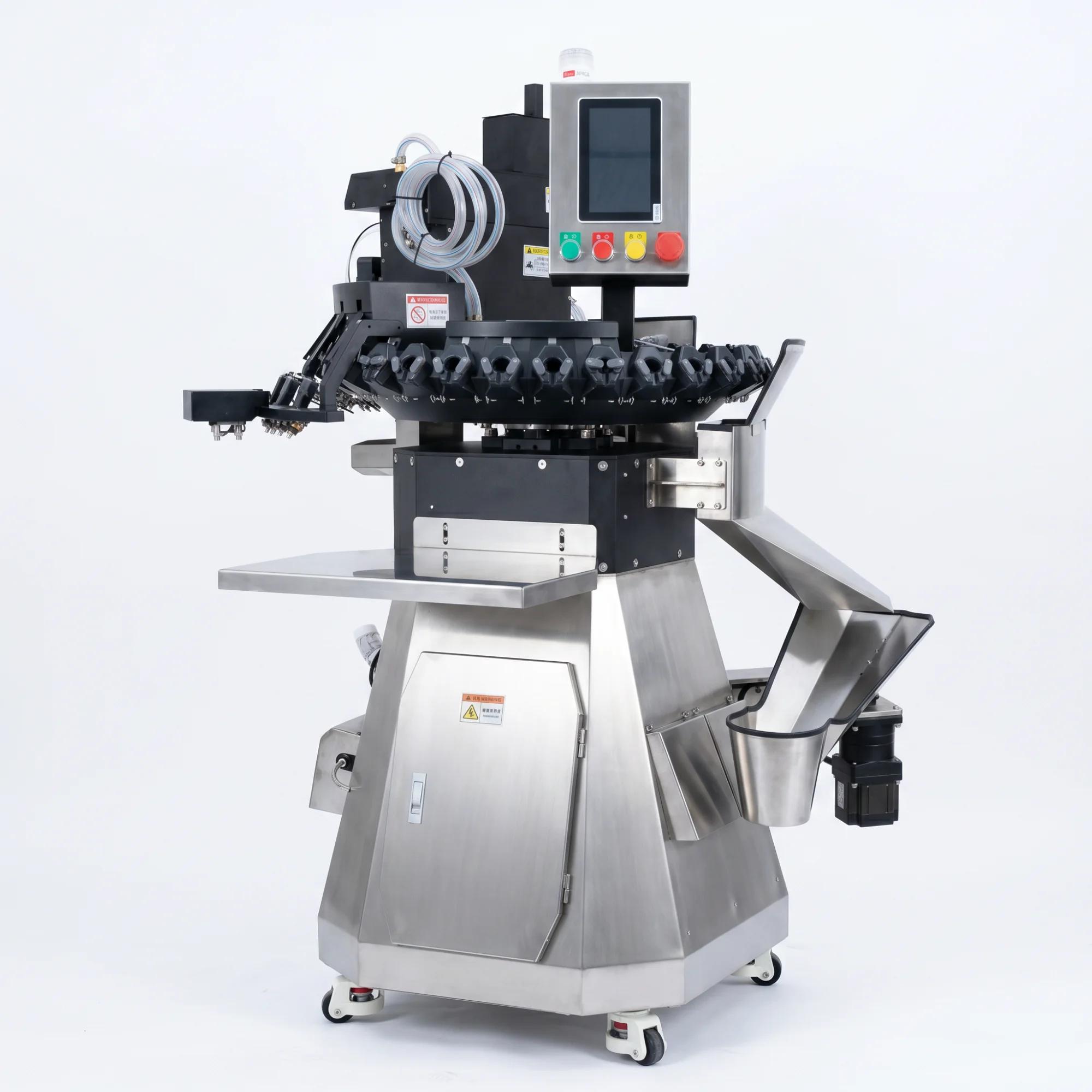
A manufacturer can answer every procurement question and still deliver a poor operating fit. That happens when the purchase order is reviewed only as a list of machines. A poultry hatchery equipment manufacturer should be evaluated by the people who will run, connect, clean, maintain, and commercially accept the line.
The useful short list is not created by one score. It is created when five teams can explain why the same proposal works from their point of view.
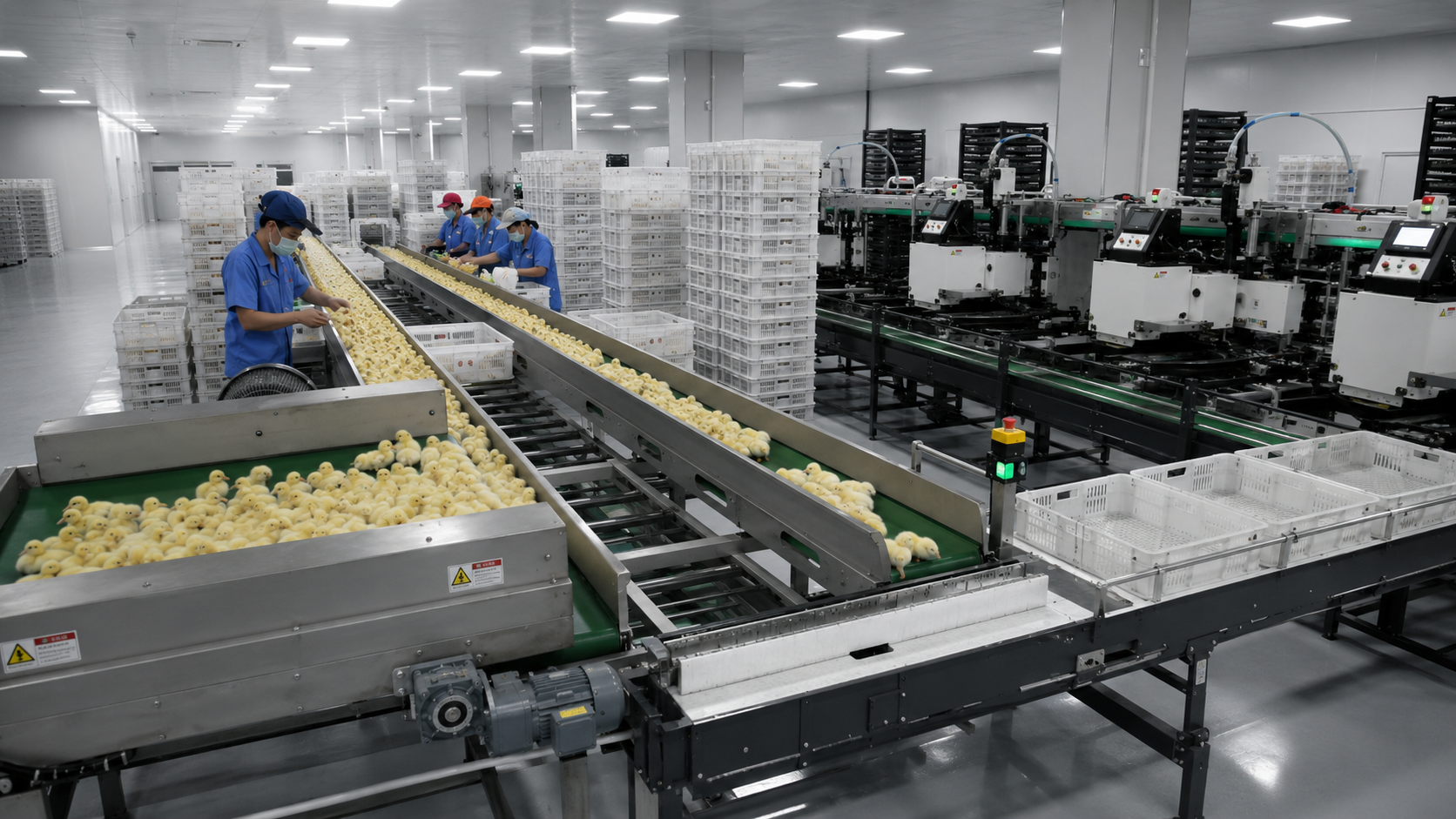
Production Signs Off on the Workday
Production should begin with the busiest hour, not the catalogue capacity. Share batch arrival patterns, required operations, staffing, operating window, crate flow, planned stops, and common interruptions.
Ask the manufacturer to walk through startup, normal flow, replenishment, a downstream pause, restart, and end-of-batch clearance. The goal is to see whether the proposed modules behave as one process. A fast treatment station does not improve shift output if chick transfer is uneven or full boxes cannot leave.
Production should sign only when the capacity assumptions resemble the real hatchery day and the recovery sequence is understandable to supervisors.
Engineering Signs Off on Every Interface
Engineering needs more than an overall layout. Mechanical heights, footprints, access, utilities, drainage where relevant, electrical loads, controls, signals, guarding, emergency-stop coordination, and connection to existing equipment must be visible.
The manufacturer should mark the project boundary. If customer equipment sends chicks, trays, boxes, or control signals into the supplied line, the interface needs an owner and an acceptance method. "Easy to connect" is not an engineering specification.
Future expansion belongs here too. A hatchery may buy one module now but plan parallel capacity later. The first project should not block sensible access, controls, or flow for the next phase.
Sanitation Signs Off on the Time Between Batches
Compact equipment can look efficient while running and become difficult when the room must be cleared and cleaned. Sanitation should review lower access, covers, guides, removed parts, water and debris management, protected components, floor access, reassembly, and release.
The supplier demonstrates how the delivered equipment is accessed. The hatchery confirms compatibility with its approved sanitation program. Neither side should assume that a short active wash time equals the complete downtime from final production to approved restart.
If sanitation cannot explain the sequence before installation, the layout is not finished.
Maintenance Signs Off on Recovery, Not Just Spare Parts
A spare-parts list matters, but maintenance also needs diagnostic access. What does the operator see when a fault occurs? Which recovery belongs to production, which requires maintenance, and which requires supplier support? Can the affected zone be identified without stopping unrelated areas?
Ask for the alarm philosophy, routine inspection points, lubrication or replacement schedule where applicable, electrical and mechanical documents, recommended initial spares, and the support escalation path. During factory acceptance, include a controlled fault and restart rather than watching only continuous operation.
Maintenance should sign when the team can imagine the first ordinary failure and knows what evidence will help resolve it.
Procurement Signs Off on Responsibility
Procurement brings the five views into one commercial document. The proposal should identify models, quantities, options, line components, software or controls, factory test, packing, trade term, site preparation, installation, commissioning, training, documents, spares, warranty terms, and exclusions.
At this stage, the poultry hatchery equipment manufacturer should be able to connect each commercial line item with an owner, deliverable, test, or explicit exclusion.
| Sign-off owner | Decision it must protect | Evidence expected before order |
|---|---|---|
| Production | Stable workday and recoverable flow | Batch-based sequence and capacity assumptions |
| Engineering | Complete, buildable interfaces | Marked layout, utilities, signals, and boundary |
| Sanitation | Timely cleaning and release | Access review and agreed cleaning demonstration |
| Maintenance | Diagnosable stops and practical service | Alarm, document, spare, and escalation plan |
| Procurement | Comparable scope and accountable delivery | Itemized proposal, tests, responsibilities, exclusions |
Price comparison becomes meaningful only after these responsibilities match. A cheaper quotation may simply move installation, integration, testing, or startup work back to the customer without saying so clearly.
The Manufacturer Does Not Need to Make Every Machine
A multi-module manufacturer can reduce interface risk when treatment, vaccination, transfer, conveying, and stacking must operate together. A specialist may be a better fit for a narrow replacement when the existing line is stable and the interface is already understood.
The buyer should judge the project, not reward the longest product catalogue. Ask which modules the manufacturer designs and produces, which items are sourced, who integrates them, and who remains responsible during testing and support.
Where Jili Intelligent Fits
Jili Intelligent states that it develops poultry hatchery automation equipment and technical solutions, with research and development in Shenzhen and a manufacturing unit in Huizhou. Its published range includes day-old chick beak treatment, injection and spray vaccination, picking and transfer, conveying and stacking, crate washing, and complete hatchery automation solutions.
This range suits projects where several day-old chick processing interfaces need one line-level discussion. A customer replacing one station can also request a focused scope. The company should still be evaluated against the five sign-offs and the specific evidence agreed for the project.
Frequently Asked Questions
Should we choose a manufacturer or a trading company?
Choose based on verified responsibility, technical capability, product scope, testing, integration, documentation, and support. The label alone does not prove project fit.
What is the most important factory visit question?
Ask the team to trace your proposed configuration from design and assembly through testing, shipment, installation, and support. The answer should connect people, documents, and equipment.
What belongs in the first manufacturer inquiry?
Send the process map, batch data, required operations, layout, existing machines, crates or trays, utilities, cleaning constraints, destination, schedule, future plan, and expected service boundary.
Let Five Teams Approve the Same Project
A poultry hatchery equipment manufacturer is ready for the order when production, engineering, sanitation, maintenance, and procurement can all recognize their responsibilities in the same proposal.
Send Jili Intelligent your process map, peak data, layout, existing equipment, utility information, cleaning requirements, and required project scope through the contact page. Ask for a line-level proposal that each of the five teams can review before approval.