


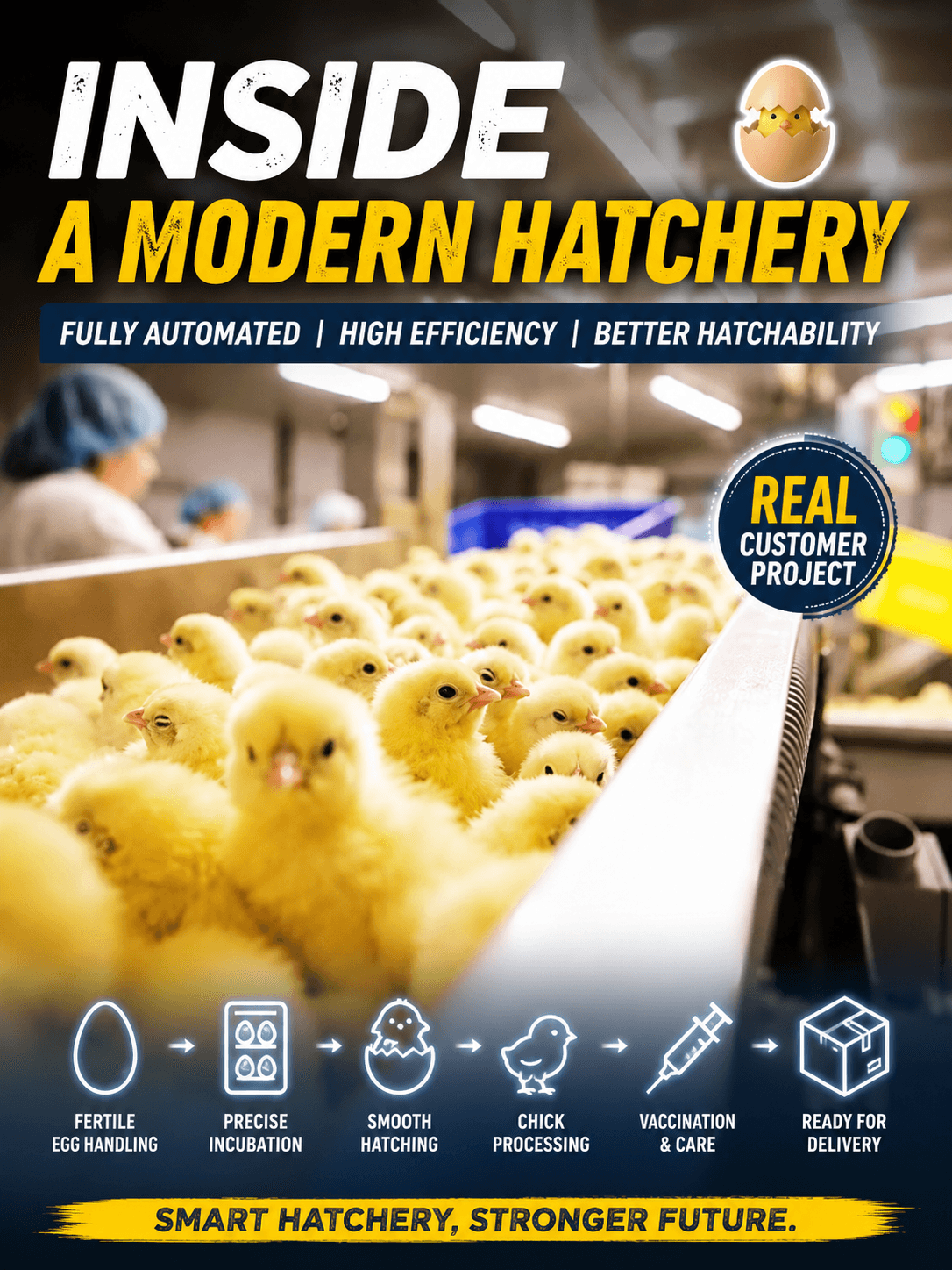
A poultry hatchery machine list can describe what a project may contain, but it cannot explain how the hatchery will operate. It does not show what happens when containers arrive late, one station pauses, cleaning takes longer than expected, a batch changes, an operator calls for help, or the downstream area is unavailable.
Those exceptions are not side issues. They reveal whether the proposed equipment is a connected operating concept or a collection of purchases. A useful automation plan starts with the difficult moments and then decides which machines, interfaces, controls, and services are needed.
Scenario One: The First Container Is Late
The line is ready, people are waiting, and the expected container has not arrived. What should remain running? Where can work wait? Who communicates the delay? Does the operator leave the station to investigate?
This simple scenario exposes the relationship between incoming logistics and the equipment plan. It may show a need for staging space, clearer visual status, a defined waiting rule, or a different container route.
Jili Intelligent presents integrated hatchery automation capabilities through the JuliSense product portfolio. The equipment list should follow a process map that reflects the customer's room, batches, containers, staffing, and approved operating rules.
Scenario Two: One Station Stops but the Others Can Continue
An automation drawing often shows arrows moving in one direction. Real production needs decisions. Can upstream work pause without creating congestion? Can another activity continue independently? Where is the boundary between a local stop and a line stop?
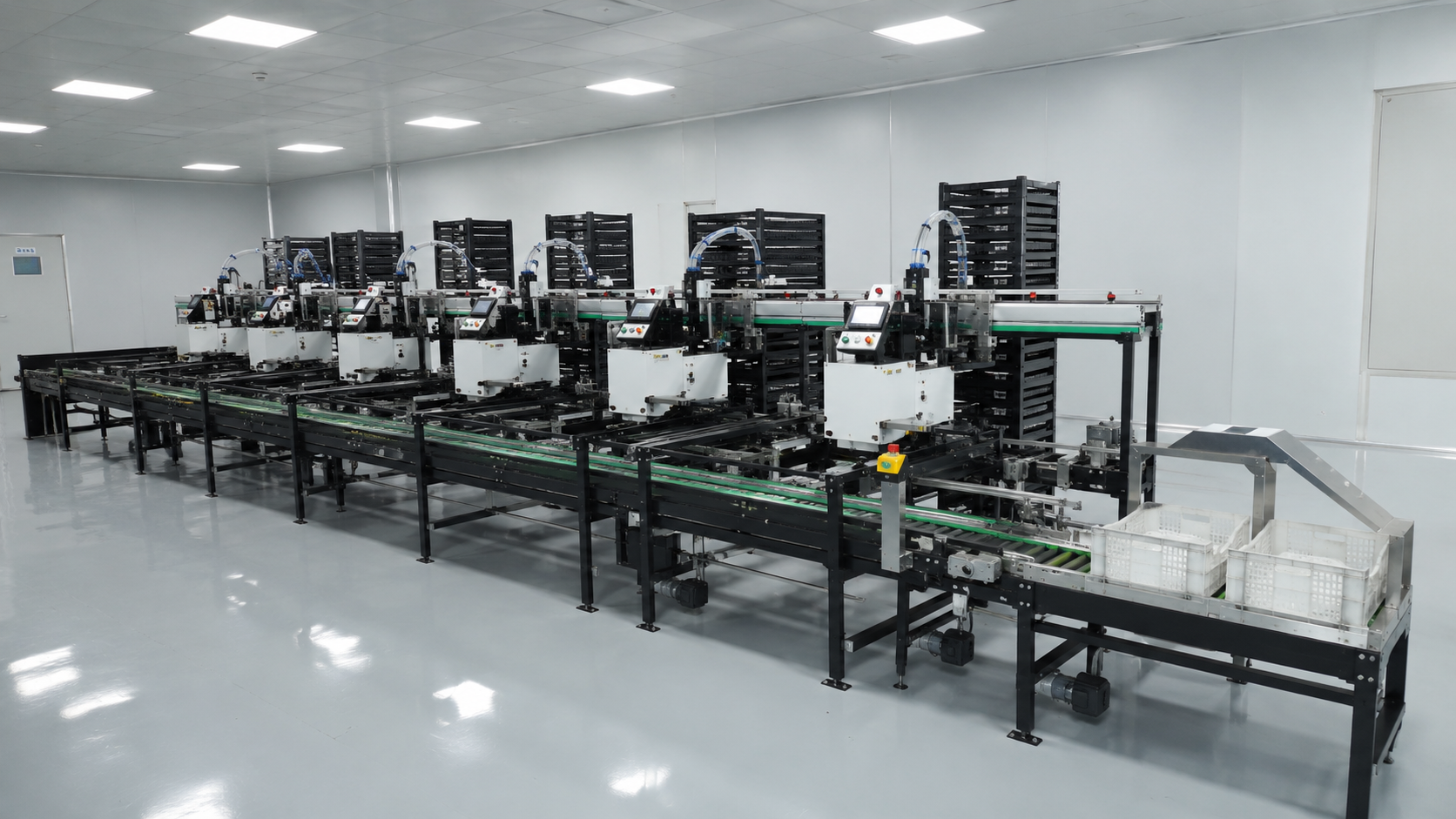
Place each proposed poultry hatchery machine on a stop matrix. For every station, record what sends work into it, what receives work from it, what happens during a pause, who is informed, and what must be checked before restart.
This exercise avoids vague promises that equipment is "integrated." Integration should be described through signals, physical handoffs, operating responsibility, and recovery behavior.
Scenario Three: The Batch Pattern Changes at Midday
The buyer should explain how batch sizes, timing, destinations, or container requirements vary. Then ask how the proposed system handles the change without relying on undocumented operator memory.
The answer may involve program selection, physical changeover, labels, container staging, line clearance, records, or supervisor authorization. Confirm which functions are available in the selected configuration and which remain in the customer's procedures or information systems.
For machinery risk discussions, ISO 12100 provides a general framework for risk assessment and risk reduction. The final project must also follow the applicable requirements at the destination.
Scenario Four: Cleaning Needs More Space Than Production
During operation, a station may fit comfortably. During cleaning, guards open, parts are removed, tools enter the area, wet work expands, and inspection needs clear sight lines. A surrounding conveyor or wall can turn a reasonable machine into a difficult sanitation task.
Ask sanitation to review the plan before layout freeze. Mark removal directions, temporary part locations, access zones, tool routes, inspection points, drying assumptions, and release responsibility.
The JuliSense service page is a starting point for discussing design support, system integration, commissioning, training, and after-sales scope. Those services should be defined for the project rather than assumed from a general statement.
Scenario Five: An Operator Sees Something Unusual
The operator may not know the technical cause, but should know what to report and how to protect the process. The supervisor needs enough information to decide whether work can continue. Maintenance needs useful condition details. Remote support needs a clear channel and agreed boundaries.
For each poultry hatchery machine, discuss normal state, paused state, alarm information, operator access, supervisor access, maintenance information, event records where available, and restart authority. Do not wait for commissioning to discover that different teams expect different screen information.
Scenario Six: The Supplier Says the Site Is Not Ready
Installation delays often begin with an undefined boundary: utilities are present but not connected, lifting is unavailable, civil work is incomplete, network points are missing, or customer labor was assumed but never assigned.
Create a readiness register with the following fields:
| Readiness item | Required definition |
|---|---|
| Site condition | What must exist before supplier work begins |
| Owner | Supplier, customer, or named third party |
| Evidence | Drawing, photograph, measurement, checklist, or test |
| Due date | When the condition must be confirmed |
| Consequence | What work cannot proceed if it is incomplete |
This register should be reviewed before shipment, not when the installation team arrives.
Scenario Seven: The Hatchery Wants to Expand
Expansion is not solved by adding empty floor space. The first project should identify which interfaces may grow: incoming flow, container types, controls, data, utilities, sanitation capacity, maintenance access, and downstream dispatch.
A phased plan may be better than immediate full automation. The buyer can automate the current bottleneck, prove the handoffs, stabilize the operating method, and preserve defined interfaces for later stages.
JuliSense can discuss a project roadmap based on the buyer's present constraints. The company background on the About Us page describes its focus on intelligent equipment and integrated solutions for poultry hatcheries.
Turn the Scenarios Into an Acceptance Plan
Normal operation should be one part of acceptance, not the entire test. Select representative exceptions and define the configuration, materials, staffing, conditions, method, records, responsibilities, and pass criteria for each.
The final poultry hatchery machine scope may include equipment, workstation elements, conveyors, interfaces, controls, documents, training, commissioning, spares, travel, and support. It may also exclude civil work, utilities, labor, network infrastructure, or local approvals. Put both included and excluded items in writing.
Each poultry hatchery machine should therefore appear in the acceptance plan beside the normal and exception scenarios that prove its role in the wider process.
Animal-health and welfare procedures remain with the customer's qualified owners. The World Organisation for Animal Health Terrestrial Code provides an internationally recognized reference, while local requirements and approved procedures guide the actual operation.
Ten Questions Before Approving the Machine List
Why start with exceptions instead of normal flow?
Normal flow hides dependencies. Exceptions reveal waiting, communication, access, responsibility, recovery, and the interfaces that require design attention.
How many scenarios are enough for early planning?
Use the scenarios that can materially change layout, scope, controls, staffing, sanitation, acceptance, or project cost. Seven is a useful starting set, not a fixed rule.
What makes two machines integrated?
Define the physical handoff, signals, operating sequence, stop behavior, responsibility boundary, and recovery method rather than relying on the word "integrated."
Should every station stop when one station stops?
Not necessarily. The correct response depends on process protection, buffers, room design, control logic, and the customer's approved operating concept.
Who approves batch-change procedures?
The customer's qualified process, veterinary, welfare, quality, and operational owners approve the applicable procedure. The supplier explains equipment functions and boundaries.
What should sanitation add to the layout?
Add access, removal paths, part placement, tools, inspection space, wet and dry assumptions, reassembly checks, and release responsibility.
What belongs in the site readiness register?
Include civil work, utilities, access, lifting, labor, storage, network points, environmental conditions, connections, permits, and any prerequisite named in the project scope.
How should expansion be discussed?
Identify which capacity, interface, utility, control, data, sanitation, and service assumptions may change, then decide what the first phase must preserve.
What should acceptance prove?
Acceptance should prove the agreed functions and evidence under defined conditions, including selected normal and exception scenarios relevant to the final configuration.
How can buyers start a JuliSense automation review?
Use the JuliSense contact page to send the current process map, room layout, batch pattern, known bottlenecks, exception scenarios, and desired project phases.
Plan the Decisions Between the Machines
A useful poultry hatchery machine plan explains more than what equipment will be purchased. It explains how work moves, how stops are handled, how the room is cleaned, how people receive information, how the site becomes ready, and how the project can expand.
JuliSense can use an exception map to prepare a focused automation discussion. When the buyer defines difficult operating moments early, the equipment list becomes a consequence of the process design rather than a substitute for it.