


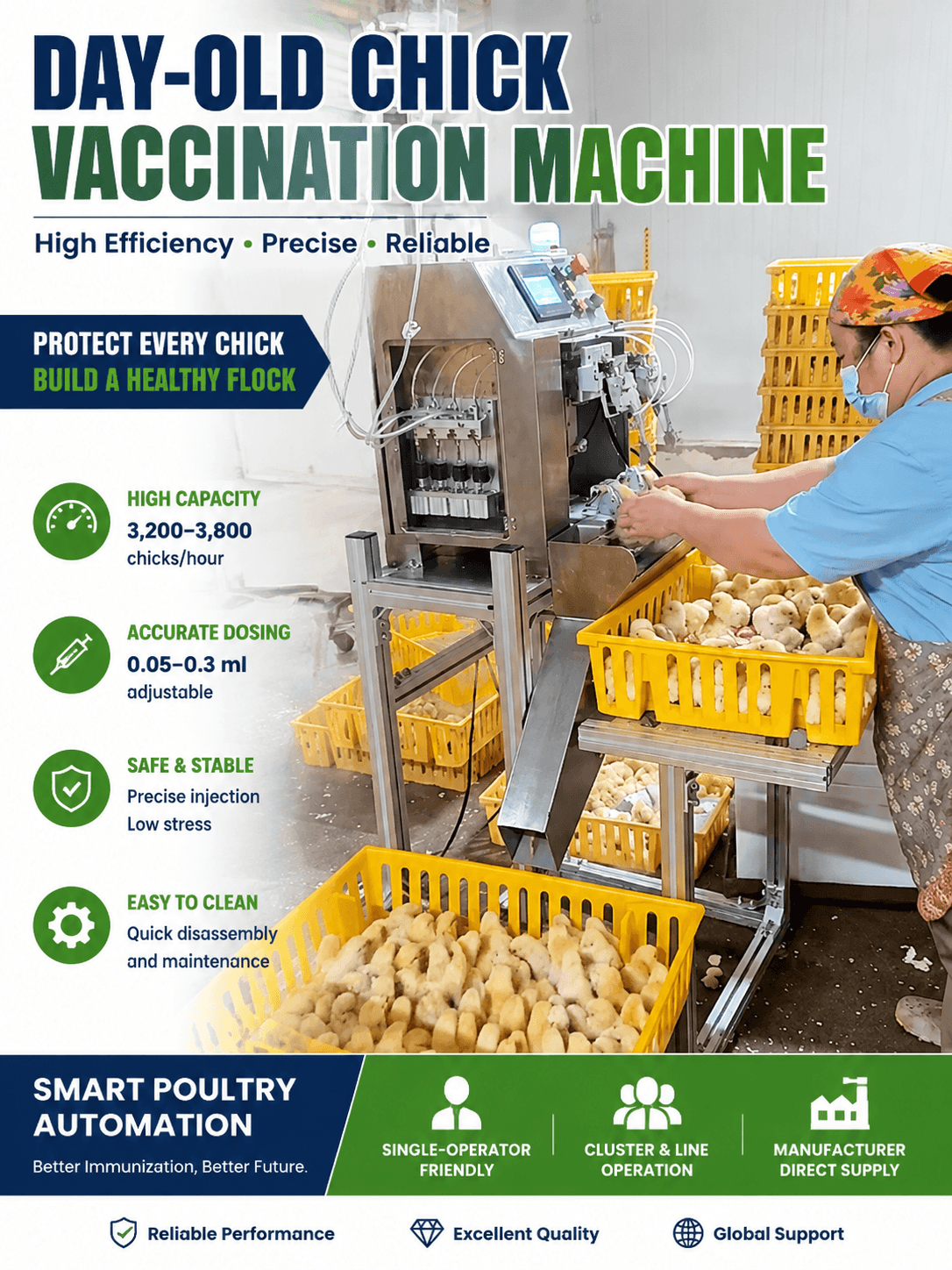
A poultry vaccination machine commissioning plan can look complete while four essential owners are still working from different assumptions. Put four named chairs at the startup table: veterinary or animal-health ownership, production, engineering and maintenance, and quality or records.
Pass each commissioning decision around the table. If one chair cannot explain its evidence, authority, or next action, the decision is not ready for the floor.
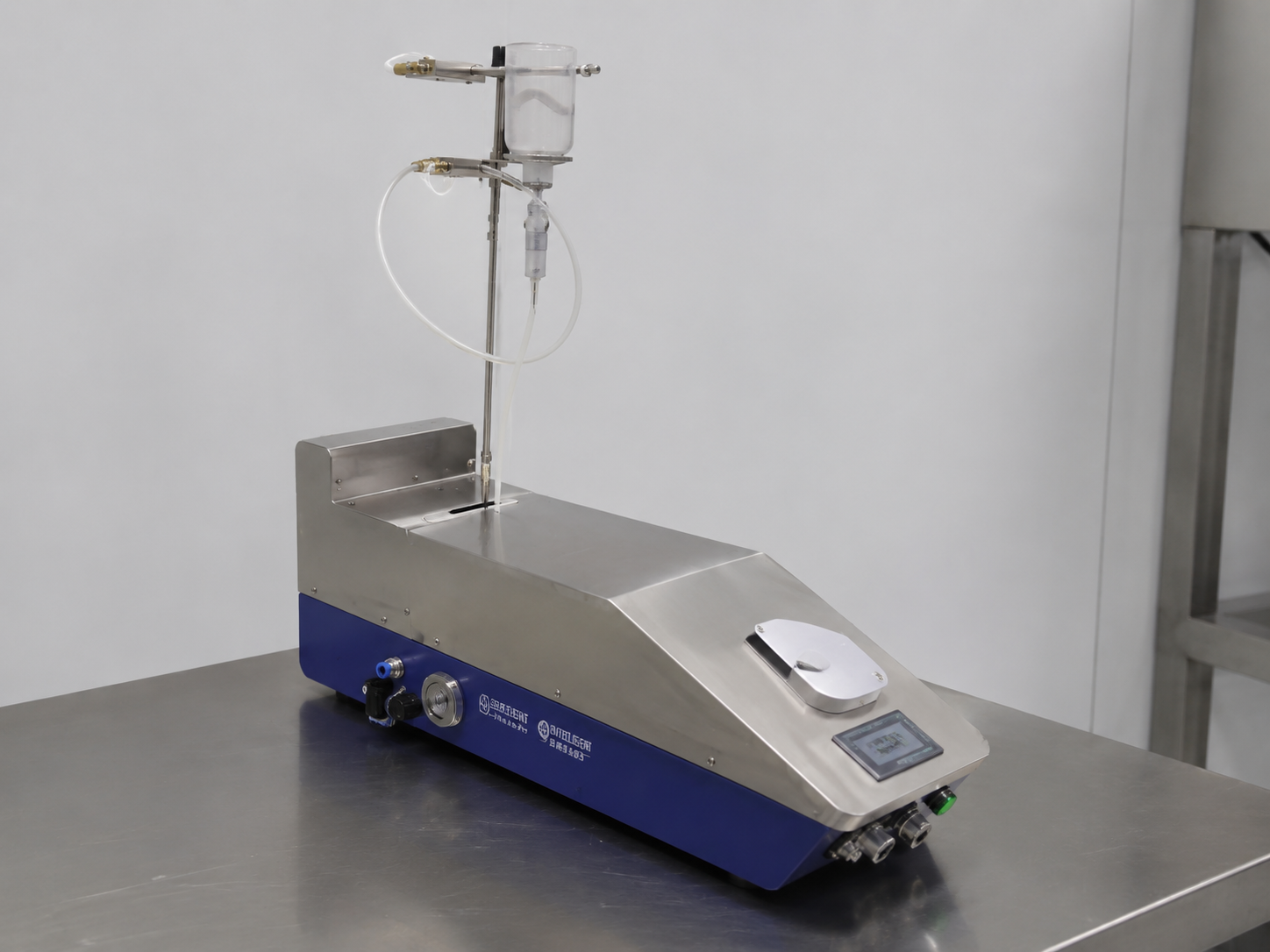
Before the Table Meets: Confirm What Is Arriving
Start with the ordered configuration, accessories, interfaces, included documents, customer-supplied items, utilities, installation boundary, and any temporary arrangements. Record what is verified and what remains open.
JuliSense presents the Jili Intelligent day-old chick vaccination machine for commercial hatchery applications. Exact process suitability, settings, capacity, interfaces, and service commitments require project-specific confirmation.
Match delivery to the controlled scope
Compare identification, packing information, accessories, and documentation with the latest approved list. A missing interface item may not be visible until the whole line is expected to run.
Protect unresolved questions
Do not bury open items in meeting notes. Give each one an owner, due date, impact, required proof, and person authorized to close it.
Chair One: Veterinary Ownership Defines the Clinical Boundary
The first chair belongs to the customer's qualified veterinary or animal-health team. It owns the applicable vaccination protocol, approved materials, handling criteria, observation method, stop criteria, and interpretation of results.
In a poultry vaccination machine commissioning plan, the equipment supplier can demonstrate machine functions and agreed process steps, but it should not replace the customer's professional clinical decisions.
Write the approved protocol reference
Record the controlled customer document, responsible approver, applicable flock or hatchery context, allowed settings or ranges where relevant, and escalation route. Avoid copying a temporary trial note into permanent instructions.
Agree what must stop the trial
Define clear conditions for pausing and who has the authority to call that pause. Teams should not debate the threshold while work is already in motion.
The World Organisation for Animal Health Terrestrial Code offers internationally recognized animal-health and welfare references. Local requirements and the customer's qualified decisions remain decisive.
Chair Two: Production Makes the Day Operable
Production translates the proposed process into arrivals, staffing, replenishment, ordinary variation, breaks, shift changes, downstream release, and exception handling. A demonstration that works for a short, carefully prepared sample may not represent a normal operating window.
Build a realistic arrival card
Write one representative hour with batch transitions, ordinary variability, material replenishment, documentation, and a plausible delay. Use this card when planning the run sequence.
Count the work around the machine
Record every repeated touch, walk, check, handoff, refill, correction, and communication. These tasks determine whether planned staffing and space are realistic.
Chair Three: Engineering Owns State and Recovery
Engineering and maintenance verify utilities, installation, guarding interfaces, controls, access, service positions, spare or wear-item information, isolation procedures, alarms, and recovery after an allowed interruption.
For machinery risk assessment and risk reduction, ISO 12100 provides a general framework. Relevant destination laws, standards, risk assessments, and site procedures must be applied to the complete installation.
Define ready before pressing start
Use a short readiness card covering installation status, utilities, guarding, access, approved materials, machine state, upstream and downstream readiness, and named authorization.
Rehearse one controlled interruption
Choose a safe scenario permitted by the risk assessment and instructions. Record the initiating condition, machine response, work position, operator information, permitted actions, checks, escalation, and restart authority.
Chair Four: Quality Connects Evidence to Release
Quality determines which records are required, how observations are identified, how deviations are handled, and who may release the equipment or process from one commissioning stage to the next.
The poultry vaccination machine commissioning plan should connect each acceptance statement to an observable record instead of a broad comment such as “run completed.”
Give every record an identity
Include date, equipment or configuration reference, customer protocol reference, run conditions, responsible people, exceptions, attachments, and approval state.
Separate observation from conclusion
Write what happened first. Put cause, disposition, and approval in distinct fields. This makes later review more reliable and reduces arguments based on recollection.
Pass Five Decision Cards Around the Table
Each card is a commissioning gate. Every chair adds its evidence or states why the item is not applicable. The card moves only when the named owners agree.
The cards turn the poultry vaccination machine commissioning plan into a sequence of controlled releases instead of one crowded startup date.
| Decision card | Shared question |
|---|---|
| Ready to install | Are scope, site, utilities, access, and interfaces ready? |
| Ready for dry checks | Are state, guarding, controls, roles, and records prepared? |
| Ready for representative work | Are approved materials, protocol ownership, staffing, and stop rules confirmed? |
| Ready to train | Are normal work, exceptions, cleaning, and escalation understood? |
| Ready to hand over | Are evidence, open items, documents, support, and release authority complete? |
Refuse the empty signature
A signature without the supporting drawing, checklist, record, or observation is weak evidence. Attach the proof that allowed each owner to decide.
Keep conditional approvals visible
If a gate is approved with a condition, state the condition, risk, temporary control, owner, deadline, and proof needed for final closure.
Use Three Runs, Not One Long Performance
Divide the practical portion into a dry functional check, an agreed representative run, and a recovery-and-release run. The separation helps teams understand what each result actually proves.
Run one: function without production pressure
Confirm controls, signals, access, roles, communication, and permitted checks. Do not interpret a dry check as evidence of the complete production process.
Run two: representative operation
Use agreed inputs, staffing, duration, normal variation, observation points, and evidence rules. During this poultry vaccination machine commissioning plan, keep small waits and corrections in the record rather than editing them out of the story.
Run three: interruption to approved release
Demonstrate a planned stop, protected work, status interpretation, authorized checks, recovery, restart, and the quality decision that releases the next stage.
Make Training a Demonstration by the Customer
Training is not complete because a supplier spoke and attendees signed a sheet. After instruction, authorized customer personnel should demonstrate their assigned tasks and explain boundaries in plain language.
JuliSense outlines project discussion, installation, commissioning, training, and after-sales support on its service page. The quotation and agreed project documents should state the actual scope, location, language, timing, deliverables, and exclusions.
Ask the operator to teach back
The operator explains preparation, ordinary operation, visible conditions, allowed response, stop criteria, and escalation. A supervisor listens for gaps rather than supplying every answer.
Ask maintenance to teach back
Maintenance explains access, isolation under site procedure, inspection, cleaning-related boundaries, parts or tools, reassembly, checks, and return-to-service authority.
Leave With a Commissioning Passport
The final package should show the approved configuration, site readiness, completed checks, representative-run evidence, controlled interruption, training records, cleaning and inspection status, open items, and stage-release decisions.
This passport does not erase customer responsibility or turn commissioning into a universal certification. It preserves what the four chairs actually decided.
Who should own the master copy?
Name a customer document owner and define where controlled supplier records, customer approvals, revisions, and open-item evidence are stored.
What should buyers send JuliSense?
Share the hatchery context, expected workflow, available utilities, approved customer protocols, surrounding equipment, proposed roles, timing, and the evidence expected at each gate. The JuliSense products page can help place the machine in the wider process.
How early should planning begin?
Begin before shipping dates and site work are fixed. Early decisions about utilities, interfaces, roles, and evidence prevent rushed compromises during startup.
At that stage, the poultry vaccination machine commissioning plan can still influence scope, layout, training, and the evidence requested from each party.
What is the next commercial step?
Use the JuliSense contact page to request project-specific configuration, interface, delivery, commissioning, training, and support information.
Four Chairs Produce One Defensible Start
A poultry vaccination machine commissioning plan works when veterinary ownership, production, engineering, and quality can explain the same startup without borrowing authority from one another. JuliSense can organize equipment and service discussions around those decisions. The customer's qualified teams retain control of protocols, approvals, site procedures, and final acceptance.