


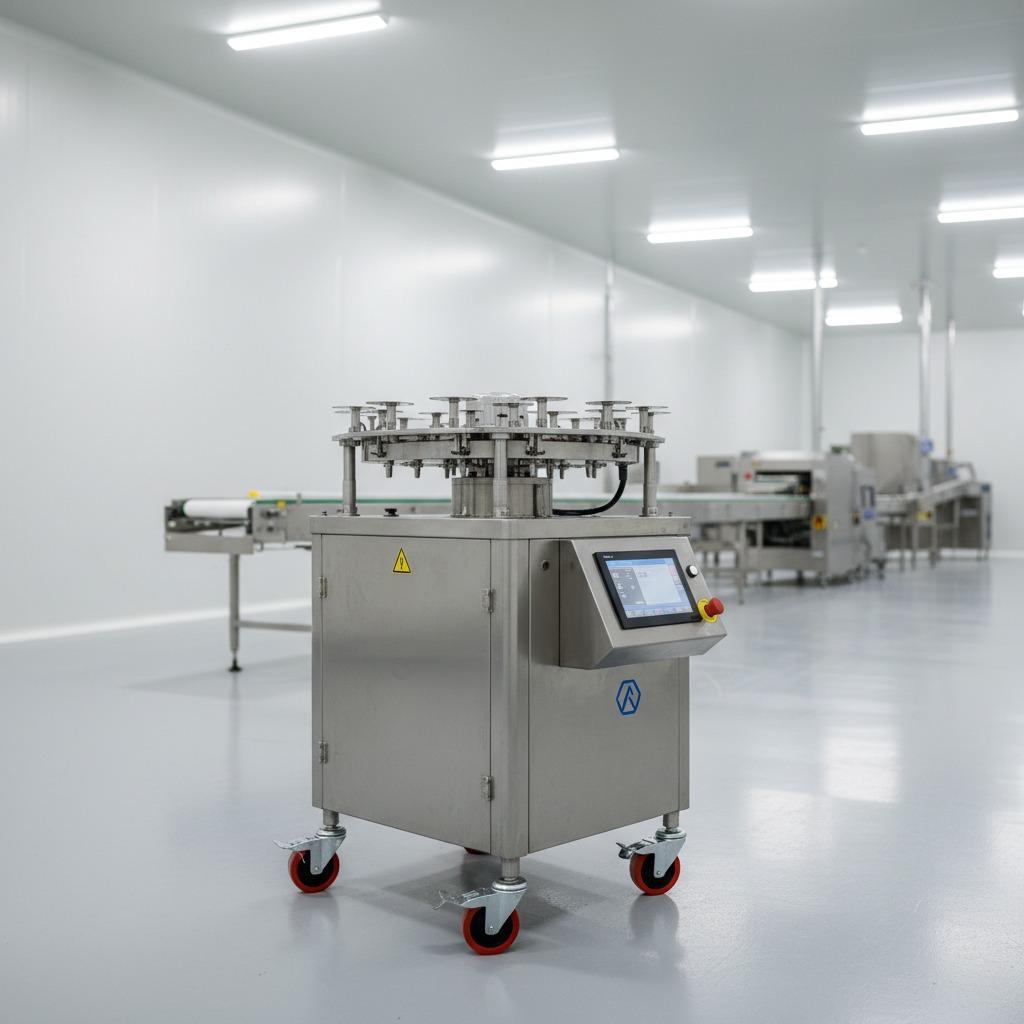
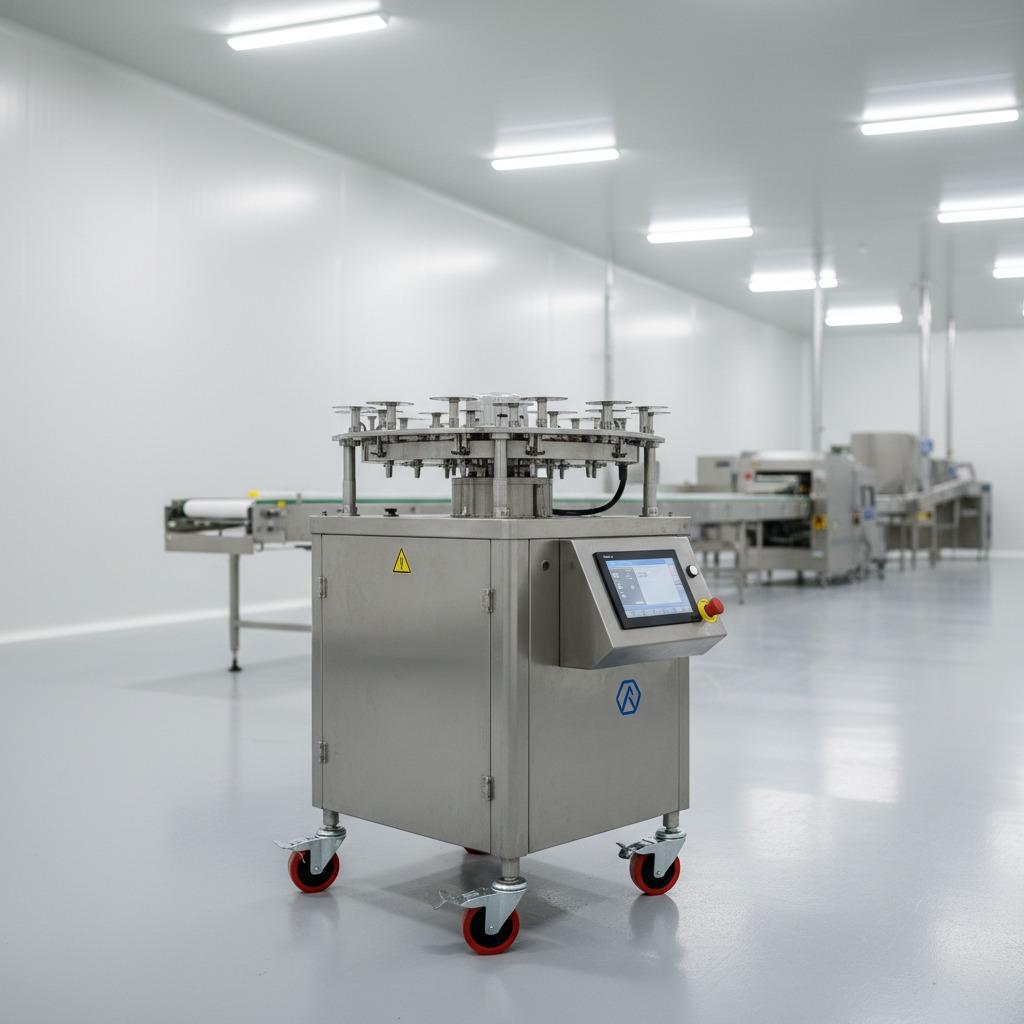
Automatic chick vaccination equipment can save money over time when it reduces rework, improves dose consistency, and makes operator routines easier to repeat. Buyers often compare equipment by purchase price, but long-term value depends on injection quality, maintenance access, consumables, and training.
The Jili Day-Old Chick Injection Vaccinator is used for one-day-old chick neck subcutaneous injection. Product material lists 0.05-0.3 ml adjustable dose, about 3,200-3,800 chicks per hour for four-station equipment, machine size of 659 mm x 600 mm x 995 mm, about 0.2 kW power, and air pressure checks around 0.45-0.5 MPa.
Where long-term savings come from
Vaccination cost is not only the equipment price. Leakage, missed injection, unstable dose delivery, operator fatigue, and repeated correction can all increase operating cost. A stable vaccination station helps the hatchery reduce these hidden costs.
Reliable automatic chick vaccination equipment gives managers a clearer routine for dose calibration, needle installation, tubing checks, air pressure control, and first-batch inspection.
What buyers should compare
- Dose range and calibration method.
- Needle installation and guide position.
- Air pressure requirement before operation.
- Tubing flow, bubble removal, and liquid stability.
- Consumable replacement and spare-part planning.
- Training, cleaning routine, and troubleshooting support.
Buying comparison table
| Selection factor | Jili reference information |
| Application | One-day-old chick neck subcutaneous injection |
| Dose range | 0.05-0.3 ml adjustable |
| Reference capacity | About 3,200-3,800 chicks per hour |
| Air pressure | Around 0.45-0.5 MPa before operation |
| Power | About 0.2 kW |
| Machine size | 659 mm x 600 mm x 995 mm |
How to avoid hidden costs
Hidden costs appear when operators spend too much time correcting injection quality, replacing parts without a routine, or troubleshooting without supplier guidance. Buyers should ask how Jili supports startup training, dose checks, cleaning, and replacement planning.
A well-selected automatic chick vaccination equipment setup supports both productivity and quality control. It helps the hatchery keep vaccination results more predictable across shifts.
When to consider integrated vaccination and beak treatment
If vaccination must happen together with infrared beak treatment, buyers can compare the Jili Day-Old Chick Infrared Beak Trimming and Vaccination Machine. If the project is injection-focused, the injection vaccinator is the direct match.
How to calculate practical return
Practical return can be estimated by looking at the cost of rework, operator time, missed injection risk, and production interruptions. If the current manual process requires frequent correction or slows down during peak volume, a more controlled vaccination station can reduce hidden costs over time.
Buyers can prepare a stronger inquiry by sharing vaccine dose, chick age, daily volume, peak hourly target, air supply condition, and current quality problems. This helps Jili recommend equipment around real vaccination performance rather than only around capacity.
Questions to ask before ordering
Ask how dose calibration is checked, how consumables are replaced, how operators remove air from tubing, and what first-week inspection should include. Clear answers help buyers judge whether the supplier can support stable use after installation.
How to compare long-term supplier value
Supplier value becomes visible after the machine starts running. Buyers can ask how installation support is handled, what training operators receive, which consumables need routine replacement, and how quickly the supplier can help when injection quality changes. These points affect real cost because a machine that is easy to maintain and support is more likely to keep stable output over time.
FAQ
What is automatic chick vaccination equipment used for?
It supports controlled vaccination of day-old chicks, commonly through neck subcutaneous injection.
What dose range is listed in Jili material?
Jili material lists an adjustable dose range of 0.05-0.3 ml.
How can vaccination equipment save money?
It can reduce rework, stabilize dose delivery, support operator training, and reduce workflow variation.
What should buyers check before operation?
Check air pressure, needle setup, tubing flow, dose calibration, counting, and first-batch results.
What should buyers send to Jili?
Send chick age, dose requirement, target output, air supply, room layout, and current vaccination problems.