


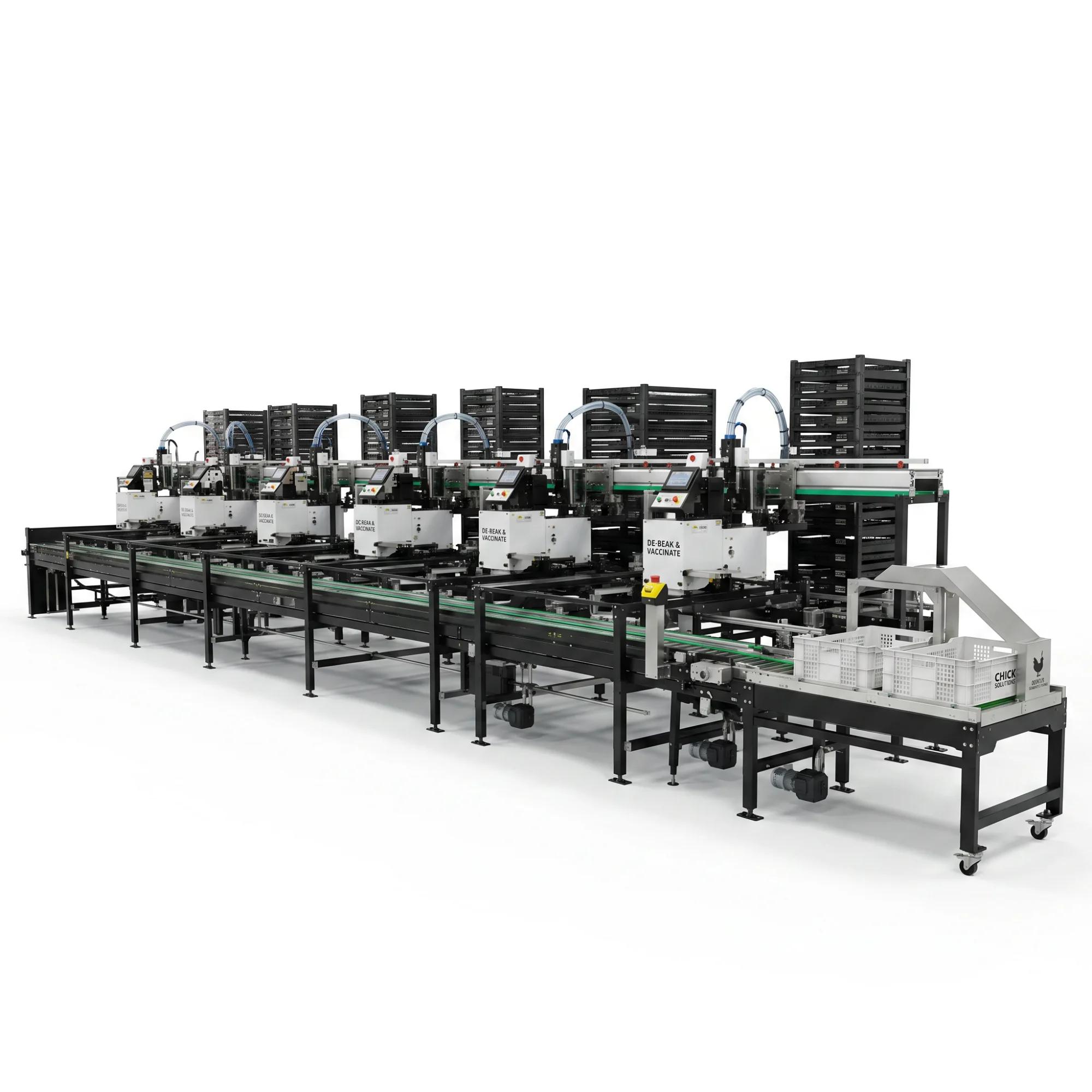
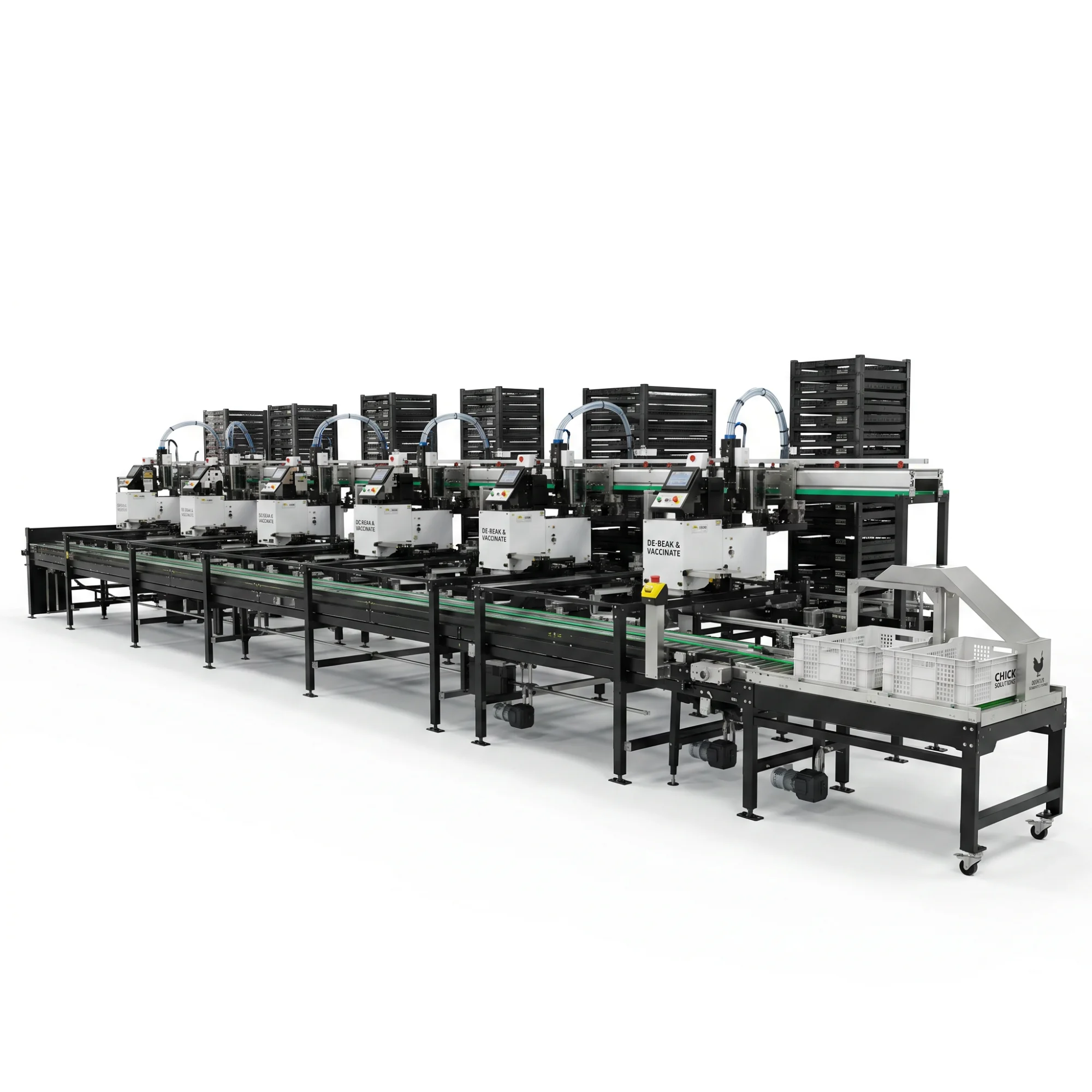
Infrared beak trimming technology can improve hatchery efficiency when the equipment is selected around the real chick flow, operator routine, and production target. Its value does not come from adding a machine alone. The hatchery also needs stable settings, clear inspection points, practical cleaning access, and a reliable handoff to vaccination or conveying.
The Jili Day-Old Chick Infrared Beak Trimming Machine is designed for day-old yellow-feather chicks, layers, and ducklings. Jili product information lists visual settings, automatic counting, dust blowing, alarm functions, a reference capacity of about 3,200-3,800 chicks per hour, one-operator operation, and approximately 500 W power. These details help buyers judge whether the station fits the intended hatchery workflow.
Efficiency depends on repeatable operation
Hatchery managers often focus on hourly output first. Output matters, but a station also needs to produce a repeatable routine across operators and shifts. Visual settings can give the team a common reference. Automatic counting supports production records. Alarm reminders help operators respond to abnormal conditions, while dust blowing supports a more practical working area.
The operational impact of infrared beak trimming technology is easier to evaluate when the hatchery tracks waiting time, manual interventions, operator changes, cleaning time, and first-batch inspection results. These observations show whether the station is improving the whole process or simply moving the bottleneck downstream.
Where the technology changes the hatchery workflow
- Operator planning becomes clearer because the station has a defined working routine.
- Production counting becomes easier to compare with shift targets.
- Settings and inspection points can be standardized for training.
- Connection with vaccination or conveying can be planned before installation.
- Maintenance and cleaning responsibilities can be assigned before startup.
Buyer evaluation table
| Evaluation area | Question for the supplier |
| Chick application | Which chick types and ages are supported by the proposed unit? |
| Capacity | Does the reference output match the surrounding stations? |
| Controls | How are settings, counting, alarms, and inspection handled? |
| Labor | What training and operator routine are required? |
| Maintenance | Which parts need regular cleaning, inspection, or replacement? |
| Integration | Can the station connect with vaccination or conveying later? |
How to judge treatment control during commissioning
Commissioning should include more than a short no-load test. Buyers can prepare a production checklist covering chick presentation, machine settings, counting, alarms, operator movement, cleaning access, and the handoff to the next station. The first production batches should be inspected under the hatchery's approved operating procedure, with adjustments recorded for later training.
A supplier should also explain how operators recognize an abnormal condition and when the station should be paused. This makes infrared beak trimming technology easier to manage after the installation team leaves the site.
When an integrated station is more practical
A dedicated beak treatment unit is suitable when the hatchery wants a focused station. When vaccination must happen in the same handling step, buyers can compare the Jili Infrared Beak Trimming and Vaccination Machine. The decision should consider room layout, target capacity, operator positions, utilities, and the process immediately before and after the station.
What to send with an RFQ
Send chick type, daily volume, peak hourly demand, current treatment method, layout drawings or photos, operator plan, utilities, and the next process in the line. Explain the current bottleneck and the operating result the project should improve. This information helps Jili determine whether a dedicated machine, an integrated station, or a connected line is the better match.
For buyers, the real impact of infrared beak trimming technology is measured through workflow fit, repeatable operation, service access, and the ability to support the hatchery's production plan.
FAQ
What is infrared beak trimming technology used for?
It supports controlled infrared beak treatment for day-old chicks within a hatchery processing workflow.
What capacity does Jili list for its dedicated machine?
Jili product information lists a reference capacity of approximately 3,200-3,800 chicks per hour.
What should buyers check besides speed?
Check chick application, settings, operator training, counting, alarms, cleaning access, maintenance, and line integration.
When should an integrated machine be considered?
Consider an integrated machine when vaccination and beak treatment need to happen in the same handling station.
What information improves the quotation?
Chick type, volume, layout, utilities, current workflow, bottlenecks, and future connection needs improve the recommendation.