


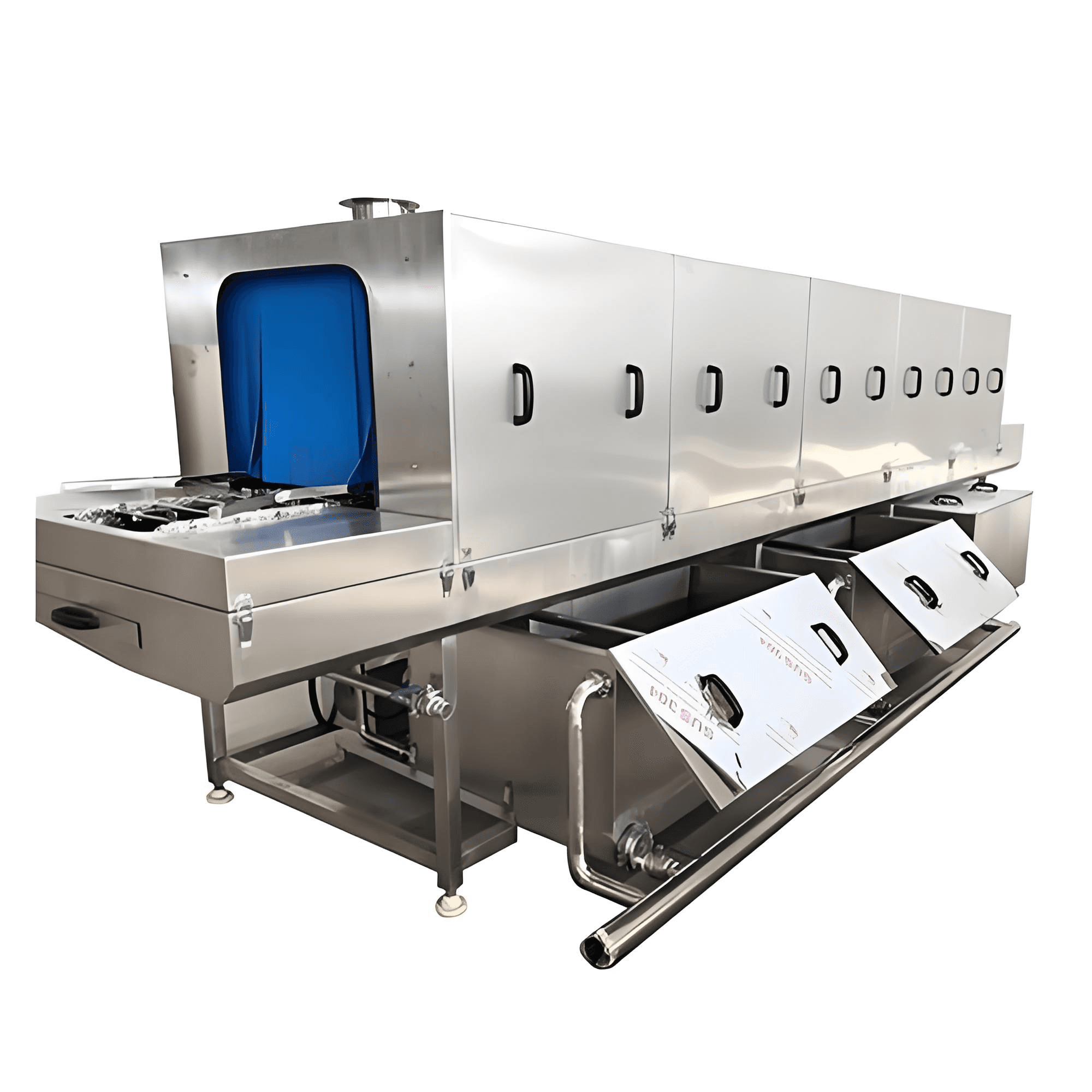
A hatchery crate washing system becomes important when crate return starts to limit production flow. Clean crates must be available at the right time, in the right place, and in a condition suitable for the next cycle. Buyers searching this topic usually need more than a single washer; they need a practical crate return plan.
Jili offers the Automatic Continuous Crate Washer for focused washing and the Poultry Crate Washing System with Inverting and Liner Placement for connected workflows. The right choice depends on crate dimensions, soil level, return volume, water and drainage conditions, and whether crates need extra handling after washing.
Why crate washing affects hatchery capacity
When crates are not cleaned and returned on time, other stations may wait. Operators may spend time searching for clean crates, sorting damaged crates, or correcting poor loading flow. A washing system should therefore be planned as part of the hatchery operation, not as a separate cleaning corner.
The goal is a repeatable loop: dirty crate arrival, loading, washing, drainage, discharge, inspection, and return to use. Every step needs enough space and clear operator access.
When a system is better than a standalone washer
- The hatchery needs continuous crate return during production.
- Crates require inverting, liner placement, or organized downstream handling.
- Manual loading and unloading create waiting or labor pressure.
- Utilities and drainage must be planned around higher washing volume.
- Clean crates must return predictably to the next production area.
Planning table for buyers
| Planning factor | What buyers should confirm |
| Crate details | Dimensions, material, damage level, and stacking method |
| Washing demand | Crates per hour, shift schedule, and return timing |
| Soil condition | Residue type, pre-rinse needs, and cleaning standard |
| Utilities | Water, drainage, heating, power, and floor slope |
| System scope | Washing only, or washing with inverting, liner placement, and conveying |
How to prepare the RFQ
Send crate photos, crate dimensions, room layout, target throughput, soil condition, current cleaning method, available water, drainage, heating, and power. If crates need to be inverted or lined after washing, include that requirement in the first inquiry.
Buyers should also describe where dirty crates come from and where clean crates must go. This helps Jili discuss the system as a flow, not just a machine.
Maintenance and hygiene planning
A good washing system should be easy to inspect. Operators need access to nozzles, filters, residue collection areas, loading points, discharge points, and drainage zones. Maintenance access should be reviewed before layout approval because poor access can reduce cleaning consistency over time.
How to compare proposals
Compare proposals by crate fit, wash flow, maintenance access, utility demand, system footprint, operator positions, and future expansion space. A lower-cost quotation may be less useful if it does not solve the return-crate bottleneck.
How to keep the system scalable
A scalable crate washing system leaves room for higher volume, easier maintenance, and possible handling upgrades. Buyers should consider whether the first layout can support more crates per hour, longer shifts, different crate styles, or additional handling steps in the future.
Scalability also depends on staff routine. Operators need clear access to cleaning points, and managers need a predictable return path for clean crates. When the workflow is simple to understand, the system is easier to train, inspect, and improve over time.
A scalable hatchery crate washing system should keep dirty-crate intake, washing, inspection, and clean-crate return moving at a predictable rhythm.
FAQ
What is a hatchery crate washing system?
It is a workflow for washing and returning poultry or hatchery crates, often including loading, washing, drainage, discharge, and optional connected handling.
When is a system better than a single washer?
A system is better when crate return, inverting, liner placement, or connected handling must be planned together.
What details should buyers prepare?
Prepare crate photos, dimensions, soil level, throughput, room layout, utilities, and return-flow requirements.
Why does drainage matter?
Poor drainage can slow cleaning, create maintenance issues, and reduce the predictability of crate return.
Which Jili product pages are most relevant?
Buyers can compare the automatic continuous crate washer and the poultry crate washing system according to system scope.