


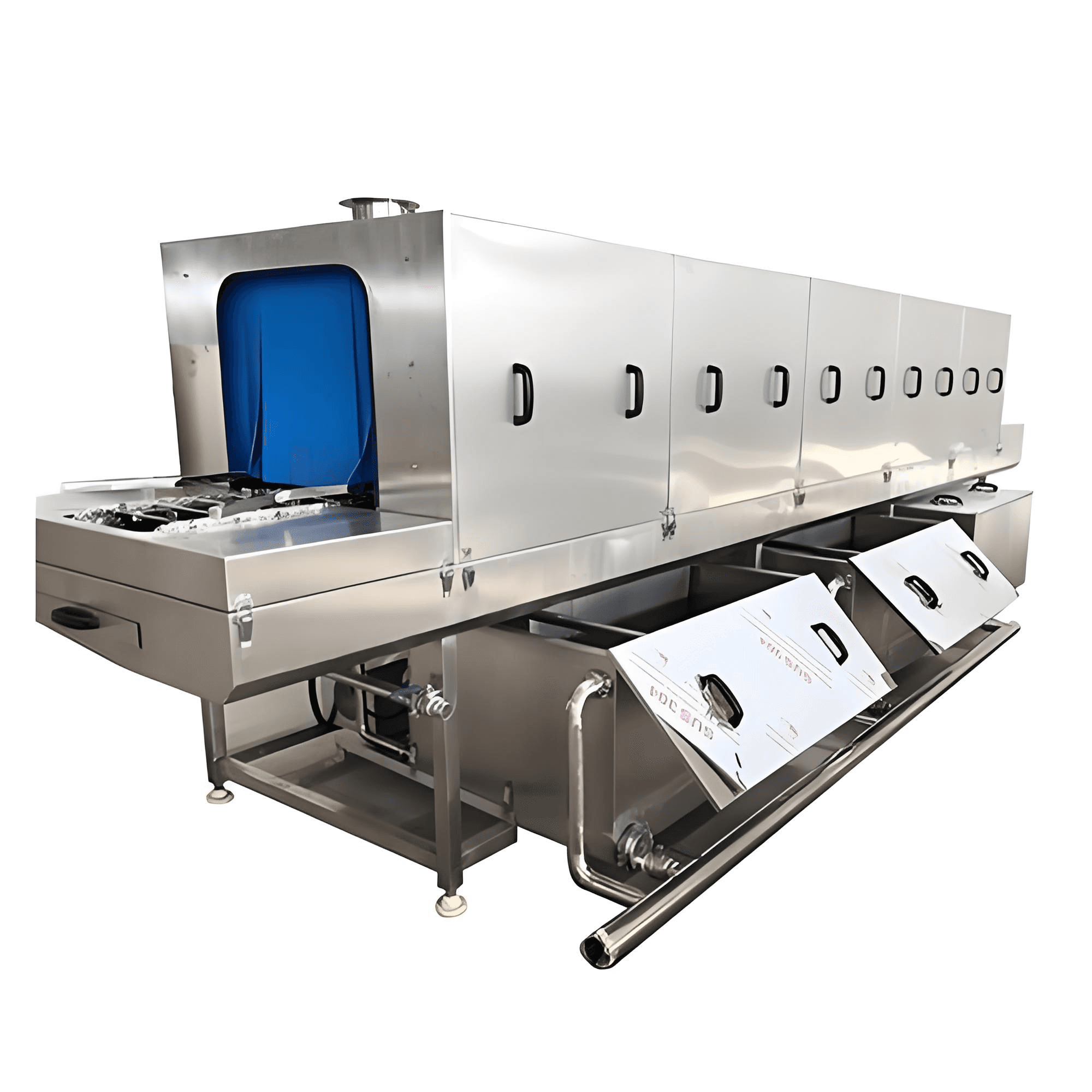
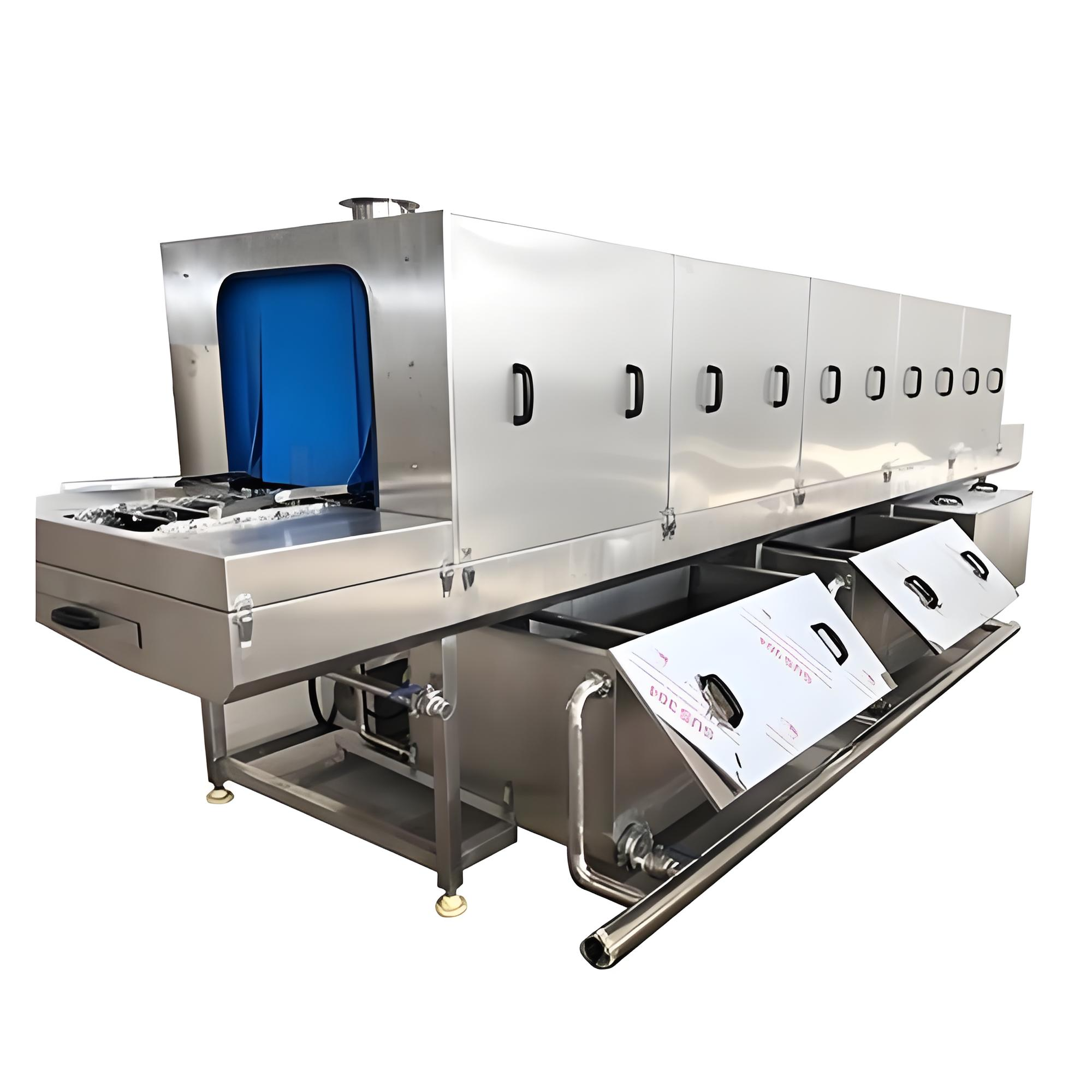
Poultry crate cleaning equipment becomes important when manual washing or slow crate return starts to limit production. Buyers often look for a washer after clean crates become hard to keep available during busy shifts. The goal is not only cleaning; it is keeping crate return predictable.
Jili offers the Automatic Continuous Crate Washer for focused washing needs and the Poultry Crate Washing System with Inverting and Liner Placement for connected workflows. The right choice depends on crate dimensions, soil level, hourly return volume, water and drainage conditions, and whether crates require extra handling after washing.
Why crate cleaning affects production flow
If clean crates are not ready on time, workers spend time waiting, searching, or manually correcting the return process. Poor washing layout can also create drainage issues, residue buildup, and extra labor around loading and unloading.
Scalable poultry crate cleaning equipment should support the full crate loop: dirty crate arrival, loading, washing, drainage, discharge, inspection, and return to production.
When buyers should upgrade
- Manual crate washing is creating labor pressure.
- Clean crates are not returning fast enough for production.
- Crate residue, labels, or feathers require more consistent washing.
- Operators spend too much time clearing filters or drains.
- The site needs inverting, liner placement, or connected crate handling.
- The facility plans higher throughput in the next stage.
Planning table for scalable cleaning
| Planning factor | What buyers should confirm |
| Crate details | Photos, dimensions, material, and damage level |
| Soil condition | Residue type, pre-rinse need, and target cleaning standard |
| Throughput | Crates per hour and shift schedule |
| Utilities | Water, heating, drainage, power, and available floor space |
| Handling flow | Loading, unloading, clean-crate return, inverting, or liner placement |
| Maintenance | Nozzle, filter, drain, and residue collection access |
How to make the proposal more accurate
Before asking for a quotation, buyers should send crate photos, crate measurements, target throughput, soil condition, current cleaning process, and room layout. If the project requires connected handling, that should be stated before the layout is planned.
Jili can then judge whether a focused washer is enough or whether a larger system will reduce labor and protect crate return flow. This prevents a buyer from solving washing while leaving loading, discharge, or return storage unresolved.
What long-term value looks like
Long-term value comes from reduced manual cleaning pressure, fewer crate-return delays, better maintenance access, and more predictable daily operation. Well-planned poultry crate cleaning equipment should be easy to inspect and easy to operate at the same standard across shifts.
How to calculate practical return
Practical return can be estimated by looking at labor saved, fewer crate-return delays, easier cleaning, and reduced stoppages. Buyers should compare how many workers are currently involved in washing, how often clean crates become unavailable, and how much time is spent clearing residue or correcting crate movement.
These details help Jili recommend a solution that fits the facility. A focused washer may be enough for simple washing, while a larger system can be more cost-effective when crate inverting, liner placement, or organized return handling is required.
Questions to ask before layout approval
Before approving the layout, buyers should ask where dirty crates enter, where clean crates leave, how operators reach filters and nozzles, and how drainage is managed during long shifts. These details directly affect whether the system remains practical after installation. A good washing layout should reduce manual correction rather than simply move the bottleneck to another area.
FAQ
What is poultry crate cleaning equipment used for?
It is used to wash and return poultry or hatchery crates in a more consistent production workflow.
When is a larger crate washing system needed?
A larger system is useful when washing must connect with inverting, liner placement, conveying, or organized clean-crate return.
What should buyers send before quotation?
Send crate photos, dimensions, soil level, throughput target, room layout, and utility conditions.
Why does drainage matter?
Poor drainage can slow cleaning, increase maintenance work, and reduce washing consistency over time.
How can buyers reduce hidden costs?
Plan loading, discharge, filter access, nozzle access, drainage, and clean-crate storage before approving the system layout.