

Smart hatchery equipment should do more than display counts or alarms. It should help the team complete a decision loop: detect a condition, explain enough context, assign the right action, verify recovery, and use the evidence to improve the next batch.
If the loop stops at a dashboard, the equipment may be connected without making the operation more controllable.
Detect a Condition That Matters
Start with operational questions. Where does the first queue form? Which alarm repeats? How long does restart take? Which container creates disruption? Which maintenance task is overdue?
Choose signals that support those questions. Runtime, machine state, stop reason, batch identity, queue status, counts, or maintenance records may be useful depending on the offered configuration.
Avoid collecting every available data point before deciding who will review it and what action may follow.
Explain the Context Around the Signal
An alarm code alone rarely explains the cause. The team needs the time, machine state, affected zone, recent change, upstream and downstream status, operator action, and whether the condition repeated.
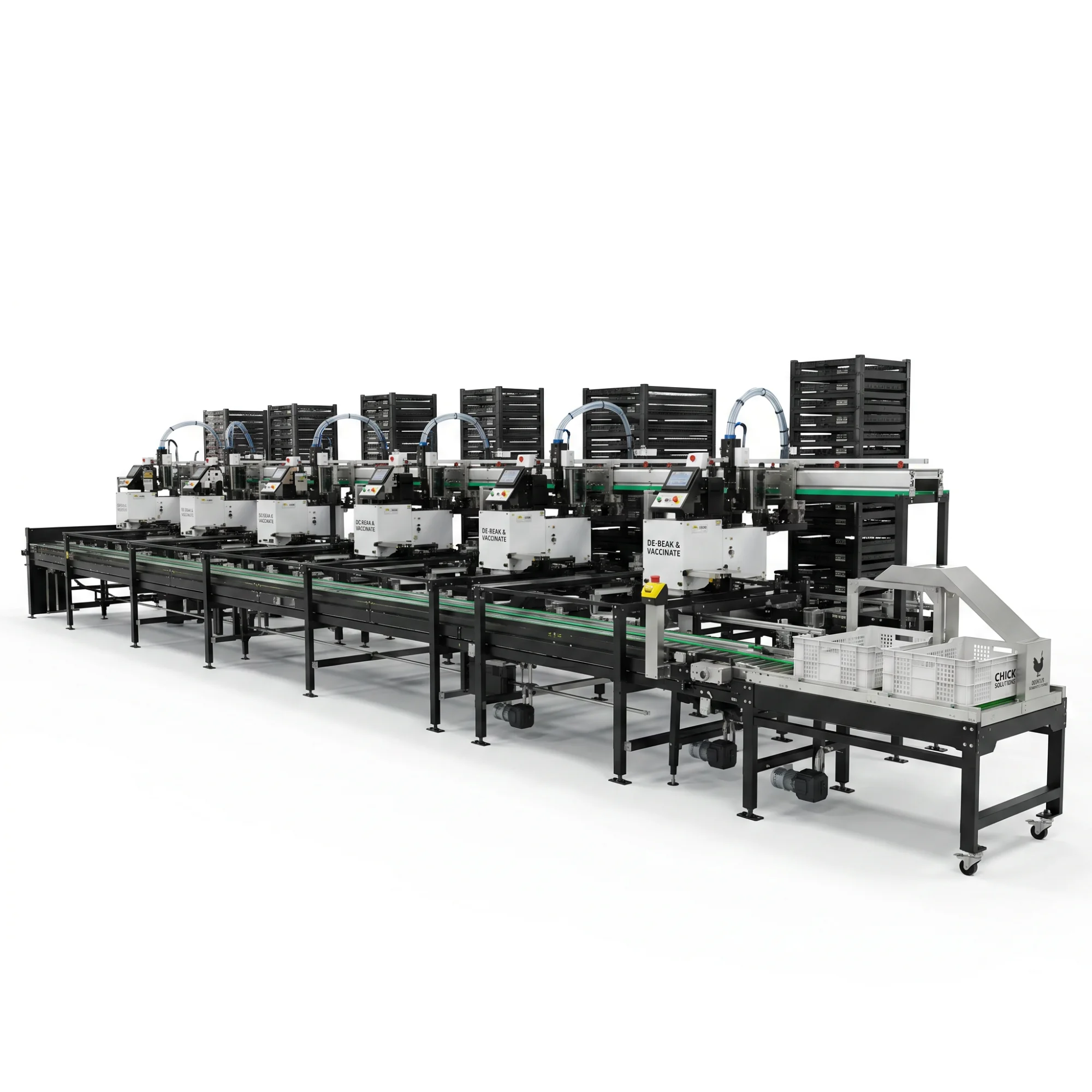
Jili Intelligent supplies individual machines and connected hatchery automation solutions. Buyers should ask which status and diagnostic information is available for the specific configuration, and which evidence must still be recorded by people.
When comparing smart hatchery equipment, request a demonstration of a planned stop and diagnosis, not only normal running.
Assign the Action to a Named Role
Every signal needs an owner. Operators may clear a permitted condition. Maintenance may investigate a repeated mechanical or electrical issue. Technical or veterinary teams may decide on batch or process status. Management may approve a layout or staffing change.
Define permissions and escalation. Who may reset? When does a repeated condition require maintenance? What evidence is sent to the supplier? Who decides that production can resume?
Smart controls should make ownership easier to follow, not create an assumption that the system has made a technical decision by itself.
Verify Recovery, Not Just Reset
A reset removes an alarm state. Recovery proves that the normal process has returned.
Check downstream readiness, accumulated material, batch identity, spacing, operator position, and the first several successful transfers. Record restart time and whether the condition returns.
Include recovery scenarios in factory and site acceptance. A machine that detects a stop but cannot return predictably to normal flow leaves the most difficult work to the operator.
Improve the Process With a Short Review
Review a small number of recurring conditions each day or week. Separate isolated events from patterns. Ask whether the cause belongs to equipment, input variation, containers, staffing, training, cleaning, maintenance, layout, or an interface.
Then assign an improvement and check the next production evidence. The loop is complete only when the action changes the measured condition.
Jili's service information can support remote diagnosis when the hatchery provides clear evidence. Project-specific response channels and responsibilities should be written into the commercial scope.
Test Smart Claims With One Scenario
Choose one representative scenario before purchase, such as a downstream station becoming unavailable. Ask the supplier to show detection, displayed context, operator guidance, escalation evidence, stop sequence, and restart.
Repeat the scenario with the people who will operate and maintain the equipment. Ask them what decision they would make from the available information. If they still need an experienced demonstrator to interpret the screen, the handover is incomplete.
The same test can be applied to treatment, vaccination, transfer, conveying, stacking, or washing equipment.
Frequently Asked Questions
Does smart equipment require a large dashboard?
No. A clear local status and a few useful records may be enough. The interface should follow the decisions the team needs to make.
Can equipment data replace veterinary or quality approval?
No. Data can support evidence and verification. Responsible customer teams retain technical, veterinary, sanitation, and production approval.
What data should be retained for supplier support?
Retain machine identity, configuration, batch, time, state, alarm history, recent changes, operator actions, photos or video, and whether the problem repeats.
Intelligence Is the Completed Loop
The value of smart hatchery equipment lies in the complete operating loop, not the number of sensors. Detect, explain, assign, verify, and improve with evidence that the hatchery team can understand.
Send Jili Intelligent your workflow, recurring conditions, desired records, roles, interfaces, and support expectations through the contact page. Ask the proposed system to demonstrate one complete decision loop.