


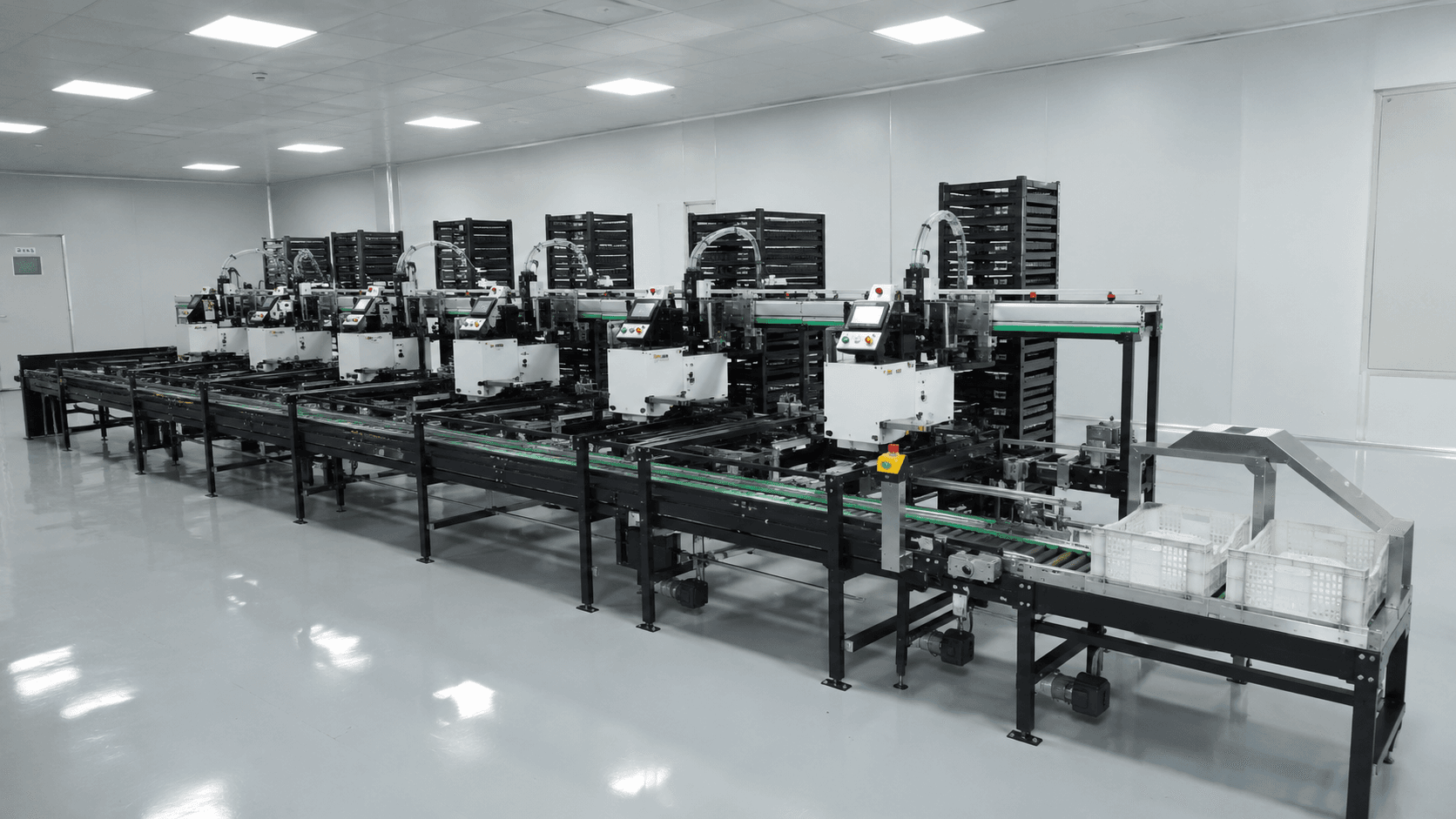
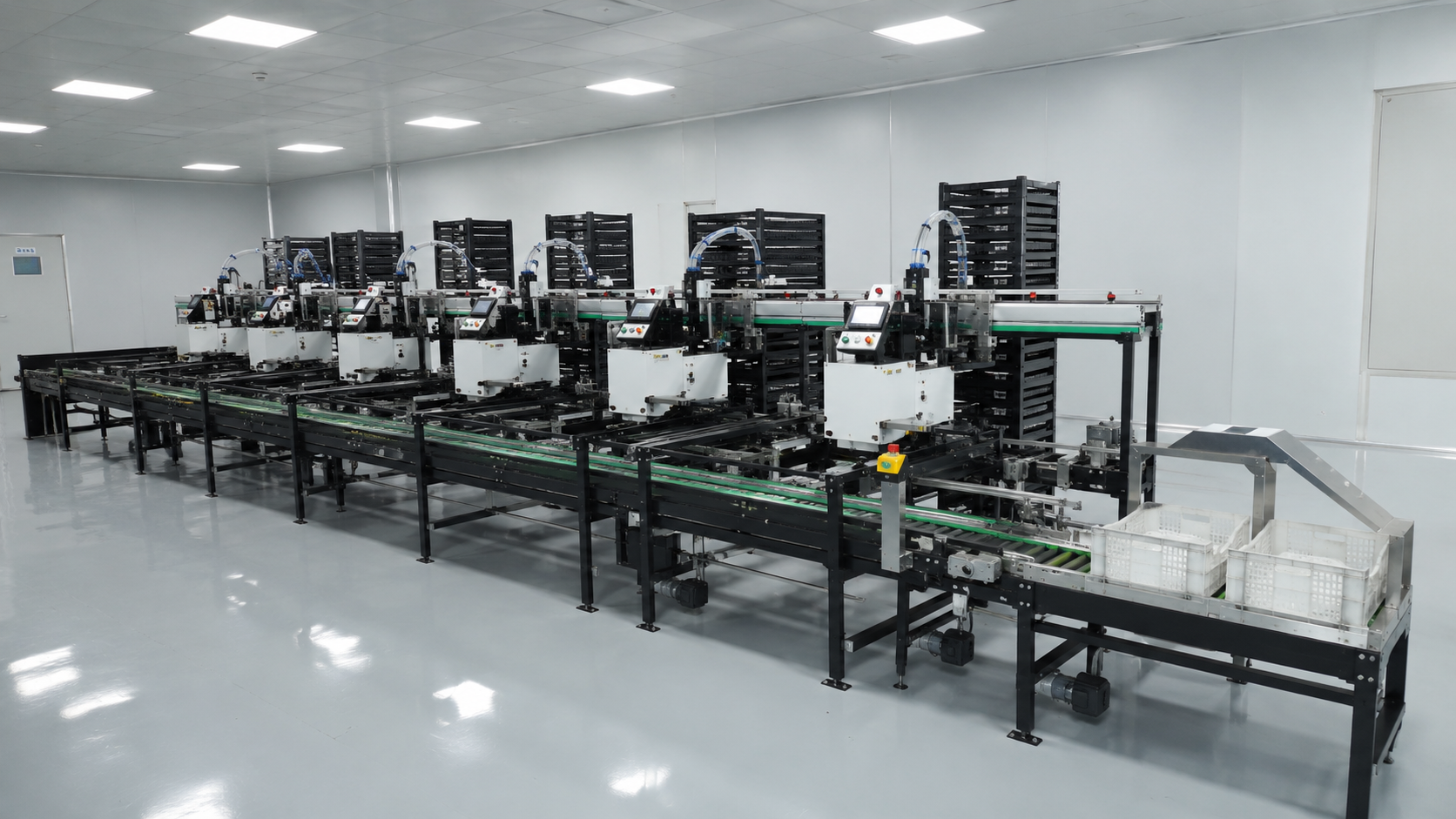
Hatchery automation solutions give poultry groups a way to reduce manual pressure, stabilize day-old chick handling, and plan capacity growth with fewer workflow gaps. Buyers usually search this topic when single-station improvements are no longer enough and the hatchery needs a connected process from transfer to downstream handling.
Jili supports modular project planning through products such as the Day-Old Chick Picking and Transfer Machine, Infrared Beak Trimming and Vaccination Machine, Conveying and Stacking Line, and Complete Hatchery Automation Solutions. These modules can support transfer, beak treatment, vaccination, conveying, stacking, and wider chick processing flow.
Why automation strategy matters before equipment selection
A hatchery can buy a machine and still keep the same bottleneck if the line is not planned as a workflow. Transfer speed, vaccination routine, beak treatment capacity, conveying rhythm, crate flow, and operator access all affect each other. A good project starts by identifying the process that creates waiting or inconsistent output.
Practical hatchery automation solutions help buyers connect equipment decisions to real production goals: fewer handoffs, more predictable output, easier training, clearer counting, and better use of floor space.
Where automation can create value
- Reducing manual transfer and basket handling pressure.
- Keeping beak treatment and vaccination stations supplied more steadily.
- Improving counting, line organization, and operator visibility.
- Creating room for future conveying, stacking, or washing modules.
- Reducing delays caused by disconnected equipment decisions.
- Making RFQ discussions more specific and easier to compare.
Project planning table
| Planning area | What buyers should confirm |
| Current bottleneck | Transfer, vaccination, beak treatment, conveying, stacking, or crate return |
| Target output | Daily volume, peak hourly demand, and shift rhythm |
| Equipment modules | Which station is needed now and which can be added later |
| Layout | Operator access, maintenance space, and downstream movement |
| Support | Training, spare parts, installation guidance, and service response |
| Expansion | Future connection with additional chick processing modules |
How to avoid overbuilding the first phase
Some buyers need a complete line. Others only need to solve one bottleneck first. A phased plan can be more practical when the hatchery wants to control investment while preparing space for later upgrades. The first phase can focus on transfer, vaccination, beak treatment, or conveying depending on the strongest production pain point.
When discussing hatchery automation solutions, buyers can send workflow photos, room drawings, daily chick volume, and current labor challenges. This helps Jili recommend a plan based on the real process rather than a generic equipment list.
What to send before asking for a proposal
Prepare chick volume, target output, existing equipment, room layout, utility conditions, current bottlenecks, and the process modules required. Clear information makes it easier to compare solutions and turn the discussion into a serious quotation.
How buyers can turn a plan into an inquiry
A useful inquiry should explain where the hatchery is today and what output it wants to reach. Buyers can describe the number of chicks handled per day, the peak-hour target, the number of operators available, and which process currently slows the line. If photos or videos are available, they help Jili understand space limits and handoff points more accurately.
Buyers can also list which modules are required immediately and which are future options. This makes the proposal more realistic, keeps investment focused, and helps the first layout support later expansion without rebuilding the whole processing area.
FAQ
What are hatchery automation solutions?
They are connected equipment and workflow plans for improving chick transfer, treatment, vaccination, conveying, stacking, washing, or complete processing flow.
Does every hatchery need a complete line?
No. Many buyers start with the strongest bottleneck and reserve space for future modules.
What information helps Jili prepare a proposal?
Daily chick volume, peak hourly output, layout, photos, current labor pressure, and required process modules are useful.
Why is workflow planning important?
Workflow planning prevents one upgraded station from creating waiting at the next station.
Which product page matches this topic?
Buyers can review Jili Complete Hatchery Automation Solutions for broader line planning.