


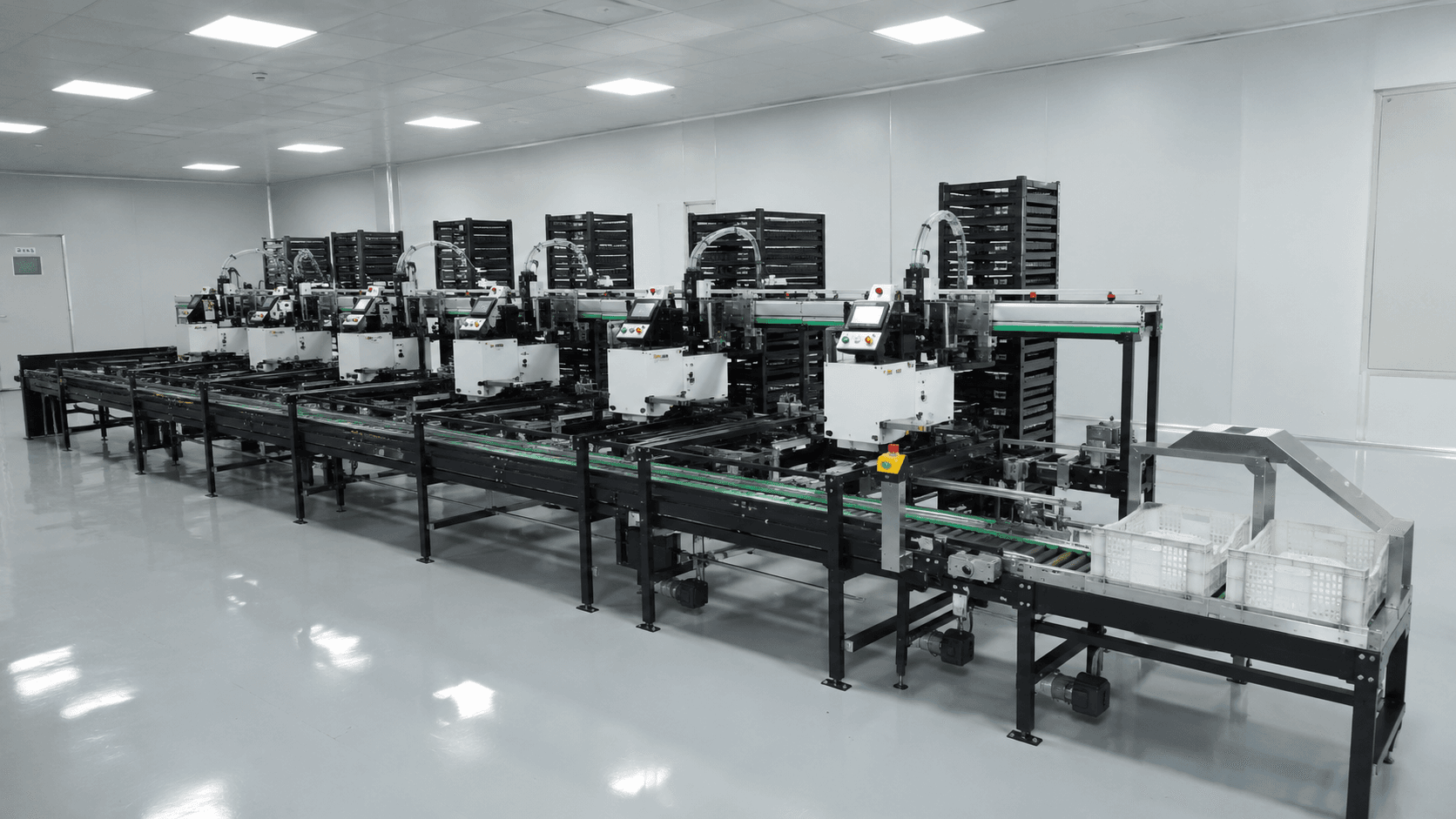
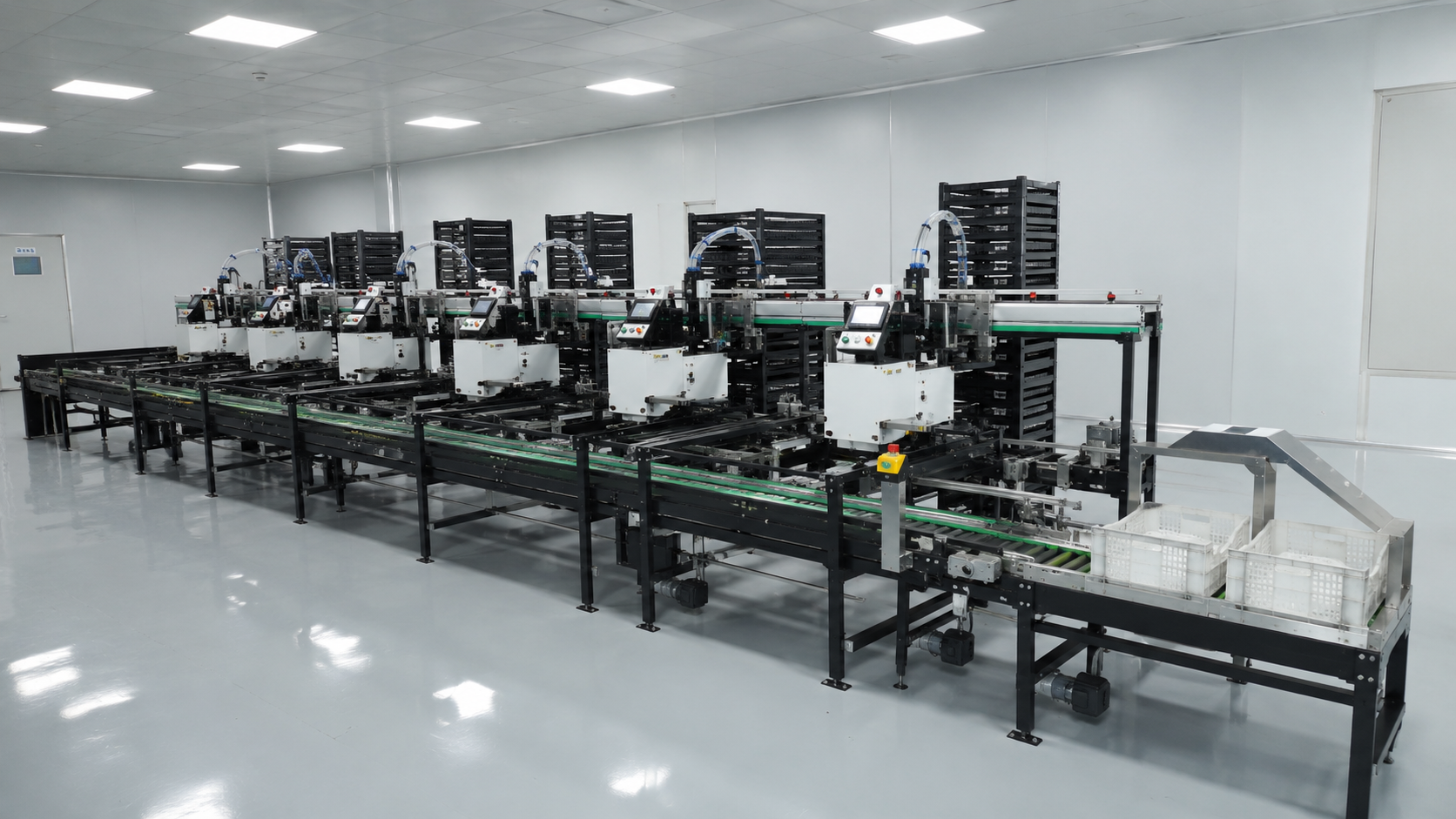
turnkey hatchery automation solution is searched by hatchery buyers who need to connect multiple day-old chick processing stations into a stable workflow. The buying decision is about module fit, line balance, operator access, future expansion, and whether the project can reduce manual handling without creating a new bottleneck.
Jili automation planning can include picking and transfer, infrared beak trimming, injection vaccination, integrated beak trimming and vaccination, conveying, and stacking. Buyers can start from Jili Complete Hatchery Automation Solutions and then compare the matching product modules.
Search Intent Behind turnkey hatchery automation solution
This keyword has commercial and transactional intent. Buyers are usually preparing for a project discussion, so they need clear module options, planning criteria, risk points, and RFQ details rather than a generic overview.
Core Modules in the Project
| Module | Role in the hatchery flow |
| Picking and transfer | Early chick handling, basket tipping, shell handling, boxing |
| Infrared beak trimming | Dedicated day-old chick beak treatment |
| Injection vaccination | Dose-controlled neck subcutaneous injection |
| Integrated treatment and vaccination | Beak treatment plus single- or double-needle vaccination |
| Conveying and stacking | Movement, handoff, and downstream organization |
Buyer Selection Checklist
- Identify the strongest bottleneck before selecting equipment.
- Compare capacity station by station, not as one average line number.
- Map room layout, handoff direction, cleaning route, and operator positions.
- Confirm which modules are needed now and which can be added later.
- Prepare startup training, spare parts, and maintenance expectations.
How to Build a Strong RFQ
A useful RFQ for turnkey hatchery automation solution should include daily chick volume, room drawings, current workflow, manual pain points, required vaccination type, beak treatment needs, downstream handling, and expansion goals. This helps Jili recommend a line that matches the real production flow.
Related Product Links
Buyers can compare Jili Picking and Transfer Machine, Jili Integrated Beak Trimming and Vaccination Machine, Jili Conveying and Stacking Line, and Jili Complete Hatchery Automation Solutions depending on the project scope.
Commercial Questions Buyers Often Ask
For turnkey hatchery automation solution, buyers usually need to understand which module solves the strongest hatchery bottleneck. A useful project discussion starts with chick volume, current manual steps, room layout, operator positions, cleaning access, and the target process order. These details are more useful than a broad equipment list because each station has its own role and capacity.
A strong RFQ should also explain whether the buyer wants a single-machine improvement or a phased automation plan. With that context, Jili can recommend the correct mix of picking, transfer, beak treatment, vaccination, conveying, stacking, or complete automation equipment.
Decision Points Before Final Selection
For turnkey hatchery automation solution, the final decision should start with the current hatchery bottleneck. Buyers should compare module order, capacity at each station, operator access, cleaning route, startup training, and future expansion space. A useful quotation comes from a clear process map, not from a broad request for automation equipment alone.
FAQ
What is the first step in automation planning?
Map the current chick flow and identify the strongest bottleneck.
Can automation be built in phases?
Yes. Many hatcheries start with one module and reserve space for later expansion.
Why compare capacity station by station?
Different modules have different output limits, so line balance affects real performance.
What should buyers include in the inquiry?
Send chick volume, layout, process order, bottlenecks, target modules, and support expectations.
Which Jili page matches this keyword?
Use Jili Complete Hatchery Automation Solutions for line-level planning.