

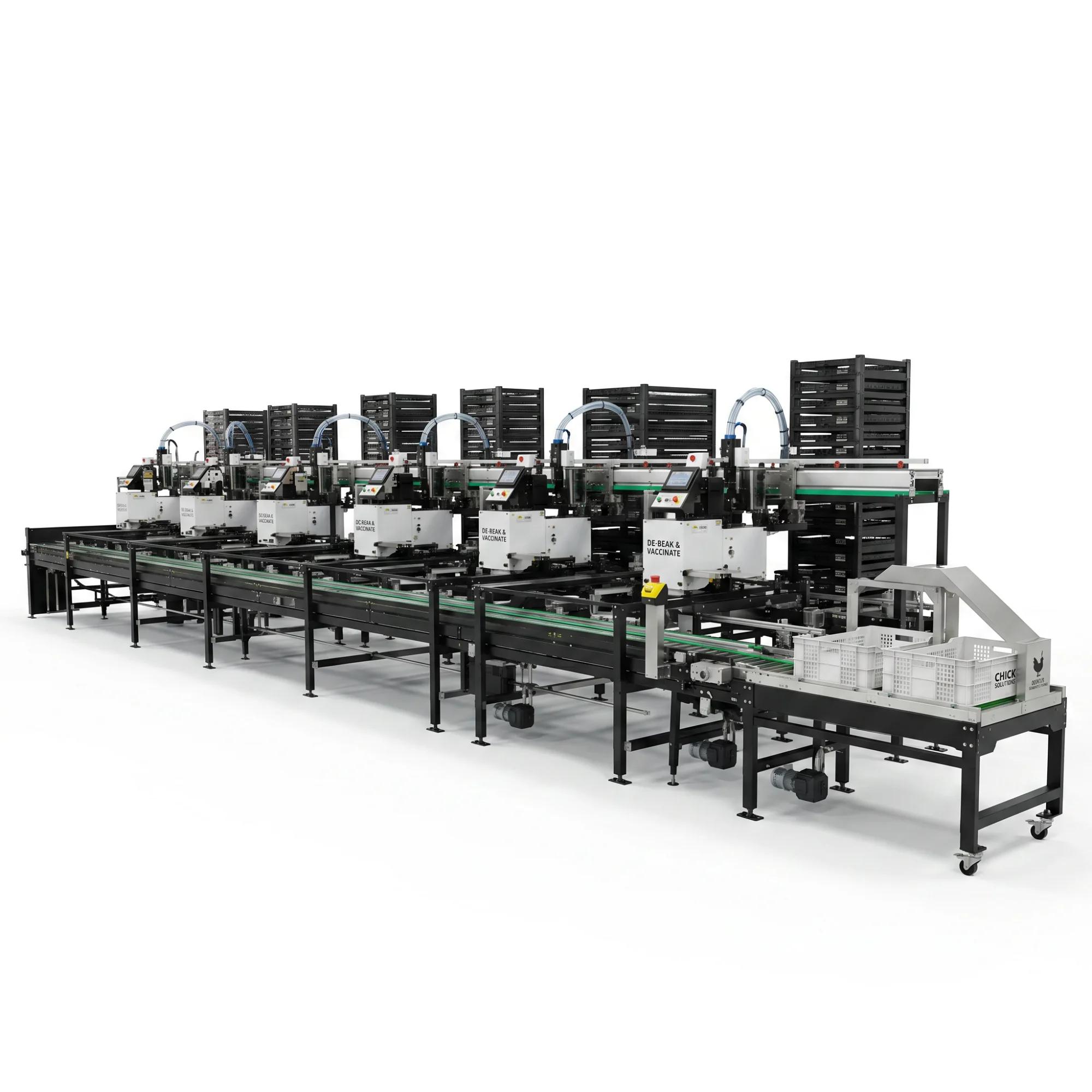
A turnkey poultry hatchery processing line sounds simple: one supplier, one project, one delivery. In practice, the result depends on seven decisions that should be made before manufacturing starts. If those decisions remain vague, “turnkey” can become a label that hides site work, interfaces, acceptance, and training responsibilities.
This guide gives buyers a practical way to review a proposal without turning the conversation into a machine catalogue.
Decision 1: What Does Turnkey Actually Include?
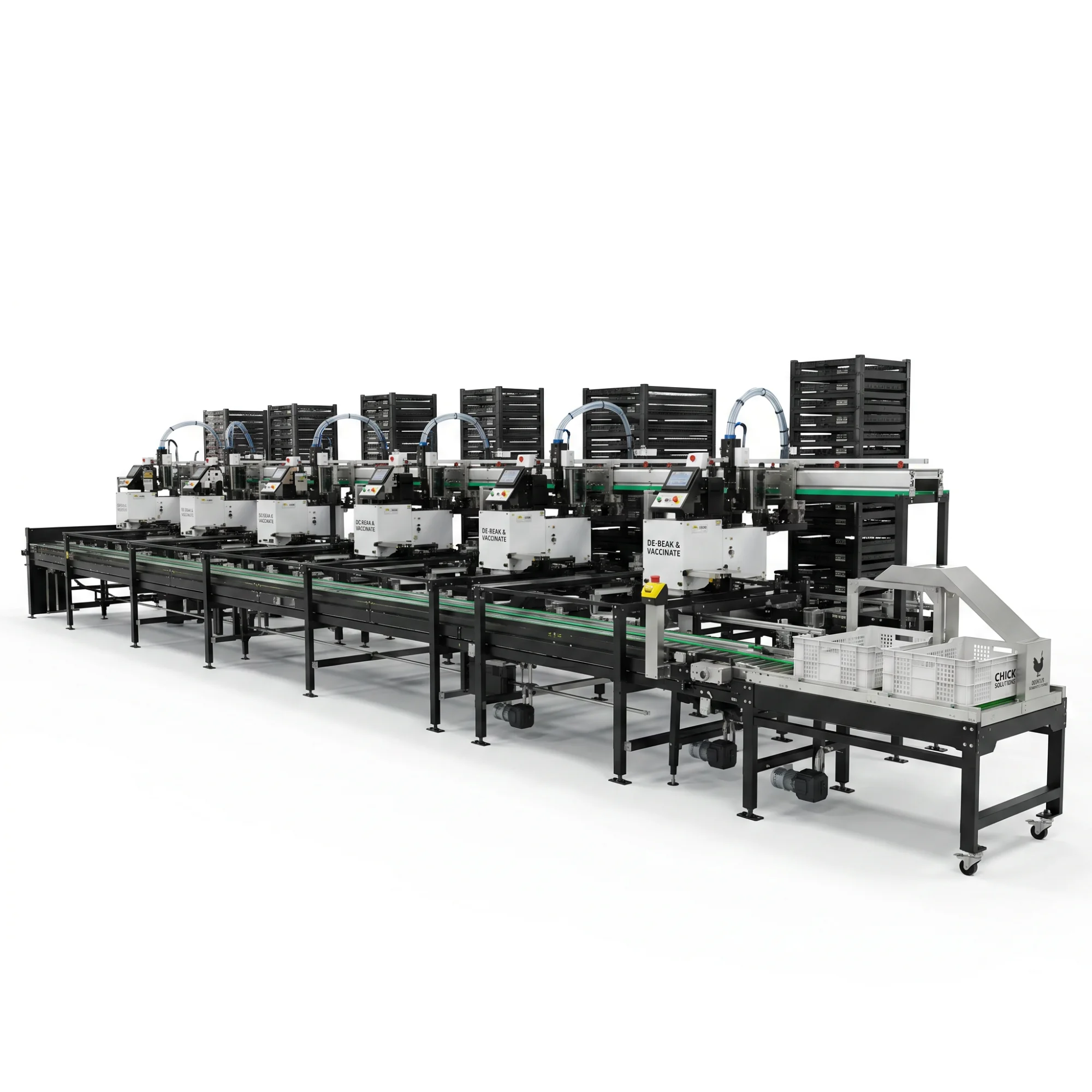
Ask for a line-by-line scope covering equipment, controls, conveyors, frames or crates, electrical work, drawings, packaging, shipping, installation guidance, commissioning, training, recommended spares, and after-sales support. “Complete line” should be defined in the quotation, not inferred from a sales headline.
Jili Intelligent develops hatchery equipment and integrated systems through JuliSense products. The customer should confirm which functions are supplied, which are optional, and which remain customer or local-contractor work.
Turn exclusions into actions
For each exclusion, write the customer action, required date, interface, and evidence. This turns “by others” into a manageable project item.
Check the delivery boundary
Confirm whether delivery ends at the port, the site, the installed line, the commissioned line, or the trained operator. Different boundaries create different budgets and schedules.
Decision 2: Which Process Does the Line Need to Protect?
Describe the actual flow from receiving or preparation through chick handling, trimming, vaccination, transfer, conveying, packing, stacking, and release. The line should protect identity, timing, operator visibility, cleaning, and controlled pauses across the entire route.
Draw the customer handoffs
Mark where upstream and downstream equipment meet, where people take over, where a batch waits, and where a quality or animal-health decision is made. A line that works only inside the supplier's boundary is not a turnkey answer.
Use ordinary conditions
Include replenishment, breaks, changeover, cleaning, and a planned pause in the process description. An ideal continuous run is not enough to design a working day.
Decision 3: What Must Be Proven Before Shipment?
Factory testing should use agreed conditions and produce evidence that travels with the line. Confirm what will be checked mechanically, electrically, in controls, at interfaces, during continuous running, and in safe operation.
For machinery risk assessment and risk reduction, ISO 12100 provides a general framework. Apply applicable requirements to the final system and destination.
Separate a test from a claim
Write what the test observes and what it does not establish. This prevents a successful demonstration from being presented as universal production performance.
Keep the acceptance index short
Use a simple index linking each acceptance item to its condition, owner, record, and closure evidence. Buyers can then find the proof without searching through a long folder.
Decision 4: Who Owns the Site Readiness Work?
Site readiness may include floor preparation, utilities, voltage and frequency, drainage, access, lifting, room clearance, upstream and downstream equipment, network or control connections, and local compliance. Put these items in a responsibility matrix before shipping.
Confirm local details early
The supplier needs the correct voltage, frequency, language, layout, production window, and installation constraints. A missing detail discovered after arrival can change the schedule and cost.
Preserve service access
Do not fill every open space with equipment. Reserve paths for maintenance, cleaning, inspection, and safe recovery. The layout should show people as well as machines.
Decision 5: How Will the Line Be Commissioned?
Commissioning should have visible gates: site readiness, dry checks, controlled movement, representative run, interface confirmation, cleaning access, customer teach-back, and open-item review. Agree the evidence and decision owner at each gate.
Use customer-led trials
Customer operators should lead at least part of the representative test. Their questions reveal whether labels, documents, access, and training are understandable without continuous supplier prompting.
Include recovery
Run an approved pause or downstream unavailability scenario. Record state, communication, inspection, reset, restart checks, and release authority. A line is not accepted only because it runs smoothly.
Decision 6: What Training Does the Customer Actually Need?
Training should cover normal operation, boundaries, exceptions, cleaning, maintenance access, records, support requests, and handover. Different roles need different teach-back: production, quality, maintenance, sanitation, project ownership, and animal-health or welfare ownership.
JuliSense describes installation support, commissioning, training, and after-sales follow-up on its service page. The commercial agreement should state what training is included, where it occurs, and what evidence is delivered.
Test the next-shift explanation
Give the handover folder to someone who did not attend every project meeting. Ask that person to explain the line route, stop boundary, cleaning release, and support path. Record any missing information.
Decision 7: What Happens After Handover?
Turnkey ownership continues after the first production day. Confirm spare information, preventive checks, support channels, response assumptions, remote support, escalation, documentation updates, and open-item closure.
The WOAH Terrestrial Code offers an internationally recognized animal-health and welfare reference; actual site decisions remain with qualified customer owners and applicable destination requirements.
Define a useful support record
The customer should know what to send when support is needed: machine identification, configuration, state, date, event, message, recent change, records, and approved photographs or video.
Keep the commercial boundary visible
State which parts, travel, remote support, upgrades, and training are included or excluded. This protects both the customer and supplier from assumptions.
A Turnkey Review Scorecard
| Gate | Good evidence | Decision owner |
|---|---|---|
| Scope | Equipment list and exclusions | Procurement |
| Process | Agreed flow and handoff map | Production |
| Factory test | Conditions and acceptance index | Quality |
| Site readiness | Responsibility matrix | Project lead |
| Commissioning | Gate records and recovery test | Engineering |
| Training | Customer teach-back | Production and maintenance |
| Support | Spare and escalation index | Project owner |
Use the same scorecard across proposals. It keeps a turnkey poultry hatchery processing line comparison grounded in customer outcomes rather than only price or headline capacity.
Buyer Questions Before Quotation
Does turnkey include civil work?
Ask specifically about floors, drains, utilities, lifting, access, local contractors, and connection to existing equipment.
Which inputs must the customer provide?
Confirm poultry type, production conditions, staffing, procedures, layout, voltage, frequency, records, and acceptance roles.
What happens if one downstream zone stops?
Ask how the line protects current work, shows status, communicates the event, and returns to an authorized state.
How should a buyer start with JuliSense?
Use the JuliSense contact page to share capacity, layout, process scope, existing interfaces, schedule, and turnkey expectations.
A Short Pre-Order Workshop Prevents Long Corrections
Bring procurement, production, engineering, quality, maintenance, and project ownership into one pre-order workshop. Ask each role to identify one must-have, one risk, one customer input, and one acceptance record. The output should be a short decision log linked to the quotation.
Ask production to challenge the rhythm
Production should test breaks, replenishment, changeover, cleaning, and the handoff to the next shift. A turnkey poultry hatchery processing line that works only in continuous motion is not ready for ordinary ownership.
Ask engineering to challenge the boundary
Engineering should review utilities, signal ownership, maintenance access, safe states, and future expansion. A turnkey poultry hatchery processing line becomes easier to install when those questions are closed before fabrication.
Ask quality to challenge the evidence
Quality should identify the condition, record, and authorized closer for every acceptance item. This keeps the project grounded in proof rather than general confidence.
That evidence should remain attached to the turnkey poultry hatchery processing line handover instead of being separated into an informal meeting note.
Turnkey Should Mean Fewer Unknowns
A turnkey poultry hatchery processing line is valuable when scope, process, testing, site readiness, training, and support are explicit. JuliSense can help buyers develop those decisions into a practical project plan while the hatchery retains control of its operating procedures and acceptance authority.