


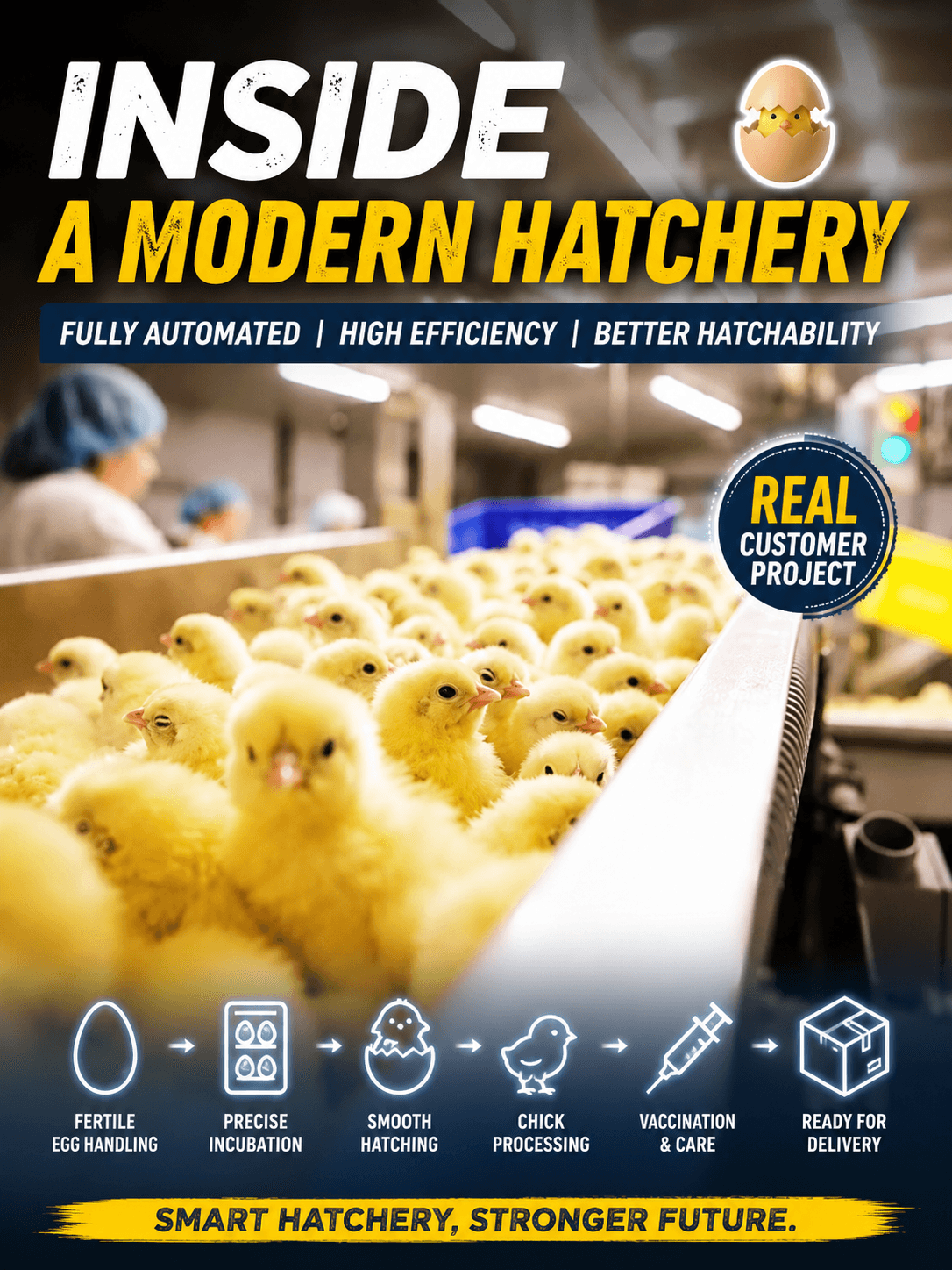
At 8:20 a.m., every station looks fast. Chicks arrive steadily, operators have full supplies, and empty crates are ready. At 10:05 a.m., two batches arrive close together, one station pauses, a crate change takes longer than expected, and the downstream area begins to fill.
That second moment should decide whether a high capacity chick processing machine fits the hatchery. Capacity is not the speed of one machine during a smooth demonstration. It is the ability of the whole process to absorb a peak, recover from ordinary interruptions, and finish the planned work inside the available window.
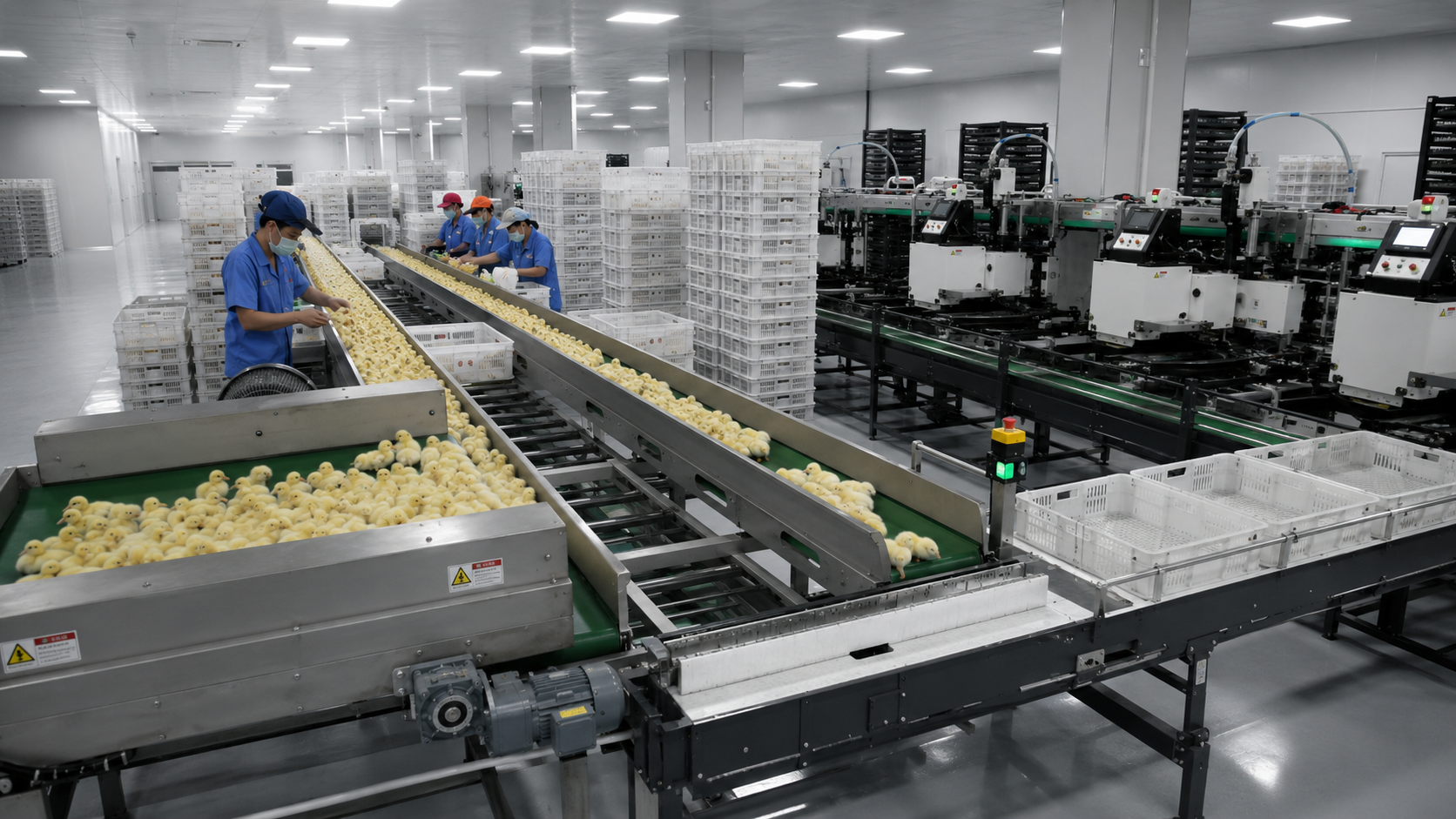
Daily Average Can Hide the Real Problem
Suppose a hatchery processes the planned daily volume within one shift. On paper, the average rate looks comfortable. In practice, most chicks may arrive during two concentrated periods. The line runs below its potential for much of the day and then becomes overloaded for forty minutes.
Buying a faster station based on the daily average may not solve this. If the delay occurs at chick transfer, operator presentation, crate supply, stacking, or stop recovery, the new machine will simply wait faster or create a larger queue.
A better starting point is the busiest fifteen to thirty minutes of a normal production day. Compare how many chicks arrive, how many leave each stage, where queues appear, and what the operators are doing when flow slows. This short window often reveals more than a monthly production total.
Follow One Difficult Morning Through the Line
The peak begins when a larger batch reaches chick transfer. Jili Intelligent, the company behind Julisense.com, publishes a day-old chick picking and transfer machine as part of its hatchery equipment range. In a connected project, transfer must feed the next stage at a rhythm that operators and downstream equipment can actually accept.
For the first few minutes, the process remains balanced. Then one operator pauses to replenish supplies at a treatment station. The station itself may have a high rated output, but its effective output falls while presentation stops. Chicks continue arriving from upstream, so a buffer begins to fill.
Next, empty crates reach the loading area late. Treatment can continue only until the available crate positions are used. A line that seemed limited by the main processing station is now limited by crate logistics. When crates finally arrive, the team tries to recover, but the downstream stacker is still clearing the earlier queue.
Nothing in this story is an exceptional failure. It is a normal combination of batch variation, replenishment, and material handling. A high-throughput line needs to manage these interactions without relying on operators to invent a new route each time.
Four Places Where Capacity Disappears
Arrival variation
Hatchery work rarely reaches equipment at a perfectly even rate. The line needs enough short-term flexibility to receive a surge without creating unsuitable accumulation. A buffer can help when the interruption is temporary, but it should have a clear purpose. A larger buffer cannot repair a stage that is chronically slower than the rest of the process.
Operator work
Equipment output depends on how chicks, supplies, and crates are presented. The buyer should watch the operator during startup, normal running, replenishment, and restart. If reaching, turning, or waiting repeatedly interrupts presentation, the practical capacity will differ from the continuous machine rate.
Connected equipment
Transfer, treatment, vaccination, counting, conveying, loading, and stacking do not need identical rated speeds. They do need a coordinated operating range. The question is what happens when one module pauses: which areas continue, where material waits, and how the line returns to normal flow.
Jili Intelligent publishes a combined infrared beak trimming and vaccination machine and a related conveying and stacking line. In a complete project, the interfaces between these stages matter as much as the individual machines.
Recovery after a stop
Two lines may lose the same five minutes and produce different shift results. One returns to stable flow quickly. The other restarts in the wrong order, sends a new surge into a full buffer, and loses another fifteen minutes. Capacity planning should therefore include recovery rate, not only running rate.
Turn Capacity Claims Into a Shared Picture
Ask the supplier to state the conditions behind the proposed output. Then compare those conditions with measured site data.
| Capacity question | What the hatchery should compare |
|---|---|
| Arrival pattern | Normal batch sequence and peak interval, not only daily total |
| Staffing | Actual operator roles, breaks, replenishment, and crate handling |
| Line balance | Output and stop behavior of connected stages |
| Buffering | Location, purpose, safe limit, and recovery plan |
| Cleaning | Time from production finish to approved restart |
| Expansion | Future volume and the interfaces that must remain usable |
This table is not meant to produce one universal capacity number. It helps the buyer see whether the supplier and the hatchery are describing the same working day.
Factory Testing and Site Testing Answer Different Questions
A factory test can confirm the machine configuration, controls, alarms, basic sequence, and agreed interfaces. It is also a good time to rehearse a controlled stop and restart rather than watch only continuous flow.
The site test answers the broader question: can the installed process work with the real room, operators, utilities, crate fleet, batch pattern, and surrounding equipment? A machine can pass at the factory and still underperform if the hatchery has not prepared the interfaces on which the proposal depends.
Agree on both test purposes before the order. The supplier should state the operating assumptions, while the hatchery should provide representative site information and complete its own preparation responsibilities.
What Management Should Ask Before Adding More Machines
When production falls behind, adding another station feels like the obvious answer. It may be correct, but only after the current bottleneck is identified.
If the queue forms before treatment, investigate upstream transfer and presentation. If finished work waits for crates, review loading and crate supply. If the line repeatedly loses time after small stops, focus on control logic, buffer behavior, operator guidance, and restart ownership. If sanitation consumes the production margin, access and cleaning sequence belong in the capacity discussion.
The related Julisense guide on maximizing output with a day-old chick processing line provides more context for balancing these stages.
Where Jili Intelligent Fits
Jili Intelligent publishes complete hatchery automation solutions alongside individual modules for chick transfer, treatment, vaccination, conveying, loading, and stacking. That range supports a line-level conversation when the customer's problem cannot be solved by one isolated machine.
The proposed capacity still needs to be tied to the customer's batch data, room layout, staffing, crate flow, utilities, cleaning requirements, and project boundary. Buyers should ask the quotation to distinguish the capacity of an individual module from the expected behavior of the connected process.
Frequently Asked Questions
Is the highest hourly rating the safest choice?
No. Oversizing one station can add cost and complexity without improving shift output. Match the design to the measured peak, actual bottleneck, recovery needs, and expansion plan.
How much buffer should the line include?
Enough to manage a defined short interruption without creating unsuitable accumulation or hiding chronic imbalance. Use observed arrival variation, normal stop duration, acceptable waiting, and recovery rate to size it.
What information belongs in a capacity inquiry?
Provide batch-level production data, the operating window, stop history, staffing, current process map, room layout, crate route, utilities, required operations, and future growth assumptions.
Prove Capacity During the Difficult Part of the Day
A high capacity chick processing machine should be judged during arrival surges, replenishment, short stops, crate delays, cleaning, and recovery. Smooth continuous running is useful evidence, but it is only one part of the decision.
Send Jili Intelligent your peak batch data, stop history, process map, room layout, crate route, staffing, and desired project boundary through the contact page. Ask the proposal to state its capacity assumptions and the conditions planned for factory and site testing.
Reference Point
- WOAH international standards provide animal-health and welfare reference material for poultry operations.