


Ducklings are not small chickens, and a hatchery that runs both knows it. They arrive at the processing room wetter, they move differently, and they react to handling in their own way. Planning waterfowl hatchery equipment is therefore less about buying a different catalogue and more about asking better questions before the order is placed.
That conversation starts with something that is easy to forget in a busy project: the same machine can serve broilers, layers, breeder stock and waterfowl, but only if the differences are written into the scope rather than discovered on the first day of commissioning. Waterfowl hatchery equipment is not a separate category of machinery; it is the same machinery asked a more demanding set of questions.
Why this deserves its own conversation
Most hatchery automation projects are written around chicken production because that is where the volume is. When a plant also handles ducklings or goslings, the take-off area, the vaccination station and the crate loop all inherit a second set of birds with a different daily rhythm.
The practical risk is not that the equipment cannot do it. It is that the specification quietly assumes one species, and the line ends up being adjusted by hand every time the other species runs.
What changes and what stays the same
The table below is not a technical specification. It is a list of the topics that should be confirmed with the equipment supplier, in writing, when more than one species shares a line.
| Topic | Why it matters for waterfowl | What to ask for |
|---|---|---|
| Presentation and handling | Bird size and body shape change how a chick sits in a carrier | A demonstration using your own bird type, not a substitute |
| Wet birds and the room | Water carried through the line affects surfaces and extraction | Drainage, cleaning access and extraction sizing |
| Processing rate | Throughput per hour differs by species on the same machine | A stated rate per species, per configuration |
| Changeover between species | Mixed-species weeks mean the line resets regularly | A written changeover sequence and its expected duration |
| Vaccination route | The route follows the flock health programme, not the hardware | Confirmation that the station supports your programme's route |
Five questions for the supplier meeting
Bring these to any meeting about waterfowl hatchery equipment. They are simple, and the quality of the answers tells you a great deal about how the project will go.
Which species, at what rate, in which configuration?
Ask for a rate per species. A single headline figure that quietly refers to broiler chicks is not a specification for a duckling line, and it will not survive contact with your production plan.
What has to change between species?
Some settings, some fixtures, or nothing at all? The answer determines how often your team will be doing changeover work and how much training they need. Get the sequence in writing rather than in conversation.
How does the machine behave with a wet bird?
Water changes friction, dust and hygiene. Ask where the water goes, which surfaces need draining, and how cleaning between species is handled in the area around the machine.
What happens at the handover points?
Take-off, vaccination, counting and crates all have to agree on orientation and rhythm. Species change is the moment when those agreements are tested, so it belongs in the planning conversation rather than the commissioning week.
Which parts and settings need documenting for a mixed operation?
If your team runs more than one species, a single laminated card per species is worth more than a hundred-page manual. Ask who produces it, and check it during the acceptance test.
Handling is the part everyone underestimates
Gentle handling is a mechanical property, not a promise. It shows up in how a chick or duckling is supported through the machine, how far it can drop, and how much of the movement depends on airflow rather than contact.
When a line runs two species, the handling design has to work for the smaller bird without being clumsy for the larger one. This is where a demonstration with your own birds is worth more than any specification table, and it is a fair request for any supplier to accommodate.
The vaccination route belongs to your veterinarian
Whether a flock is vaccinated by spray or injection is a flock health decision made with the veterinary team, and no equipment supplier should be choosing it. What the supplier owes you is honesty about which route a given station supports, and what changes if that route changes.
For a mixed operation, that question becomes sharper. If your waterfowl programme uses a different route from your chicken programme, the room has to host both without confusion at the handoff, and the operator training has to reflect two routines rather than one. International reference points, such as the WOAH Terrestrial Code and manual, are useful when a plant wants to describe its own biosecurity and vaccination practice in recognised language.
What to put in the RFQ
An RFQ for a mixed-species line is different from a chicken-only version. These are the items that most often get left out and most often cause rework, and they are the difference between waterfowl hatchery equipment that fits your operation and equipment that has to be argued with every week.
| Include | Why |
|---|---|
| Every species, with expected volumes | Turns a general promise into a measurable requirement |
| Weekly production pattern | Shows how often changeover actually happens |
| Room drawing and utilities | Prevents assumptions about drainage, air and power |
| Existing equipment to be reused | Protects interfaces you already own |
| Acceptance test criteria per species | Gives both sides the same target on test day |
| Training and documentation expectations | Makes the handover a deliverable, not a courtesy |
Where JuliSense fits
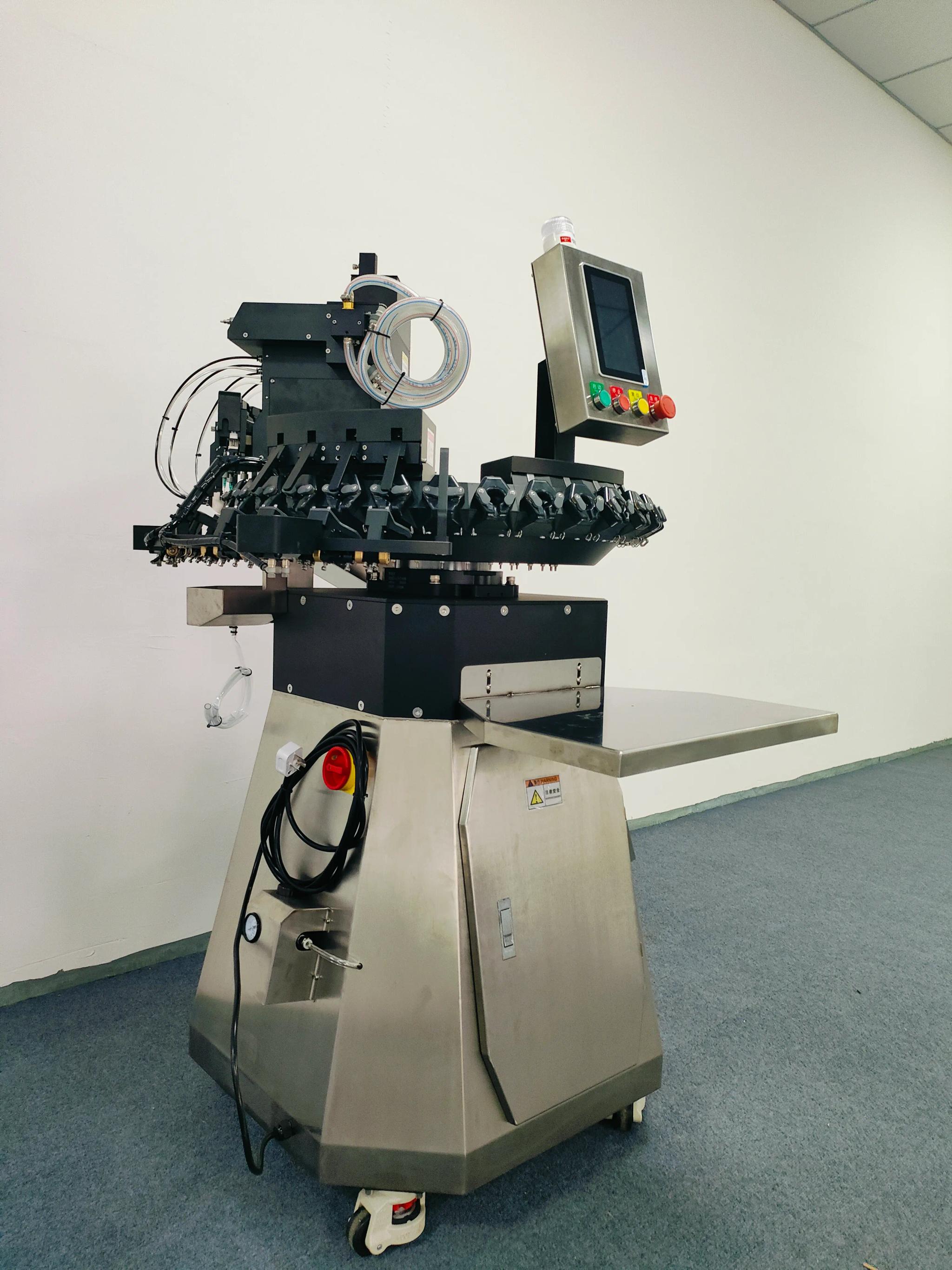
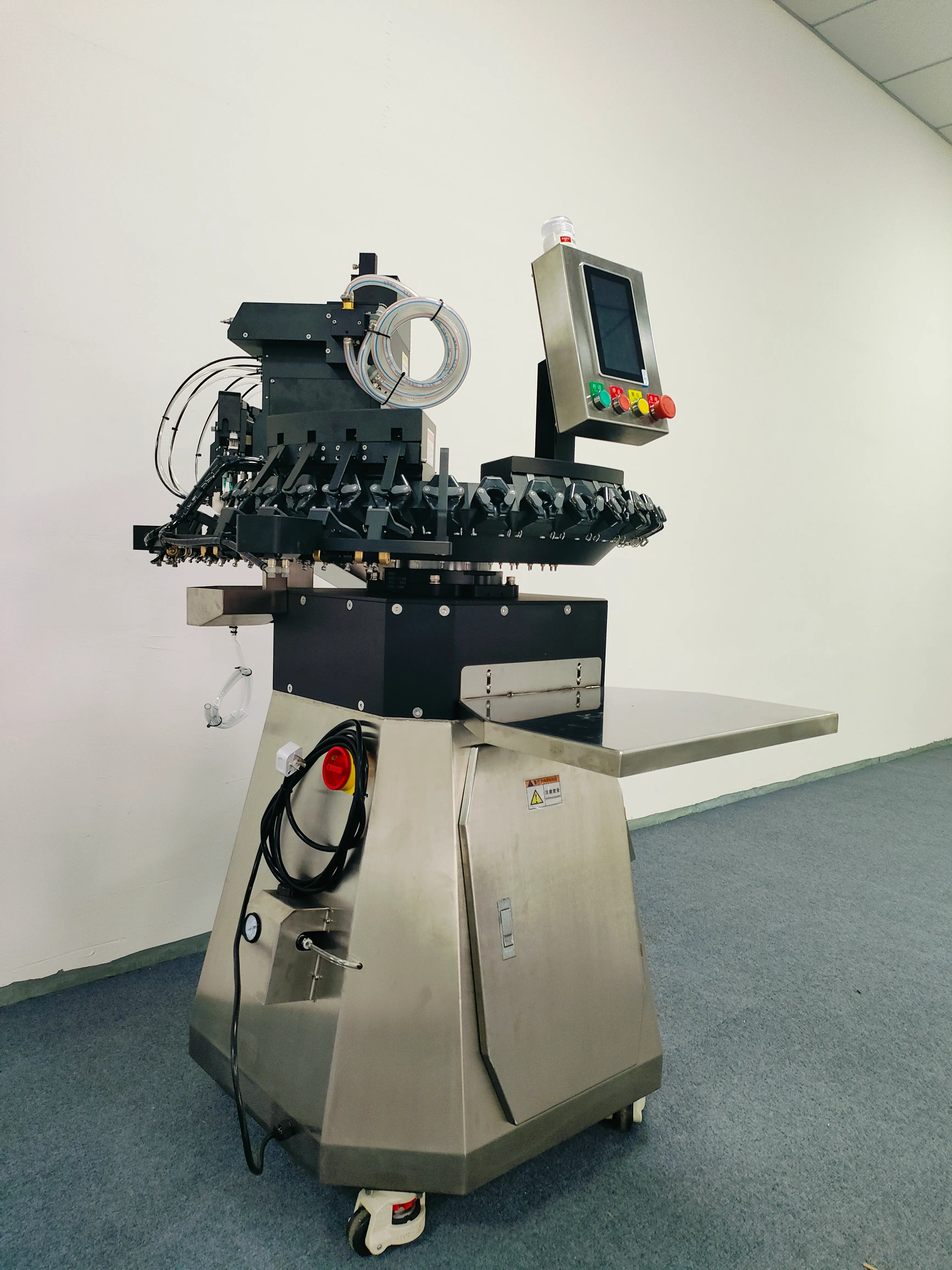
JuliSense is the hatchery equipment brand of Jili Intelligent. The day-old chick infrared beak trimming and vaccination machine was developed for broiler chicks, layer chicks, breeder chicks and waterfowl, and combines infrared beak treatment with single or dual needle vaccination, automatic counting, needle sterilisation, dust removal and alarm monitoring in one unit, rated at 3,800–4,200 chicks per hour with one operator.
Because waterfowl work rarely involves only one machine, the product range also covers transfer, conveying, crate handling and water bath equipment, so the mixed-species line can be scoped in one place. The service page sets out how design, integration and support are handled, the about page describes the manufacturing base, and the FAQs cover the questions buyers raise before a project starts.
If you are planning a line that has to serve more than one bird type, send the species list, the weekly pattern and the room drawing through the contact page. It is a far easier conversation when the differences are on the table from the first meeting.
Frequently asked questions
Can one line process both chicks and ducklings?
Many plants do exactly that, provided changeover steps, cleaning routines and rates per species are agreed in advance and written down. The risk is not the machine, it is the assumption that it will simply work.
Does waterfowl hatchery equipment need different cleaning?
The cleaning standard comes from your own biosecurity plan. What changes is the physical reality: more water, more organic load, different drainage demands. Those points belong in the room design, not only in the machine specification.
How long does a species changeover take?
Ask for it in writing and then verify it during the acceptance test with your own team. A number taken from a sales conversation and a number taken from a stopwatch are rarely the same.
Is infrared beak treatment suitable for waterfowl?
Whether a flock programme includes beak treatment is a decision for your veterinary and production team. What the equipment side owes you is transparency: the machine uses non-contact infrared treatment, and the supplier should state clearly which bird types a given configuration is designed for.
Buying waterfowl hatchery equipment well is mostly a matter of refusing to generalise. Name the birds, name the volumes, and make the supplier answer for both.