


Ask a hatchery engineer what fails first on a day-old chick line and the answer is rarely a motor. It is the small hardware around the heads: a lens that has gone cloudy, a clamp that no longer closes evenly, a vacuum line half filled with down. None of it stops the machine on Tuesday. All of it shows up in trim quality by Friday.
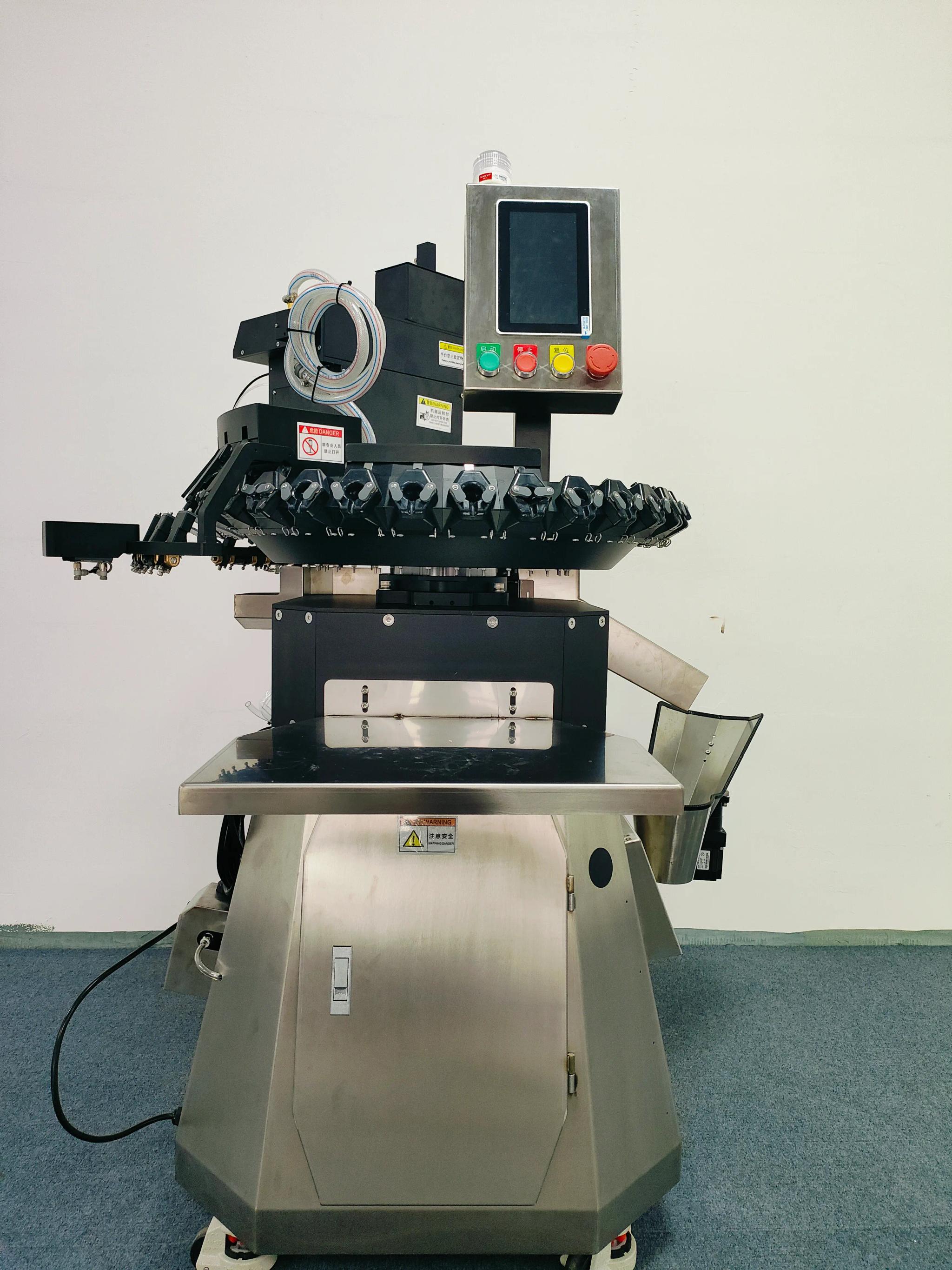
That is why head care deserves its own routine rather than a line in a manual nobody opens. The machine is a rotary carousel. Chicks are presented to a ring of heads that carry out infrared beak treatment, then move on to single or double needle vaccination, with automatic counting, needle sterilisation and dust removal inside the same enclosure. JuliSense rates the unit at 3,800–4,200 chicks per hour with one operator. Infrared beak trimming machine maintenance is what keeps that figure honest. Skip it and the line drifts without ever throwing an alarm.
The window that decides the next shift
Most hatcheries we visit have a natural gap between flocks: the trays are cleared, the room is washed down, and the next batch of chicks is still in the hatcher. That window is usually an hour or two. It is the single best maintenance opportunity in the day, because the machine is empty, the room is already wet, and nobody is waiting on throughput.
Use it deliberately. A head that is cleaned while the residue is still soft takes minutes. The same head cleaned the following morning takes considerably longer, and the difference is usually a brush, a pick and some patience. Nothing in this work is complicated. It is ordinary infrared beak trimming machine maintenance carried out while the room is still quiet, which is exactly what makes it easy to postpone.
Clean while the machine is still warm
Down, shell dust and vaccine residue all set as they cool. Wipe the head ring and the presentation area before the room temperature drops, using the cleaning agents your biosecurity plan already approves. Pay attention to the surfaces a chick actually touches, not just the surfaces a visitor can see.
Inspect the optics dry
Infrared heads behave differently when a film of moisture sits on the lens or the guard. Dry the assembly before you inspect it, then look for clouding, scratches or residue that survived the wipe. This is also the moment to check that nothing has worked loose around the head mounts after a long run.
Close the window with a written sign-off
A short entry beats a long memory: who cleaned which heads, what was replaced, and whether the next shift needs to watch anything in particular. Two lines in a log book is enough. The point is that the information survives the shift change.
A week on one page
The schedule below is the shape many JuliSense customers settle into. It is deliberately short. A routine that takes twenty minutes and happens is worth more than one that takes two hours and gets postponed. Treat the table as a starting draft, then move the intervals until infrared beak trimming machine maintenance matches the way your own week is loaded.
| When | What the team checks | What "done" looks like |
|---|---|---|
| Between flocks | Head ring, presentation area, optics, vacuum inlet | Surfaces clean and dry, no visible residue, vacuum clear |
| End of shift | Counts against the flock record, alarm history, needle changes | Numbers reconciled, alarm list read and initialled |
| Once a week | Clamp alignment, hose condition, sterilisation circuit, filter state | Faults either fixed or written into the open list |
| Once a month | Head mounts, cabling, air and vacuum lines, control cabinet | Torque checked, no chafing, cabinet clean and dry |
If your hatchery runs two or three flocks a day, the weekly and monthly rows are the ones that get squeezed. Protect them anyway. Almost every trim-quality complaint we are asked to investigate traces back to a monthly check that stopped happening two quarters ago, long after anyone still remembered making the decision to skip it.
What looks like a machine fault but usually is not
Two patterns come up often enough to be worth naming, because both are cheaper to fix at the bench than in a spare-parts order. They are also the two findings that turn up most in infrared beak trimming machine maintenance reviews.
The trim looks uneven across the ring
When one side of the carousel trims differently from the other, the cause is usually mechanical rather than electrical. A clamp that sits a fraction off, a head that was refitted without checking its seat, or a presentation rail that has shifted after a heavy wash-down. Compare the heads against each other before you touch the control parameters.
The count drifts away from the flock record
A counting disagreement of a few dozen chicks over a long run is normally a feeding or presentation issue, not a sensor failure. Watch one full revolution of the carousel with the operator and count what you see. If chicks are reaching the head at an uneven rhythm, the counter is faithfully reporting a real problem upstream.
Parts worth keeping within reach
You do not need a warehouse. You need the handful of items that decide whether a head can be returned to service during the between-flock window or whether the line waits for a courier.
| Item | Why it matters | Sensible holding |
|---|---|---|
| Spare head assembly | Lets you swap a suspect head and inspect the original off-line | One, matched to your machine configuration |
| Cleaning and lens consumables | Determines how quickly the between-flock window closes | One production month |
| Needles and seals | Wear items behind vaccination consistency | Per the intervals agreed at handover |
| Vacuum and air-line spares | Often the real reason dust removal underperforms | Two of each common fitting |
When you order, send the machine serial number and a photograph of the part. It saves a week of email, especially on configurations that have changed since the original purchase. A parts list is only worth keeping if it matches the way infrared beak trimming machine maintenance actually happens in your plant, so review it once a year rather than once a decade.
Where JuliSense fits
JuliSense is the hatchery equipment brand of Jili Intelligent. We build the day-old chick infrared beak trimming vaccination machine as a single integrated unit rather than two separate stations, which is precisely why head care has to be treated as one routine. The product range covers the rest of the line, including transfer, conveying, crate handling and crate washing.
Two earlier notes may help your team set the rhythm: the commissioning checklist for the first flock, and One Station, Seven Questions for teams still deciding between one machine and two. The service page explains how training, spares and remote support are scoped, the about page sets out where the equipment is built, and the FAQs answer the questions buyers send us most often.
If you would rather have the routine drafted around your own line, send the layout and the shift pattern through the contact page. A short conversation about how the machine is loaded usually produces a better maintenance plan than any generic schedule.
Equipment care is one of the points buyers ask about in every supplier meeting, and it is a fair one. WOAH publishes internationally recognised standards for poultry health and vaccination practice in its Terrestrial Code, and it is worth knowing where your flock health programme comes from before you decide how tight your own maintenance tolerance should be.
Frequently asked questions
How long should a between-flock clean take?
On a well-run line, twenty to thirty minutes for cleaning, drying and a visual check of the head ring. If it regularly takes longer, the issue is usually access or lighting rather than discipline.
Do we need a spare head assembly?
Most hatcheries benefit from one. It turns a suspected head fault into a twenty-minute investigation instead of a stopped line, and it gives your engineer something to compare against.
Can we clean the optics with the same agent used on the room?
Follow the cleaning agents approved in your biosecurity plan and the guidance issued with the machine. Some room chemicals leave a film that interferes with infrared performance even after the surface looks dry.
What actually indicates the head needs replacing?
Repeatable trim variation after alignment, physical damage to the head or its mount, or a fault the control system keeps reporting after the circuit has been checked. Replace on evidence, not on a calendar alone.
This is one of the few stations where quality is set by maintenance as much as by design, and infrared beak trimming machine maintenance is the reason two identical lines in the same town can produce very different results. Build the routine, keep the log, and the machine will keep doing quietly what it was bought to do.