

Day-Old Chick Injection Vaccinator: what buyers should actually be checking
A Day-Old Chick Injection Vaccinator is not just another piece of hatchery automation. For many poultry operations, it is the point where labor, throughput, and animal handling either come together cleanly or become a bottleneck. If you are sourcing for a hatchery, the real question is not whether the machine looks compact or modern. It is whether it can handle the volume, keep the workflow consistent, and reduce handling stress without creating a maintenance headache for the team that has to run it every day.
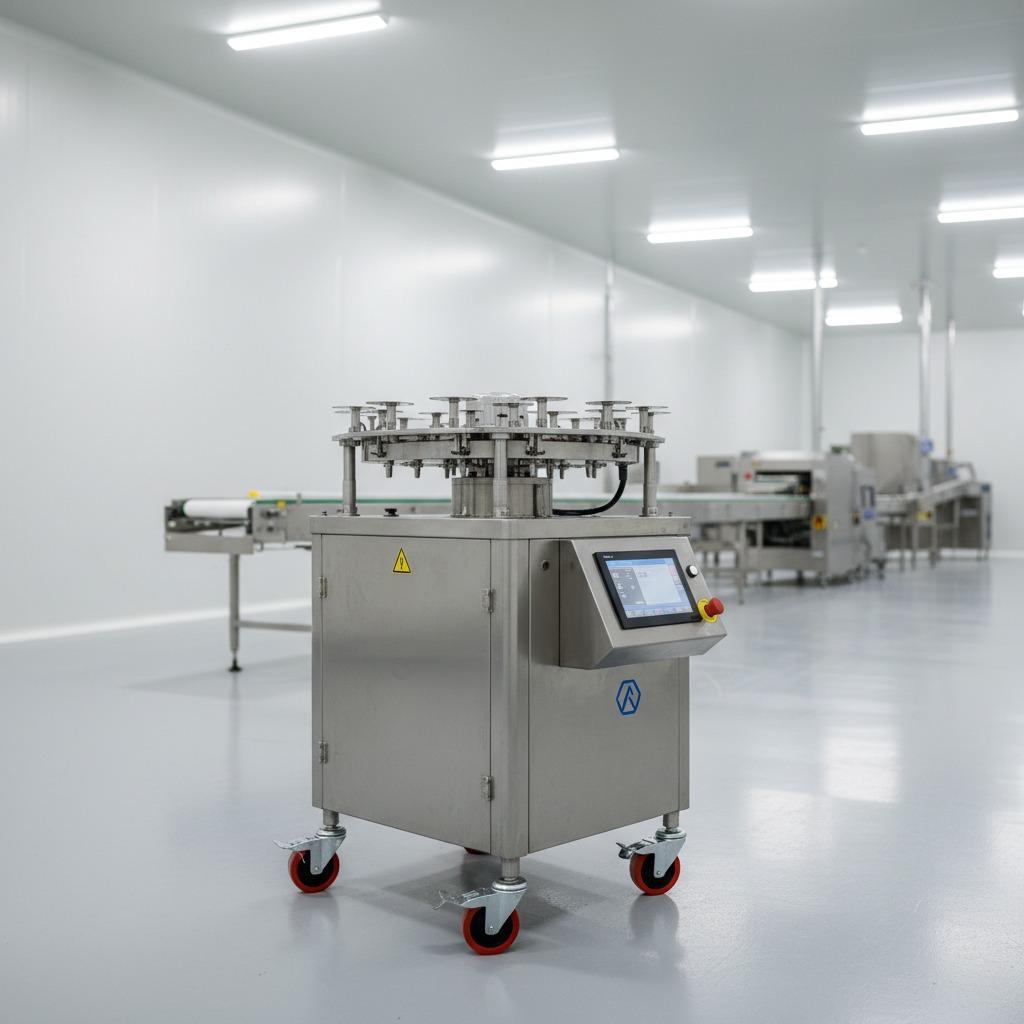
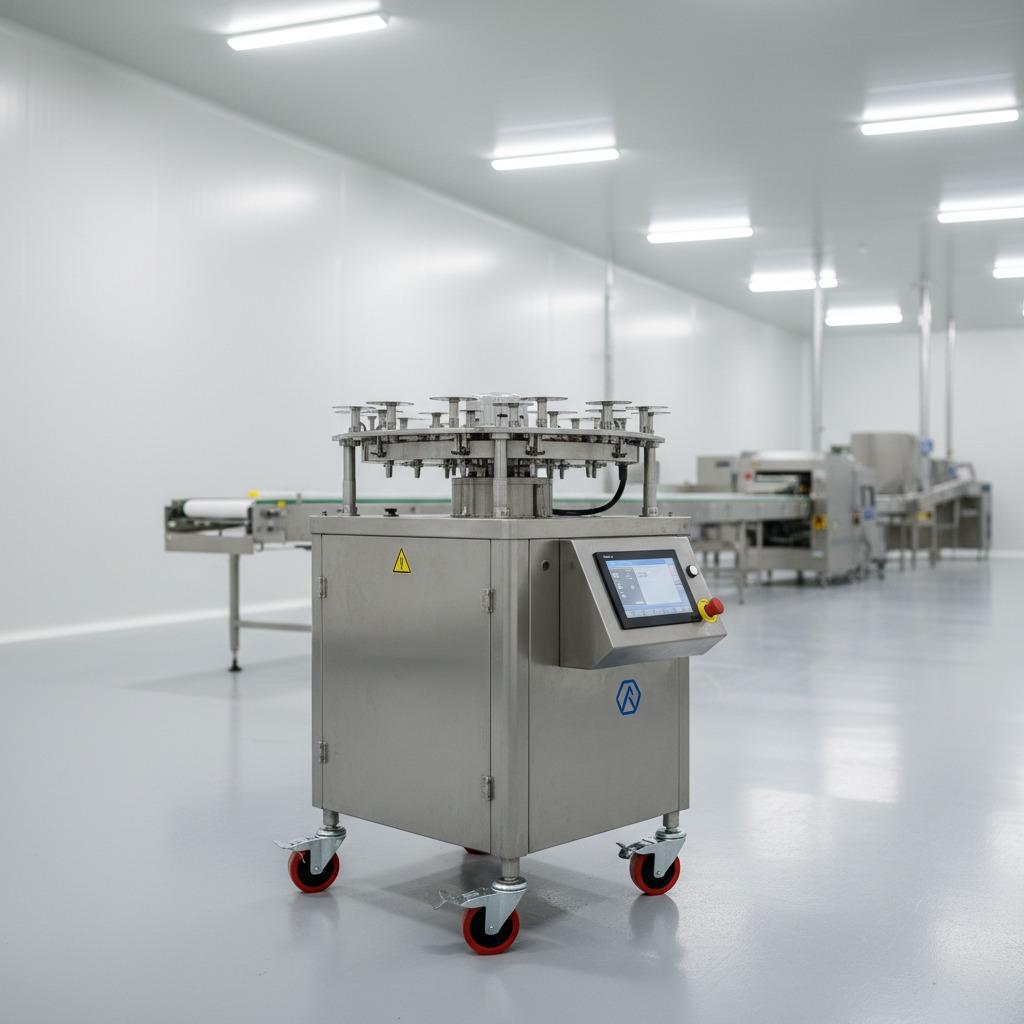
The unit described here fits the profile of a compact poultry hatchery automation machine, likely used in chick vaccination or an infrared beak trimming and vaccination workflow. The visible layout suggests an enclosed tabletop system with a stainless steel upper housing, blue lower base, touchscreen HMI, and a reservoir with clear tubing feeding a dosing or injection line. That tells a sourcing manager something useful: this is built for controlled liquid handling and repeatable processing, not for improvised manual use on a bench. In hatchery work, that distinction matters.
Why this equipment matters in the hatchery line
Day-old chick handling is a race against time. Chicks need to move through vaccination or other early-stage processing quickly, and they need to do so with as little variation as possible. Manual handling can work at small scale, but once the numbers rise, the process becomes vulnerable to fatigue, inconsistent dosing, and avoidable delays. An automated vaccinator is meant to stabilize that part of the operation.
The listed capacity of 3,800 to 4,200 chicks per hour places this machine in the practical throughput range that hatchery teams tend to care about. It is not a tiny pilot unit, but it is also not a giant line system that demands a large footprint and a large crew. The single-operator note is especially relevant. In real purchasing terms, that usually means labor reduction, fewer handoffs, and a cleaner workflow when a hatchery is trying to keep day-old chicks moving on schedule.
There is a practical caution here: capacity figures are only useful if they match your own handling rhythm. A machine can be rated for high throughput and still underperform in a hatchery if the upstream and downstream processes are not equally organized. In other words, do not buy the vaccinator in isolation. Buy it as part of the line.
What the visible build tells you
Even without a full technical sheet, the physical design gives clues about how the equipment is intended to be used. The stainless steel outer panels suggest a machine built for frequent cleaning and regular contact with hatchery environments. The blue painted metal base looks like a support structure rather than a cosmetic accent, and the angled front face with a small touchscreen HMI points to operator interaction at close range.
The top-mounted transparent reservoir or cup, the vertical support rod, and the clear tubing indicate liquid handling and dose delivery. In hatchery equipment, that usually means controlled movement of vaccine or another treatment fluid through a measured path to the application point. The visible fittings and connectors reinforce that impression. It is a compact mechanical system, but not a simple one.
One detail worth noting is the combination of a visual control interface and automated functions such as counting, needle sterilization, dust removal, and alarms. Those features are not decorative. They exist because chick processing is messy, repetitive work, and even a short interruption can affect throughput. A visual interface helps operators catch problems early, and automatic alarms are particularly useful where one person is supervising an entire batch.
Key functions buyers usually want from this type of machine
1. Consistent delivery
For a Day-Old Chick Injection Vaccinator, the heart of the decision is whether it can deliver a repeatable dose or treatment at speed. The exact vaccine compatibility and internal mechanism are not stated here, so it would be unwise to assume too much. Still, the surrounding description points to metering, injection, and treatment delivery as core functions.
2. Low labor dependence
Single-operator functionality is one of the strongest selling points in hatchery automation. If one trained person can supervise the unit, adjust the settings, and keep the line moving, that can ease staffing pressure. It does not eliminate labor, but it changes the kind of labor needed: fewer hands, more oversight.
3. Monitoring and control
The touchscreen HMI matters because operators need to see status quickly. In hatchery settings, people do not want a machine that requires guesswork. A clear interface can help with count tracking, process status, and fault alerts. That is especially important when a machine includes automated counting and alarm functions.
4. Hygiene-related features
The notes mention needle sterilization and dust removal. Those are worth attention, because hatchery environments are not forgiving. Dust, fluff, and residue build up quickly. Any equipment that anticipates that reality is more attractive than equipment that assumes a clean-room life it will never have.
Where this type of vaccinator fits best
This kind of machine is typically aimed at hatcheries processing day-old broilers, layers, or waterfowl. It also makes sense in automated vaccination lines or integrated chick processing stations where birds move through a controlled sequence of steps. For buyers planning a conveyor-linked system, the important issue is compatibility with the rest of the workflow rather than the machine alone.
A compact tabletop format can be useful when floor space is tight or when a facility wants a smaller processing station before committing to a larger line. That said, compact does not automatically mean simple. If the machine is to be integrated into a broader hatchery process, the purchaser should still ask how it connects, how it is maintained, and how cleaning is handled between batches.
Selection criteria that are easy to overlook
Most buyers start with capacity, and that is fair. But the better decisions usually come from the second layer of questions.
First, ask how the machine handles consistency during long shifts. A good Day-Old Chick Injection Vaccinator is not just fast at the beginning of the day. It should stay stable after several hours of operation, when operators are more likely to get tired and when residue can start to matter.
Second, consider how transparent the maintenance routine is. If the reservoir, tubing, and dosing line are easy to inspect, that saves time. If access requires too much disassembly, the machine may end up underused or improperly cleaned. That is a common source of regret in hatchery equipment purchases.
Third, think about alarms and operator feedback. A machine with useful alerts can prevent small issues from becoming batch-wide problems. A vague alarm, by contrast, just slows people down. The difference matters more in production than in brochures.
Finally, do not ignore the unknowns. The available notes do not confirm exact power requirements, dimensions, weight, sanitation rating, vaccine compatibility, or whether the pictured unit is a complete standalone system or a subsystem. A buyer should request those details before treating the machine as a finished specification.
Common mistakes when evaluating this equipment
The first mistake is buying on throughput alone. A stated 3,800 to 4,200 chicks per hour sounds efficient, but a hatchery should verify whether that speed is realistic under its own operating conditions.
The second mistake is assuming all “vaccination” machines are interchangeable. In practice, the handling method, dose control, and line integration can vary quite a bit. If the equipment is part of an infrared beak trimming and vaccination system, the buyer should be clear about which functions are present in the exact unit being quoted.
The third mistake is ignoring operator ergonomics. The touchscreen placement, front-edge controls, and overall access points may seem minor in a catalog image, but they affect real daily use. If an operator has to reach awkwardly or bend too often, the machine becomes more tiring than it should be.
Practical advice for sourcing teams
For sourcing managers, the best approach is to tie the machine to the actual hatchery workflow. Ask what happens before the chick reaches the station, what happens after it leaves, and where the bottlenecks are today. A compact system like this often makes sense when the site wants to improve one part of the process without rebuilding the whole line.
For engineering teams, the practical focus should be on interfaces: product feed, operator access, cleaning access, and how alarms are handled. Stainless steel housing is helpful, but it is not a substitute for a design that is easy to service. Clear tubing, reservoirs, and visible fittings are good signs, though they should still be checked for replacement ease.
For product teams planning an equipment package, the key is to define whether you need a standalone processing station or a subsystem inside a larger automated line. That one decision will shape everything else, from layout to staffing to maintenance planning.
FAQ: quick answers buyers usually ask
Is this machine only for vaccination?
Not necessarily. The notes suggest it is likely part of a vaccination workflow and possibly an infrared beak trimming and vaccination system. The exact function of the pictured unit should be confirmed before purchase.
How much labor can it save?
The single-operator note suggests meaningful labor reduction, but the real saving depends on line layout and batch size. One operator can still be busy; the difference is that the work becomes more controlled and less physically scattered.
Is compact always better?
Not always. Compact equipment is useful when space is limited, but access for cleaning and maintenance still matters. A machine that is too cramped can become a nuisance fast.
What to request before you buy
If you are seriously evaluating a Day-Old Chick Injection Vaccinator, ask for the exact process description, the list of included functions, operating requirements, maintenance routine, and integration details. Also confirm the stated capacity under the conditions that matter to your facility. That is the kind of information that separates a useful purchase from an expensive assumption.
And if the machine is meant to sit inside a broader hatchery automation line, make sure the supplier explains how it fits with upstream handling and downstream sorting or transfer. That is where the real value shows up—or disappears.
For buyers comparing hatchery equipment, this is the decision point: choose a vaccinator that matches your bird flow, staffing plan, and cleaning routine, not just the one with the biggest throughput number. If the system can deliver steady operation, clear control, and reasonable maintenance access, it is far more likely to earn its place on the floor.