


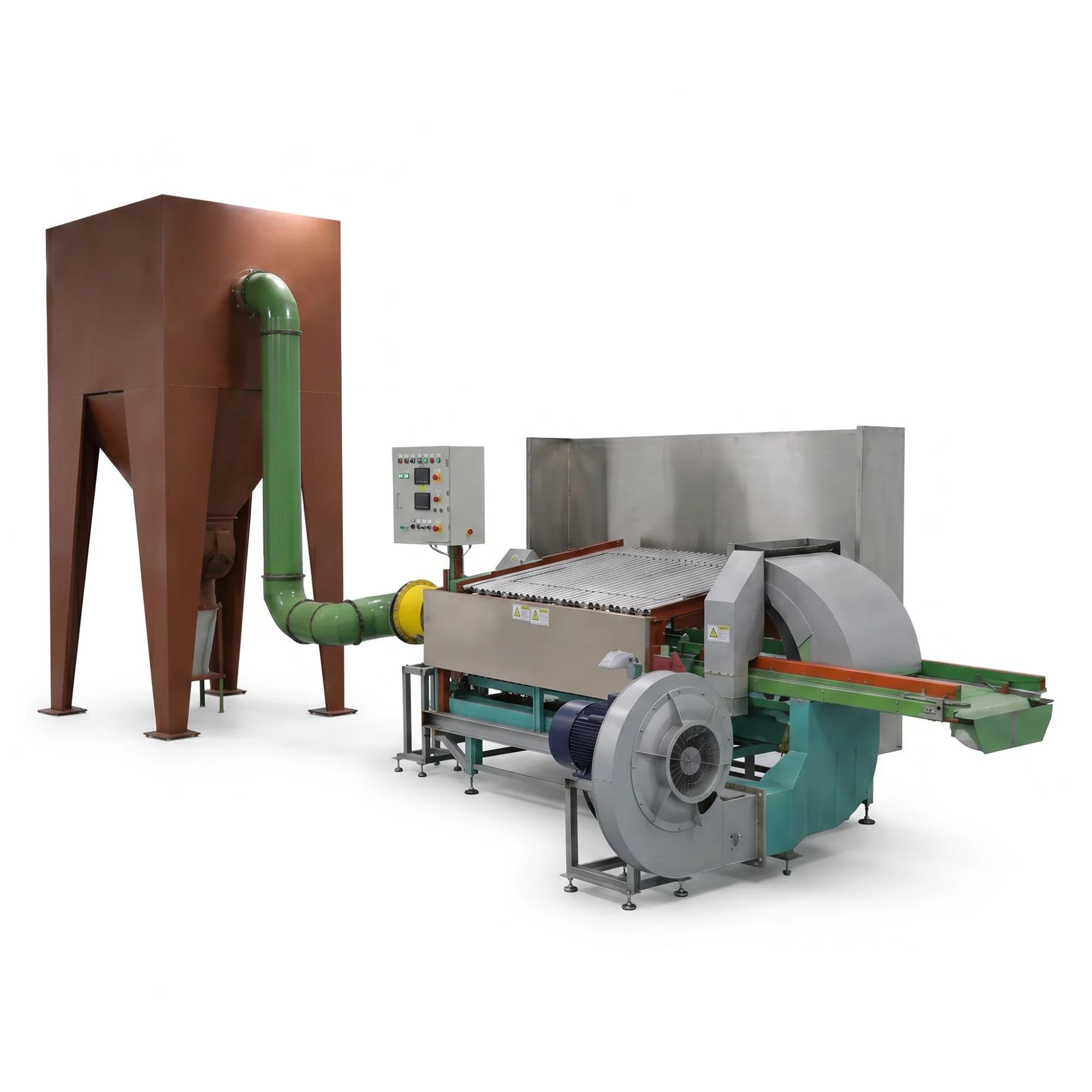
Between the moment a hatcher tray is opened and the moment chicks reach a vaccination or packing station, there is one job that has to happen without drama: separated, picked, transferred, in a single direction, without birds piling up. That job is what a day old chick picking and transfer machine exists to do.
This guide covers what the machine does, who should and should not buy it, the specifications worth arguing about, how quality is checked before shipment, and what moves a quotation.
What the machine actually does
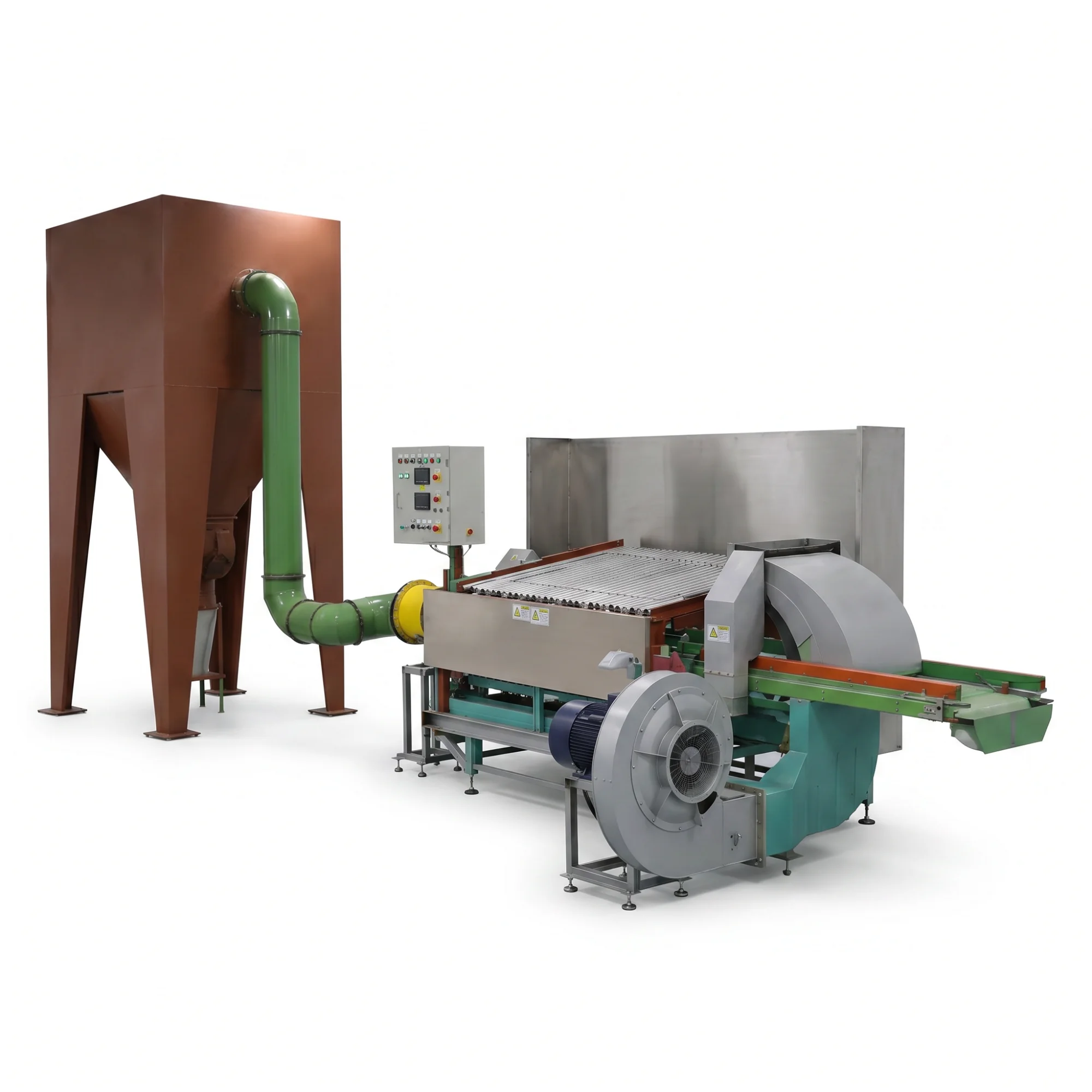
Three actions run at the same time. Chicks are separated from what they hatched in, lifted gently out of the tray path, and carried on a controlled airflow and belt system towards the next station. JuliSense builds this as a standalone unit with its own PLC control and touchscreen so that it can be operated, cleaned and maintained by the hatchery team rather than by a visiting specialist.
Everything else in the specification is a variation on those three actions. One lane or two, how far chicks are carried, and what happens at the far end are project decisions rather than product decisions. That distinction is the most common source of mismatched expectations.
Who it fits, and who should buy something else
A day old chick picking and transfer machine is not a universal upgrade. It earns its place in some plants and sits unused in others.
Where it fits well
Hatcheries with a steady day-old volume where manual picking sets the pace. Sites where the same people are pulled between take-off, vaccination and dispatch. Plants designing a new line, where the transfer section can be planned into the room instead of squeezed into a gap. In those situations a day old chick picking and transfer machine earns its cost quickly.
Where it is the wrong purchase
Small hatcheries running short, irregular hatch days, where the machine would be cleaned more often than used. Sites with no room between the hatcher area and the next station, because transfer needs a defined path. And plants whose real bottleneck sits downstream, where a faster transfer into a slow vaccination station only moves the queue.
Where it sits in a hatch day
The machine inherits the rhythm of the room around it, so the schedule explains more than a feature list.
After take-off, before vaccination
Chicks arrive from the hatcher trays and leave as a single, ordered flow. Getting that flow right lets a vaccination station run at its rated pace rather than at the pace of whoever is carrying trays.
When trays are wet or shells are heavy
Hatch days are not uniform. Trays that arrive wet, or with a heavy shell load, are the real test of the extraction and transfer design. Watching the machine run on an imperfect tray is worth ten clean demonstrations.
At the handoff to dispatch
The far end decides how the rest of the day flows. Chicks leaving in a consistent orientation and count make packing and stacking straightforward. When that order breaks, people improvise, and handling quality quietly disappears.
Specifications worth arguing about
The table below lists the items that genuinely change the machine, and what each one affects. Anything missing here can usually be settled later.
| Item | What it affects | What we need from the buyer |
|---|---|---|
| Lane configuration | How many trays can be processed at one time | Peak chicks per hour and the tray pattern |
| Transfer length and route | Room layout, turns, and access for cleaning | A drawing of the take-off area, with columns marked |
| Airflow structure | Gentle movement and dust capture | Room pressure and extraction expectations |
| Control system | Alarms, counting, and who can change settings | Who is authorised to operate and adjust |
| Finish and contact surfaces | Cleaning time and biosecurity confidence | The cleaning agents approved in your plan |
| Downstream interface | Whether the next station can keep pace | The equipment it must hand over to |
Build, materials and the parts that decide uptime
Post-hatch rooms are wet, warm and full of organic dust. Machinery that is not built for that environment fails slowly, usually where nobody looks.
Contact surfaces and framework
Stainless steel framing with removable panels is the practical minimum. What matters is whether the surfaces a chick touches can be reached by the person cleaning them at the end of a shift, without tools and without dismantling the machine.
Airflow and conveying components
Industrial motors, sealed bearings and a transfer structure built around airflow rather than impact reduce stress on the birds and wear on the machine. This is where a five-year budget is quietly won or lost.
Control cabinet and sensors
Keep the cabinet clean, dry and accessible. Sensors are the cheapest components on the machine and the ones most often blamed for problems caused by dust or moisture. Plan access around them at the start and maintenance stays routine.
Quality control before the machine leaves the factory
Quality claims are only useful if the buyer knows what to ask for. At Jili Intelligent the sequence runs from incoming material inspection through assembly checks and an in-house run test, to a review of the documentation pack before packing.
What a buyer should request
An in-house run test with video, a wiring and component record, the spare-parts list, and operating instructions in the language your team actually uses. Ask for the run test on a tray you supply or describe.
What we do not claim
We do not describe the machine as certified for a market we have not been audited for. Where a project needs a specific certificate, it belongs in the RFQ so the answer is in writing. Our quality work follows the principles set out in the ISO 9001 quality management standard, and buyers are welcome to ask how those principles appear on the shop floor.
Capacity, lead time and project planning
The capacity of a day old chick picking and transfer machine is not a single number. It is the interaction of lane configuration, tray pattern, how fast trays arrive, and the pace of the station that follows. That is why we ask for the peak rate rather than the daily average.
Plan lead time in three stages rather than one: production, shipping and site preparation. The third is the one buyers underestimate. Floor work, drainage, power, air and access for a delivered crate all happen while the machine is in transit, and they decide whether a project finishes early or late.
Four ways to configure it
Post-hatch handling is normally configured rather than chosen from fixed models. These four patterns cover most projects.
| Configuration | Best suited to | Trade-off to accept |
|---|---|---|
| Standalone unit, manual loading | Plants taking a first step into automation | Pace still depends on one loader |
| Unit integrated with vaccination | Sites where vaccination is the pace-setter | Requires a settled vaccination route first |
| Unit with counting and stacking downstream | Plants shipping to fixed tray or crate counts | More interfaces to commission and document |
| Retrofit into an existing conveyor route | Plants upgrading a working line | Layout compromises compared with a new room |
Cost, and the three things that move the budget
Buyers rarely want a headline price; they want to know what changes it. Three items dominate the cost of a day old chick picking and transfer machine.
The first is the transfer route: every extra turn, lift or metre of conveyor adds structure, motors and cleaning surface. The second is integration level, because a standalone unit and a machine handing over to three other stations are different projects. The third is documentation and training, which some suppliers treat as a courtesy and others as a deliverable.
Where spreading the spending genuinely helps, we say so. Starting with transfer and adding counting or stacking later is often better value than one large order, and the modular design supports that path.
OEM and ODM: what we can change, and what we should not
OEM and ODM work is routine for us, and most useful when treated as a structured conversation rather than a request for a different colour. Branding, labels, documentation language, voltage, control conventions and accepted tray sizes are all practical starting points.
What we push back on is worth stating: changes that compromise transfer geometry or cleaning access. Those two properties make the machine reliable, and a modification that damages either will be paid for by the operator. If a request sits in that category, we will say so and propose an alternative.
How to write the RFQ
Send five items and the first reply you receive will be far more useful: peak chick rate and tray pattern, a sketch of the take-off area, the equipment the machine hands over to, the cleaning agents and biosecurity standard in use, and any certificate your market requires. Add photographs of the trays and of the room as it stands. Photographs resolve more questions than paragraphs.
Next step
JuliSense is the hatchery equipment brand of Jili Intelligent. The day-old chick picking and transfer machine is part of a wider range that includes injection vaccinators, spray vaccination, beak treatment and crate handling, all listed on the products page.
Two background reads help before the RFQ: Where the Chicks Leave the Tray covers the take-off area, and Take These Five Photos explains which pictures make a quotation more accurate. The service page describes how design, integration, training and support are scoped, the about page covers where the equipment is built, and the FAQs answer the most common questions.
Send those five items through the contact page and we will reply with a configuration, a scope and a lead time rather than a catalogue page.
Frequently asked questions
Can it handle different tray types on the same line?
Usually yes, within limits stated in the specification. Send samples or photographs of every tray you use, including the older and slightly warped ones, because they define the worst case.
How much floor space does it need?
It depends on the transfer route rather than the machine itself. A straight run needs far less than one that turns a corner, and cleaning access counts as part of the footprint.
How long does installation take?
Mechanical installation is short; commissioning and training take longer, and site readiness decides both. If floor, power and drainage are ready on arrival, the schedule holds.
Is training included?
Training and documentation are part of the scope agreed with each buyer and should be listed in the quotation. Ask for a teach-back session rather than a presentation: your operators should be able to run and stop the machine unaided before the engineer leaves.
Buying a day old chick picking and transfer machine is easier when the conversation starts with the trays, the room and the next station. That order is what keeps a post-hatch project on schedule.