


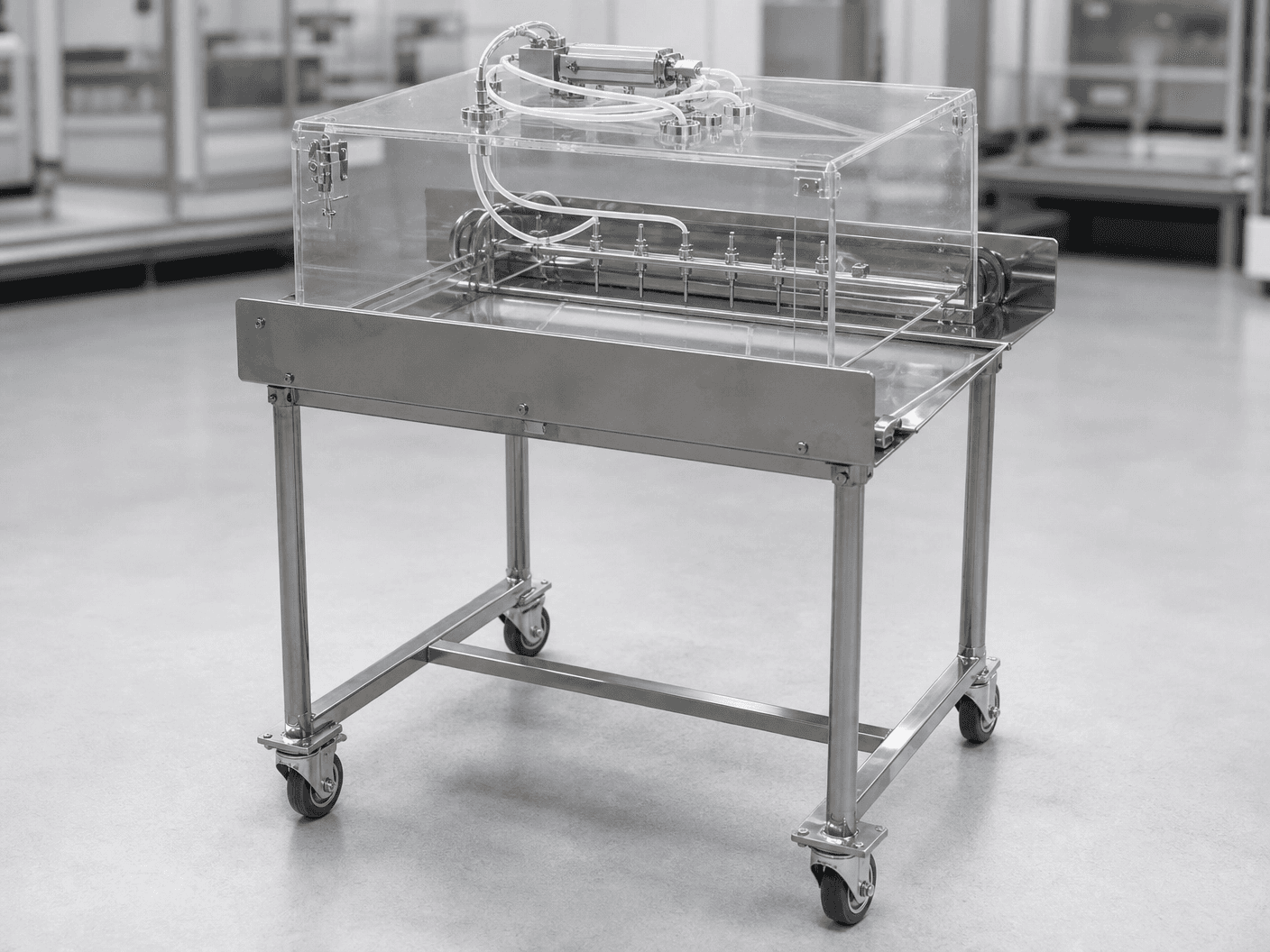
Most hatcheries do not wake up wanting a spray machine. They wake up wanting a vaccination route that keeps pace with the room, uses the vaccine team properly, and stays repeatable at seven in the morning and again after lunch. That is why a day old chick spray vaccinator is best judged as one option inside a route, not as a gadget that arrives on wheels.
Spray and injection do different jobs, and both still exist in commercial hatcheries for good reasons. The decision usually turns on four things: the vaccine the flock program calls for, the way chicks move through the building, the amount of handling the team can supervise, and the evidence the hatchery needs at the end of the shift. Get those four right and the equipment question becomes far less emotional.
Start with the vaccine decision, not the machine decision
The vaccination route follows the flock health program, and that program belongs to the hatchery's veterinarian and production leadership. Some vaccine presentations are given by injection at day old; others are delivered as a spray. A supplier can explain what a machine physically does, but the supplier should not be the one choosing how a flock is immunised.
So before any quotation is useful, write down the route the program already requires. Then ask whether the current bottleneck is the route itself or the way the route is executed. A hatchery that already sprays by hand may simply need consistency and a cleaner station. A hatchery running injection stations may be comparing a different question entirely.
What changes in the room when spray enters the line
A spray station changes less about the chicks and more about the space around them. Vaccine becomes an airborne mist inside an enclosure, so airflow, overspray control, and the operator's working position matter more than they do at an injection bench. Handling is usually gentler because the chick passes through rather than being held and injected individually, and that can matter when the team is moving a large number of day-old birds in a short window.
Injection, by contrast, gives the operator a discrete, countable event per chick. That is a real advantage when the program requires it, and it also means the station's pace is tied to human hands more tightly.
| What the room notices | Spray route | Injection route |
|---|---|---|
| Handling per chick | Chicks pass through a cabinet or tunnel with limited individual contact | Each chick is presented to a needle station or station group |
| Pace driver | Presentation rhythm and enclosure throughput | Operator hands, needle cycle, and reload timing |
| Air and surroundings | Enclosure integrity and airflow management matter more | Bench ergonomics and sharps discipline matter more |
| Operator skill emphasis | Uniform presentation and station awareness | Consistent placement and dose attention |
| Typical integration point | Between chick take-off and the next handling step | At a dedicated station or integrated processing position |
Three constraints that decide whether spray actually works here
Suppliers can show a clean machine in a clean room. Your building is the real specification, and it decides whether a day old chick spray vaccinator belongs at that point in the line. Walk the route with the production team and be honest about these three constraints, because each one changes the project cost and the daily routine.
The path a chick takes to reach the station
If chicks arrive at the spray point already moving in a controlled direction, the station slots in naturally. If they currently arrive in a way that depends on someone carrying a tray across the room, the spray unit will inherit that improvisation. Measure the distance, count the turns, and watch what happens when the take-off line pauses for two minutes.
The air and the surface around the enclosure
Spray needs a defined boundary. Look at where mist could drift, what sits downstream of the cabinet, and how the surrounding surfaces are cleaned between runs. The machine has an enclosure, but the room still has its own airflow and hygiene logic. The hatchery's biosecurity program decides the standard; the equipment has to support it rather than fight it.
The person who stays with the station
Ask who owns the station during the busiest hour of the day and again during the handover. A well-designed spray station can reduce per-chick handling, but it does not eliminate attention. Someone still watches presentation, reacts to a stall, and confirms the run is complete.
A five-minute trial that reveals more than a specification sheet
When you evaluate a day old chick spray vaccinator, spend less time reading the feature list and more time watching one ordinary cycle. A short, structured observation tells you how the station will behave on a real Monday.
- Watch the first thirty seconds. Does the operator step into the right position without being told, or does the trainer still have to point at the cabinet?
- Watch a pause. Ask the supplier to stop the cycle mid-run. Where does the chick in the enclosure go, and who decides what happens to it?
- Watch the reset. After the pause, can the operator restart using the normal sequence instead of a special workaround?
- Watch the exit. Follow one chick from the cabinet to the next station. Is the handoff obvious, or does someone improvise a tray?
Four small observations will tell you more about integration risk than a page of technical claims, and they give your team concrete language for the follow-up meeting.
Questions worth asking before the quote is signed
A quotation becomes useful when both sides agree on what is inside the scope. Use the table below to keep the conversation on evidence rather than adjectives.
| Question | What a strong answer includes |
|---|---|
| Which spray parameters can be adjusted, and by whom? | Named adjustments, the approved setting record, and who is allowed to change them |
| How does the enclosure handle routine cleaning and inspection? | Access description, removable parts, and the cleaning path after a run |
| How does the station connect to the rest of the line? | Interface points, heights, buffer expectations, and who tests the handoff |
| What training and documentation come with the unit? | Operator teach-back, maintenance walk-through, and a handover record |
| Which parts and consumables should be held locally? | A short recommended list tied to the expected operating pattern |
If an answer is vague, ask what the customer is expected to provide. Utilities, compressed air, drainage, or a prepared floor area often sit outside the machine scope, and those gaps are what delay a commissioning date.
Small assumptions that create expensive surprises
Three assumptions appear in almost every project review, and each one is easier to settle before the equipment ships.
The first is that the new station will fit the current pace without changing anything upstream. In practice, adding a controlled step often exposes an imbalance that was previously absorbed by hand carrying. The second is that the enclosure removes the need for room-level hygiene discipline. It supports it, but the surrounding area still has a defined cleaning standard. The third is that everyone assumes a day old chick spray vaccinator and an injection station compete for the same job. In many hatcheries they do not; they serve different program requirements and sometimes coexist on the same processing line.
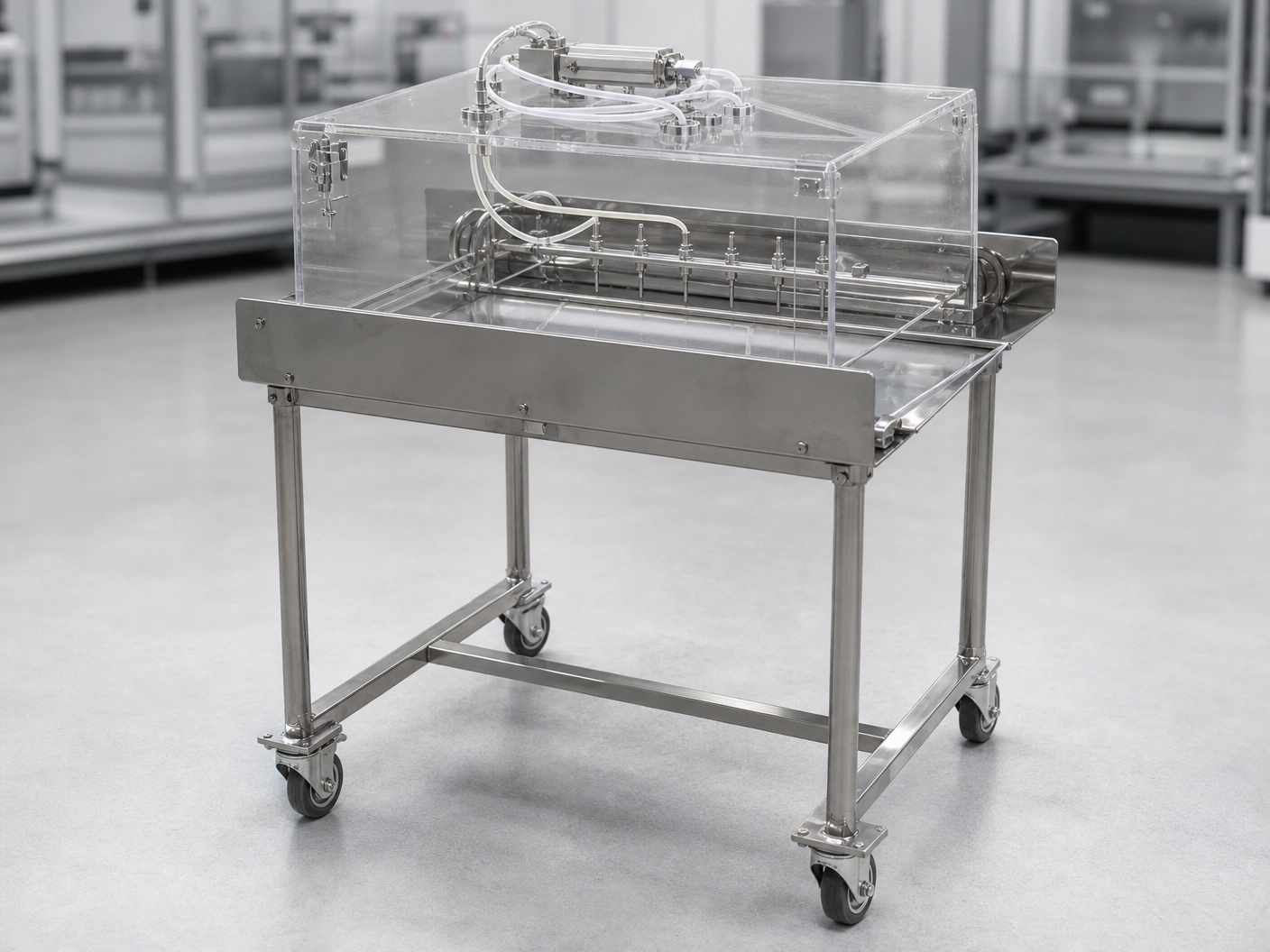
JuliSense manufactures both routes. The day-old chick spray vaccinator uses a stainless steel enclosure with a transparent protective cover and adjustable spray settings, while the day-old chick injection vaccinator and the four-station automatic vaccination machine cover the injection side of the same conversation. The JuliSense product portfolio shows how these stations sit alongside transfer, conveying, and crate washing equipment.
Where JuliSense fits in this decision
JuliSense is the hatchery equipment brand of Jili Intelligent, with a focus on infrared beak trimming, chick vaccination, and automated hatchery handling. That matters for a spray decision mainly because spray rarely stands alone. It sits near take-off, transfer, counting, or a wider processing line, and someone has to own the boundaries between those steps.
Send the room drawing, the chick flow, the vaccine program's route requirement, the shift pattern, and the handoff you want to improve through the JuliSense contact page. The service page outlines design, OEM/ODM, quality, and support conversations, while the FAQs and the about page give background on how projects are usually scoped.
Frequently asked questions
Is a day old chick spray vaccinator suitable for every hatchery?
No. It fits when the flock program calls for spray delivery and the room can support a controlled enclosure with sensible airflow and handoffs. If the program requires injection, an injection station is the right answer.
Does spraying replace the need for skilled operators?
It changes what skill is needed rather than removing it. Operators still manage presentation rhythm, watch for stalls, and confirm that the run is complete. Training and a written station routine remain important.
Can spray and injection equipment run in the same hatchery?
Yes, and some sites do exactly that when different flocks or programs need different routes. The practical question is whether the room can host both stations without creating confusion at the handoff points.
What should we prepare before requesting a quotation?
Prepare the room layout, the number of chicks handled in a typical window, the route the program requires, the available utilities, and the cleaning standard around the station. Those five items turn a generic quote into a project scope.
Choosing a day old chick spray vaccinator is ultimately a room decision. When the program, the airflow, the operator position, and the next handoff all agree, the machine stops being a new arrival and quietly becomes part of the shift.